
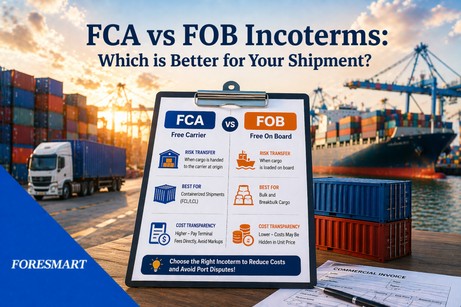
The International Chamber of Commerce (ICC) mandates FCA for containerized freight to prevent hidden origin markups. While the ICC limits FOB strictly to bulk ocean cargo, importers routinely misapply this term to containers. This mismatch leaves goods uninsured during terminal operations, triggering origin port disputes and forcing buyers to absorb terminal handling charges (THC).
This guide shows exactly how FCA and FOB divide origin liabilities, shift risk transfer points, and reduce your final landed costs.
What is the FCA Term in Incoterms
FCA (Free Carrier) transfers cargo liability from the seller to the buyer the moment the goods enter the custody of a designated carrier. This shipping term requires the seller to manage export customs clearance, leaving the importer responsible for the main ocean carriage and subsequent physical risks.
Advantages of FCA for the Seller and Buyer
- For Buyers: FCA blocks vendors from marking up origin port fees. Paying actual terminal handling charges (THC) directly to the carrier secures verifiable freight pricing.
- For Sellers: This Incoterm caps liability at the origin facility or port gate. Transferring risk early prevents financial exposure to cargo damage occurring during active vessel loading operations.
When to Use FCA Incoterms
Select FCA for containerized freight, including FCL (Full Container Load) and LCL (Less than Container Load) shipments. Contracting under this trade rule grants importers direct control over routing timelines and logistics provider selection. Bypassing seller-arranged freight prevents sudden transit delays and keeps your final landed costs predictable.
What is the FOB Term in Incoterms
FOB (Free on Board) shifts cargo liability from the seller to the buyer the moment the goods load onto the departing vessel. This shipping rule requires the seller to manage export customs clearance and origin port operations, leaving the importer responsible for the main ocean carriage.
Advantages of FOB for the Seller and Buyer
- For Buyers: FOB provides direct control over ocean freight negotiations. Contracting the shipping line directly blocks sellers from adding hidden origin margins and secures lower transit rates.
- For Sellers: This Incoterm isolates vendors from volatile international ocean freight fluctuations. Delivering cargo strictly to the local port simplifies domestic logistics and safely caps financial exposure before the main voyage begins.
When to Use FOB Incoterms
Limit FOB contracts to bulk commodities or non-containerized breakbulk cargo, such as grain, oil, or oversized industrial machinery. Deploying this maritime rule aligns the risk transfer point with the physical crane-loading process. Misapplying this term to standard container freight traps your cargo in a liability blind spot during active terminal handling.
4 Key Differences Between FCA and FOB
The legal boundary between FCA and FOB dictates who absorbs port delays and who files insurance claims during active loading operations. Misjudging these operational parameters exposes importers to redundant origin fees and traps cargo in liability disputes.
Risk Transfer Timing
FCA shifts liability to the buyer upon carrier receipt at the origin facility or port gate. FOB extends the seller’s risk until the cargo loads onto the departing vessel. This liability gap dictates which party files the insurance claim if goods suffer damage during yard transit or active crane lifting.
Transport Mode Compatibility
FCA accommodates diverse multimodal networks, spanning air, rail, road, and sea freight. FOB governs traditional ocean and inland waterway shipping. Misapplying this maritime rule to air or rail shipments creates unenforceable logistics contracts and triggers severe jurisdiction disputes.
Container Cargo Suitability
Modern containerized freight aligns with the early handover mechanism of FCA. Shipping containers typically dwell in port yards for days before vessel loading. Contracting under FOB leaves these sealed boxes in a liability blind spot during this vulnerable pre-load phase, complicating damage assessments.
Terminal Fee Allocation
FCA invoices origin terminal handling charges (THC) directly to the buyer’s designated carrier, securing transparent freight pricing. FOB forces the seller to absorb local port operating fees. To recover these origin expenses, vendors frequently inflate factory unit prices, hiding true freight costs from the importer.
FCA vs FOB Comparison Table
This summary table maps the cost and risk shifts between FCA and FOB, allowing importers to identify hidden liabilities before finalizing procurement contracts.
|
Feature |
FCA (Free Carrier) |
FOB (Free on Board) |
Business Impact |
|
Risk Transfer |
Handover to carrier |
Loaded onto vessel |
Determines who pays for port-side damage |
|
Transport Mode |
Multimodal (Air, Sea, Rail) |
Sea and Inland Waterway |
Dictates legal validity of the contract |
|
Container Suitability |
High (Direct handover) |
Low (Risk gap at terminal) |
Prevents liability blind spots in port yards |
|
Cost Transparency |
High (Direct invoicing) |
Low (Costs hidden in unit price) |
Impacts the accuracy of landed cost data |
Matching Incoterms to physical transport modes prevents unrecoverable losses and hidden surcharges. FCA secures containerized freight, while FOB serves bulk commodities. This distinction stops port disputes and protects your final landed cost.
The Impact of FCA and FOB on Landed Costs
Misapplying FOB to container freight obscures origin expenses and shifts landed cost control to the vendor. This cost shift complicates budgeting while preventing the identification of redundant supply chain costs.
Hidden Costs in Origin Ports
FOB contracts frequently embed origin port markups within product unit prices. Paying local fees under this term encourages vendors to include profit buffers for fluctuating terminal handling charges (THC), inflating the unit cost and distorting the true value of the shipment.
- Cost Separation: Moving to FCA detaches logistics expenses from the product price. This separation allows importers to pay carriers directly at market rates, ensuring the commercial invoice reflects only the actual goods value.
- Budget Accuracy: Removing hidden origin margins creates a stable baseline for final landed cost calculations. This transparency prevents unexpected budget overruns during final reconciliation.
Insurance and Liability Expenses
FOB’s coverage gap turns yard transit damage into unrecoverable losses, as marine cargo insurance claims require risk transfer to have already occurred. Since FOB liability only shifts once goods load onto the vessel, damage occurring during yard transit remains the seller’s responsibility.
- Liability Trap: Importers often assume risk transfers at the port gate, but the Incoterm dictates otherwise.
- Financial Risk: This liability mismatch forces buyers to absorb terminal damage costs if vendor coverage excludes the pre-loading phase.
Should Your Industry Sector Rely on FCA or FOB?
Matching the Incoterm to your cargo type stops cost leaks and ensures legal compliance. While bulk sectors favor traditional maritime rules, containerized industries require modern frameworks to prevent liability gaps.
Manufacturing and Machinery
FCA secures manufacturing supply chains by granting direct oversight at the factory gate. Since precision machinery requires specialized loading, this term prevents vendor mismanagement during inland transit. Taking liability before the cargo enters the port stack stops terminal handling disputes for heavy equipment.
Retail and E-Commerce
FCA provides the agility required for fast-moving retail and e-commerce inventories. Most consumer goods travel via containers or air, making FOB legally incompatible for these modes. Using FCA stops hidden origin markups, protecting thin retail margins through direct pricing. Foresmart’s FBA shipping service operates exclusively under FCA terms.
Technology and Electronics
FCA protects high-value electronics by shifting risk at carrier handover. Since technology shipments frequently use air or rail, this rule ensures contract enforceability across multimodal routes. Early risk transfer prevents unrecoverable losses during secure warehouse dwelling.
Agriculture and Bulk Commodities
FOB serves agriculture and bulk sectors where cargo loads directly into vessel holds. This maritime rule aligns with traditional port operations for grain and ore. Selecting FOB keeps the seller responsible for origin costs until the goods physically clear the ship’s rail.
How FCA and FOB Shipping Terms Affect Shipping Logistics
Matching Incoterms to logistics workflows determines the exact boundary of forwarder control and origin terminal liability. Selecting the specific term dictates how early a freight forwarder can intervene to secure the cargo and prevent origin coordination delays.
Role of Freight Forwarders
FCA grants freight forwarders like Foresmart direct control at the factory gate, allowing agents to oversee container loading without waiting for vendor permission. This early intervention stops origin scheduling gaps and prevents vendors from choosing sub-standard local truckers.
FOB locks agents out of the logistics process until the cargo clears the ship’s rail. This logistics gap frequently causes mismanaged terminal deliveries and triggers secondary handling charges that the buyer must eventually absorb.
Documentation and Compliance Requirements
FCA accelerates payment cycles by allowing “received for shipment” notations on the Bill of Lading (BOL) immediately upon carrier receipt. This early documentation provides proof of delivery days before the vessel departs, moving your financial settlement forward.
FOB mandates a “shipped on board” status, which remains pending until the vessel actually leaves the port. This documentation delay freezes cash flow while the container sits in the terminal awaiting vessel arrival, potentially stalling payments for over a week.
The Common Mistake of Using FOB for Container Freight
Applying FOB to containerized shipments creates a liability vacuum because risk only transfers once the box clears the ship’s rail. Most containers dwell in port stacks for 3–5 days before loading, leaving the cargo unprotected during terminal shifting.
- The Risk: This legal mismatch forces importers to absorb costs for damage occurring inside the port walls.
- The Solution: Transitioning to FCA matches the risk transfer to the actual physical handover point, stopping unrecoverable port-side losses.
Conclusion
Applying the wrong Incoterm shifts financial control to the vendor before the shipment leaves the origin port. FOB aligns with bulk commodities loaded directly into vessel holds, making it legally incompatible with containerized freight. FCA’s early handover keeps origin costs transparent, with insurance coverage remaining enforceable through the full yard transit phase.
Foresmart operates under FCA terms for containerized and FBA shipments, giving importers direct cost visibility from factory gate to final destination.
Frequently Asked Questions (FAQs)
Can I Use FOB for Air Freight Shipments?
No. FOB applies exclusively to maritime and inland waterway transport. Applying this maritime term to air cargo creates a contractual void lacking a vessel rail to trigger risk transfer. FCA governs all air and multimodal shipments.
Who Pays for Inland Trucking from the Factory Under FCA?
The named handover location determines payment responsibility. Importers pay for trucking when the contract specifies the factory gate as the delivery point. Selecting a port terminal as the handover site requires the seller to fund inland transport, allowing buyers to control origin expenses through pickup selection.
Who Handles Export Customs Clearance Under FCA?
The seller. FCA terms require vendors to manage and fund all export customs clearance procedures. While the buyer controls the main international carriage, the seller must secure export licenses and file government declarations. This division of labor ensures a cleared status before the carrier takes physical possession.
No. FOB applies exclusively to maritime and inland waterway transport. Applying this maritime term to air cargo creates a contractual void lacking a vessel rail to trigger risk transfer. FCA governs all air and multimodal shipments.
The named handover location determines payment responsibility. Importers pay for trucking when the contract specifies the factory gate as the delivery point. Selecting a port terminal as the handover site requires the seller to fund inland transport, allowing buyers to control origin expenses through pickup selection.
The seller. FCA terms require vendors to manage and fund all export customs clearance procedures. While the buyer controls the main international carriage, the seller must secure export licenses and file government declarations. This division of labor ensures a cleared status before the carrier takes physical possession.