
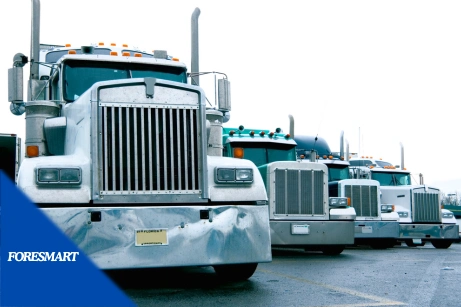
The trucking driver shortage has emerged as one of the most critical logistics challenges. What began as a small shortage of drivers has turned into a full truck driver workforce emergency. Because of that, businesses race to locate and keep a skilled workforce. Yet many carriers are finding it difficult to recruit truck drivers, as upskilling is a massive expense, whilst new talent competes for the limited space available.
Such a shortage affects a host of areas, from retail inventories to manufacturing output, with transportation costs rising. In this article, we will address why the shortage is getting worse, the larger impact on the economy, and possible solutions that could be put in place going forward.
Driver Shortage in the Trucking Industry
With there being a huge disparity in the supply and demand of drivers, the trucking driver shortage is a major problem in 2025. In the U.S., recent reports suggest that the number of gaps is estimated at around 60,000–82,000. A report from altLINE tells us there are roughly 24,000 unfilled positions currently in the truck driver world based on an analysis of 7,213 daily job listings in late 2024.
The gap prevents trucks from running, and the impact is enormous and costly, with the industry reporting a US$95.5 million hit every week due to the shortage.
This is part of a broader truck driver workforce crisis, driven by structural issues such as an aging workforce. For example, the International Transport Union (IRU) estimated there are still 3.6 million positions in truck driving unfulfilled in 36 countries worldwide, and suggests 3.4 million more drivers could retire by 2029.
What Causes the Trucking Driver Shortage?
The increasing number of truck drivers missing in the market results from certain structural and economic reasons. Here are some of the major root causes fueling the truck driver workforce crisis and truck industry worker shortage.
Workforce Ageing and Demographic Considerations
One big part of this is a steadily aging driver pool. Many existing drivers are approaching retirement age, and younger workers are not entering quickly enough to take their place.
According to the National Transportation Institute, nearly half of truck drivers now only qualify for short-term medical cards, which means many have health issues and may leave the job soon.
Also, very few women and other underrepresented groups become truck drivers. For example, women made up only about 6.6% of drivers in the past years. This limits the number of new people entering the field.
Entry Barriers and CDL Training Obstacles
Driving as a professional is costly and takes time. CDL (Commercial Driver’s License) training costs can be between $3,000 and $10,000 for most potential recruits, leaving them out of reach. Then there’s a regulatory bottleneck: new federal training standards (like the Entry-Level Driver Training or ELDT) require more classroom learning and more hands-on driving practice. Because the training takes longer and is more complicated, it slows down how quickly new drivers can get licensed and enter the workforce.
Additionally, insurance costs for young or inexperienced CDL holders are very high, dissuading smaller fleets from hiring them.
Tough Working Conditions and Lifestyle Pressures
Truck driving is a hard career, and it can be tough to maintain. Many long-haul drivers work for weeks away from home, have irregular schedules, and battle fatigue and physical strain. The isolation, health risks (such as an unhealthy diet and a sedentary lifestyle), and long hours associated with a job lead to burnout, a leading cause of truck driver retention problems.
Regulatory and Compliance
Regulations aimed at enhancing safety also play into the shortage. Specifically, Hours-of-Service (HOS) regulations impose limits on the time a driver can work, which decreases the total hours of driving possible.
Also, the FMCSA’s Drug & Alcohol Clearinghouse has shut down many drivers: more than 180,000 drivers have been disqualified from participating since 2020, not all of whom return. These compliance filters also diminish the number of CDL drivers.
High Turnover and Retention Problems
Retention might be the most important factor in this trucking driver shortage crisis. Many companies have reported a turnover of 90%, most notably among long-haul drivers.
This means that when companies recruit new drivers, they fail to retain them in the long run. The cost of constantly hiring and training new drivers is steep, and the drivers cycle out so rapidly that building a solid, competent workforce is difficult.
The Influence of the Trucking Driver Shortage on the Distribution Network
The trucking industry shortage is causing a chain reaction throughout the supply chain, and the consequences are being felt across shipping companies and end buyers. Firstly, fewer drivers available in the market translates to slower or more risky deliveries. Many U.S. freight companies say on-time delivery is under the most pressure, closely followed by concerns about driver availability.
That unreliability pushes companies (especially shippers) to become more dependent on third-party logistics providers (3PLs), which creates cost and complexity. In fact, 67% of freight companies say they rely on 3PLs at least sometimes due to the trucking driver shortage, according to WorldCargo News.
Financially, the shortage is staggering; a January 2025 report estimates that the freight industry is losing US$95.5 million a week owing to idle trucks. That underutilized capacity burdens not only trucking companies, but retailers, manufacturers, and consumers as the costs of shipping increase and inventory becomes harder to predict.
The trickle-down effects are missed delivery windows, inventory shortages, postponed projects, and thinner margins, fueling trucking retention problems and the lingering weakness of the trucking industry labor shortage overall.
Proposed Solutions in 2025
As the truck driver shortage increases, carriers and policymakers are working together to tackle the trucking driver workforce crisis from all angles. These activities are part of efforts that are making the truck driver recruitment process easier, improving retention rates, and lessening the shortage of CDL drivers.
Increasing Pay & Benefits
Among the most immediate levers: increasing compensation. According to an updated report published by the American Trucking Association (ATA), carriers are increasing pay and creating better benefits to make driving more competitive. This tackles a very big problem with truck driver retention; when pay does not justify the demands of the job, turnover rises.
Reducing Barriers to Entry
Efforts to bring in new CDL drivers include cutting fees, backing training programs, and revising rules that slow entry. For example, there is growing interest in training programs tied to employer-sponsored tuition assistance.
Improving Working Conditions & Driving Expertise
Better conditions significantly help with retention. The Federal Motor Carrier Safety Administration (FMCSA) and the U.S. Department of Transportation (USDOT) fact sheet cites investment in truck parking infrastructure as a major driver of the well-being initiative. Safe parking, more predictable scheduling, and reduced stress will help to relieve pressure on workers.
Bringing in Younger & More Diverse Talent
Expanding the driver pool is a must. Programs dedicated to recruiting younger drivers, more women, and underrepresented groups are on the rise.
Leveraging Technology & Infrastructure
While driverless trucks are not a full solution, both infrastructure and technology investments are working to ease pressure on the system. The U.S. Department of Transportation (DOT) announced it would be awarding over US$275 million in truck parking grants to improve driver conditions. When the work environment is enhanced, workers feel more comfortable, and the retention rate is increased.
Conclusion
The trucking driver shortage affects nearly every part of the U.S. logistics sector. From delayed grocery deliveries to manufacturing slowdowns, the impacts are widespread. Hiring and keeping truck drivers is still a big challenge, and the shortage of CDL drivers makes it difficult for fleets to run smoothly.
Industry efforts to boost wages, subsidize CDL training, better working conditions, and attract younger and more diverse drivers are showing promise. But sustainable solutions will require a combination of policy support, investment in infrastructure, and technological innovation.
Frequently Asked Questions (FAQs)
Why is there a trucking driver shortage?
The shortage is driven by retirements, an aging workforce, tough working conditions, high turnover, and barriers to entry, such as CDL training costs.
How long will the trucking driver shortage last?
Experts predict the shortage will persist into the late 2020s unless recruitment, retention, and training programs are significantly expanded.
Is trucking still a good career choice?
Despite the challenges, trucking still offers competitive pay, solid benefits, and strong job opportunities, especially for people entering CDL training or apprenticeship programs.
The shortage is driven by retirements, an aging workforce, tough working conditions, high turnover, and barriers to entry, such as CDL training costs.
Experts predict the shortage will persist into the late 2020s unless recruitment, retention, and training programs are significantly expanded.
Despite the challenges, trucking still offers competitive pay, solid benefits, and strong job opportunities, especially for people entering CDL training or apprenticeship programs.