
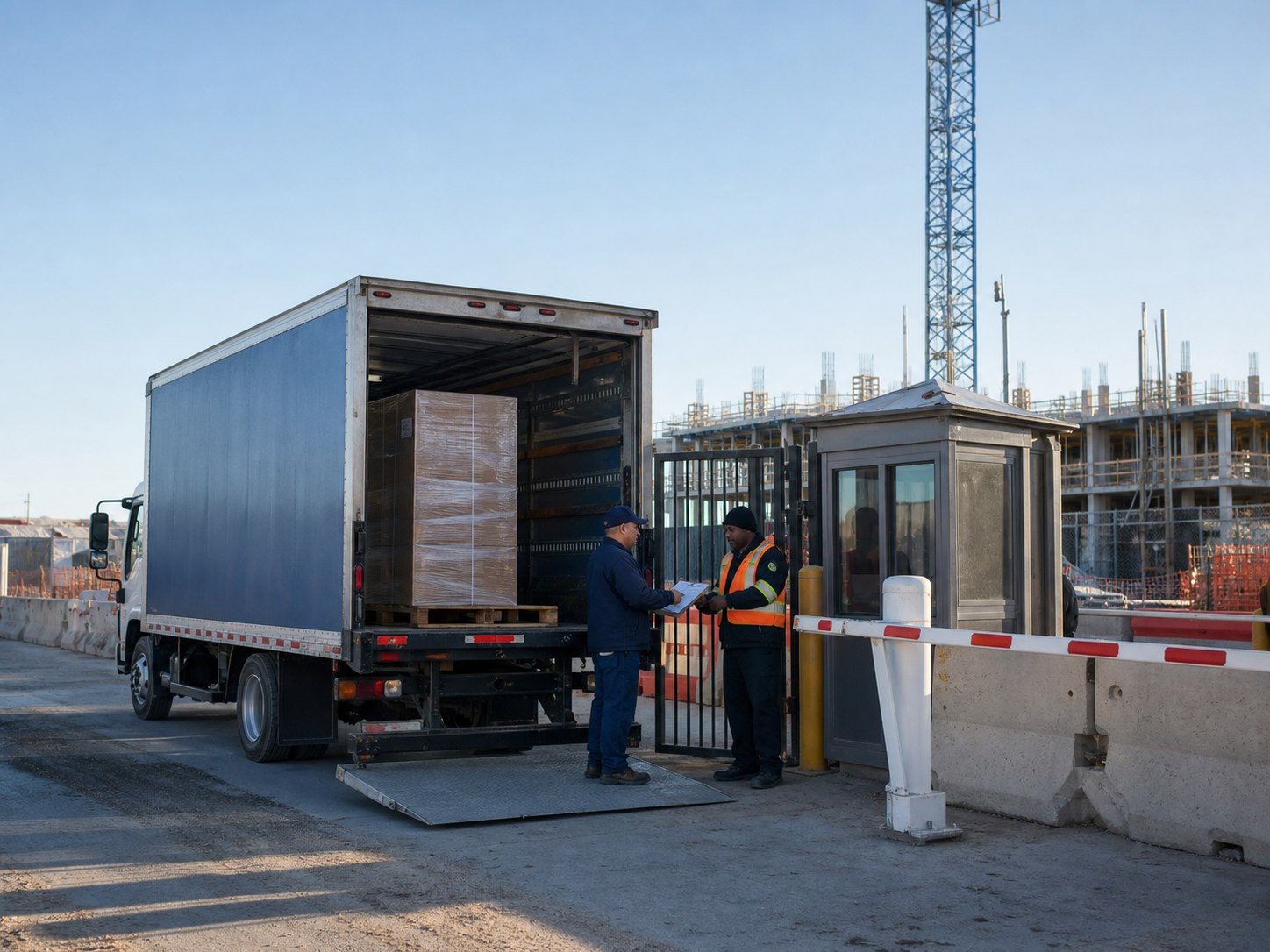
Flag limited access before booking so the carrier can price final delivery correctly. A low freight quote can rise after arrival when a school, job site, farm, storage unit, or guarded facility needs extra time or equipment. The limited access delivery fee may appear after delivery if the address was incomplete.
Limited access delivery covers final stops outside a carrier’s standard commercial dock setup. This guide explains which sites may qualify and why carriers charge more. The quote checks help importers control the cost and confirm DDP accessorial scope.
What Does Limited Access Delivery Mean in Freight?
Limited access delivery means a freight carrier must plan beyond a standard commercial dock delivery. The site may restrict truck entry, require security checks or appointments, lack unloading equipment, or have narrow receiving hours. Carriers often add an LTL limited access delivery fee when LTL freight reaches a site that requires this extra work.
A standard commercial delivery usually assumes four conditions:
- A tractor-trailer can enter, turn, and leave safely.
- A staffed receiving dock is open during normal business hours.
- The receiver has equipment and staff ready to unload.
- The driver can complete delivery without a security inspection or fixed appointment.
Carrier tariffs and pricing agreements determine whether an address qualifies. The ODFL 100-Q tariff lists day cares, military facilities, courthouses, detention facilities, fairs, parks, and libraries. The same rule covers sites that inspect the driver or vehicle before entry.
Freight buyers often see residential delivery and limited access delivery beside other international shipping terms on a quote. The two charges are not interchangeable. Carriers classify a residence by address use, while limited access depends on site conditions and carrier rules. Pricing agreements may combine or stack both charges.
Why Does Limited Access Delivery Cost More?
Limited access delivery costs more because the stop uses more driver time, dispatch work, or extra equipment than a standard dock delivery. A carrier may need a smaller truck, a liftgate, advance calls, or a scheduled route. Separate accessorial charges can stack when the site creates more than one service need.
Extra Driver Time
Security desks, locked gates, site escorts, check-in forms, and calls to locate the receiver keep the truck at one stop longer. The driver may also wait for site staff or travel farther inside a large property.
The linehaul rate usually assumes a normal dock stop. Detention, redelivery, or storage may apply separately if the receiver misses the agreed window. The limited access fee does not cover every delay at the site.
Dock and Equipment Limits
A site without a loading dock may need a liftgate truck and pallet jack. Heavy or oversized freight may need a forklift, crane, or different vehicle. Equipment availability affects dispatch planning and may change the delivery date.
The difference between limited access delivery and liftgate service is the work performed. Limited access addresses site restrictions. A liftgate lowers freight between the trailer and ground. The carrier may bill both services at the same stop.
Confirm dock height, forklift capacity, pallet dimensions, and piece weight. Inside delivery, hand unloading, or placement away from the truck may carry another charge.
Appointment and Route Restrictions
Schools, government sites, construction projects, and event venues may accept freight only during a short window. Dispatch must fit the stop into a route and reach the correct contact before arrival. Some tariffs include the first delivery notice in the limited access fee. The carrier may bill extra notifications separately.
Weight limits, narrow gates, low clearances, restricted delivery hours, or trailer bans may require a straight truck. Importers should treat appointment service, after-hours delivery, and nonstandard equipment as separate questions.
Which Locations Trigger Limited Access Delivery?
Limited access delivery locations are sites that a carrier’s tariff classifies as nonstandard or that restrict normal truck service. The business name alone does not decide the fee. Carrier definitions vary, and some locations use separate rules for residential, remote-area, airport, or trade show service.
Schools, Churches, and Government Sites
Schools and churches can trigger a fee even when the street address looks commercial. Receiving hours may be short, and loading docks may be absent. ODFL uses a separate tariff item for schools, colleges, churches, and rectories.
Government buildings, military bases, courts, and correctional facilities often require identification, vehicle checks, escorts, or gate clearance. Those controls can make the entire property a secured or limited access site. Give the carrier the site type, security process, receiving contact, and approved delivery hours.
A public-facing office can still restrict freight vehicles behind the building.
Construction Sites, Farms, and Remote Yards
Construction sites and farms often qualify because road conditions, unloading areas, or operating hours can change. A warehouse located inside an active construction property may also fall under the job-site rule.
A remote yard is not automatically a limited access location. Remote-area fees often depend on a ZIP code or distance from the carrier’s service center. Railroad yards, gated utility sites, or rural facilities may trigger both remote and limited access charges.
Ask whether the carrier can send the planned trailer to the exact gate. Dirt access, weak pavement, bridge limits, or no turning space can force a different vehicle.
Storage Units, Trade Shows, and Event Venues
Individual storage units often qualify because the facility lacks a staffed dock and receiving crew. The driver may need gate access, a unit contact, and unloading equipment. Some carriers publish a separate self-storage rule instead of using the general limited access item.
Trade shows and event venues need a carrier-specific tariff check. ODFL lists fairs and traveling shows as limited access locations. Other carriers may use a separate trade show item. Share move-in dates, booth or hall details, marshaling yard rules, and on-site contact information.
Event freight may also face prepaid billing rules and redelivery costs after a missed receiving window.
How Can Importers Control Limited Access Delivery Costs?
Importers can avoid surprise limited access delivery charges by describing the final site before the carrier prices the shipment. The full address, receiver type, dock setup, access limits, and appointment rules belong in the quote request. Written details help the forwarder separate included delivery from chargeable accessorial work.
Confirm the Delivery Site Before Booking
Call the receiver and verify the physical unloading point. A billing address or company name does not show whether the truck uses a dock, side gate, job trailer, storage unit, or event entrance.
Send the verified site details to your China freight forwarder before booking. The delivery brief should answer these questions:
- Can a 53-foot tractor-trailer enter and turn?
- Is a staffed dock available for the trailer type?
- Does the receiver have a forklift or pallet jack?
- Is a liftgate, straight truck, or inside delivery needed?
- Does security require driver identification or an escort?
- Are an appointment and named contact required?
- What receiving hours and blackout periods apply?
Ask the carrier to confirm the site classification in writing. A map pin does not replace receiving instructions.
Put Access Details on the Quote Request
Put the final address and access notes on the quote request, booking record, and bill of lading. Repeating the details helps prevent information loss between the seller, forwarder, destination agent, carrier, and receiver.
Foresmart’s door-to-door shipping can combine international freight, customs clearance, duties paid under DDP, and final delivery. The quote request still needs the site’s access conditions because a door address does not describe unloading work.
Ask for separate lines covering limited access, liftgate, appointment, inside delivery, remote area, and after-hours service. Mark each line included, excluded, estimated, or subject to confirmation. A single unexplained all-in number makes a later invoice harder to check.
Choose Terminal Pickup or Dock Delivery When Practical
Terminal pickup can avoid the limited access stop when the importer has a suitable vehicle and can collect within the carrier’s deadline. ODFL’s tariff waives its limited access item when the consignee collects by the first business day after arrival notice.
Other carriers may charge for terminal pickup, handling, or storage. Confirm cargo dimensions, pickup authorization, loading help, and the storage clock before choosing this option. A nearby commercial warehouse can also receive the freight at a staffed dock.
Price the warehouse handling and local transfer before changing the address. The alternative works only when the savings exceed the extra handling and transport.
FAQs
Who Pays the Limited Access Delivery Fee?
The shipper or third-party payer usually pays the limited access fee on prepaid freight, while the consignee usually pays on collect freight. Billing follows the bill of lading, pricing agreement, and carrier tariff. A sales contract may shift the cost between buyer and seller, but that agreement does not automatically change the carrier’s billing party.
Can a Limited Access Fee Be Added After Delivery?
Yes, a carrier may add a limited access fee after delivery when dispatch or the driver confirms that the site fits the tariff. The carrier may revise the invoice if the bill of lading omitted the site type. Missing disclosure usually does not remove the charge when the site qualifies.
How Much Does Limited Access Delivery Cost?
ODFL 100-Q lists $7.20 per 100 pounds, with a $115 minimum and $580 maximum for secured or limited access service. Other tariffs may use a flat per-shipment charge. This published example is not a shipment quote. Contract pricing and tariff revisions can change the amount.
Can You Dispute a Limited Access Charge?
Yes, you can dispute a limited access charge when the carrier used the wrong tariff item, duplicated a fee, or classified the address incorrectly. Request the tariff rule, delivery notes, invoice detail, and proof of delivery. Provide dock photos, receiving hours, access rules, and the original quote. An undisclosed charge can still be valid when the site meets the tariff.
Does DDP Shipping Include Limited Access Delivery Fees?
DDP shipping terms usually make the seller responsible for transport costs needed to reach the named destination. A valid limited access charge before delivery falls within that transport scope. DDP does not normally make the seller responsible for unloading. The DDP quote should name the full address and mark liftgate, appointment, inside delivery, and remote-area service as included or excluded.
The shipper or third-party payer usually pays the limited access fee on prepaid freight, while the consignee usually pays on collect freight. Billing follows the bill of lading, pricing agreement, and carrier tariff. A sales contract may shift the cost between buyer and seller, but that agreement does not automatically change the carrier’s billing party.
Yes, a carrier may add a limited access fee after delivery when dispatch or the driver confirms that the site fits the tariff. The carrier may revise the invoice if the bill of lading omitted the site type. Missing disclosure usually does not remove the charge when the site qualifies.
ODFL 100-Q lists $7.20 per 100 pounds, with a $115 minimum and $580 maximum for secured or limited access service. Other tariffs may use a flat per-shipment charge. This published example is not a shipment quote. Contract pricing and tariff revisions can change the amount.
Yes, you can dispute a limited access charge when the carrier used the wrong tariff item, duplicated a fee, or classified the address incorrectly. Request the tariff rule, delivery notes, invoice detail, and proof of delivery. Provide dock photos, receiving hours, access rules, and the original quote. An undisclosed charge can still be valid when the site meets the tariff.
DDP shipping terms usually make the seller responsible for transport costs needed to reach the named destination. A valid limited access charge before delivery falls within that transport scope. DDP does not normally make the seller responsible for unloading. The DDP quote should name the full address and mark liftgate, appointment, inside delivery, and remote-area service as included or excluded.