

Shipping cargo from one country to another is a little complicated. The seller and buyer need to agree on things like:
- Who pays for transportation or insurance?
- What shipping fees need to be paid along the way?
- Who handles the paperwork required at each border?
- What happens when the goods finally arrive?
Lots of questions pop up! To achieve smooth international shipping, there are official rules called Incoterms that explain what sellers and buyers must do to help avoid confusion during shipping.
The DDP Incoterm is one of the 11 Incoterms. In this article, we’ll explore DDP shipping terms in depth. We’ll look at how it works, key terms to know, who benefits most, risks for sellers, and tips for using DDP successfully.
What does DDP mean in shipping?
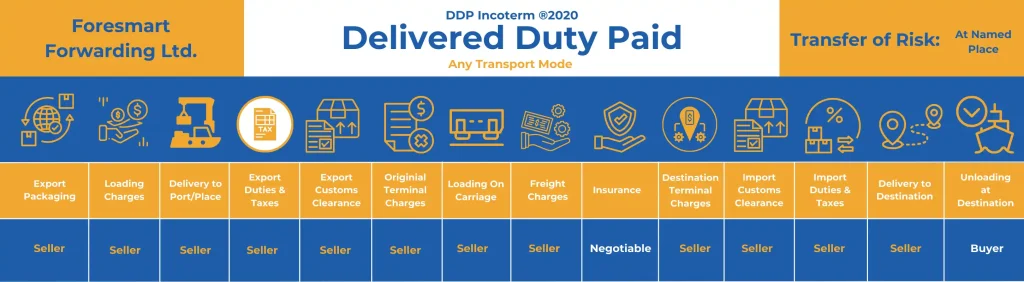
DDP stands for “Delivered Duty Paid.” If we talk about DDP shipping, the seller is responsible for getting the goods delivered to the buyer’s address. The seller also handles import taxes, customs duties, and other fees.
This includes:
-
Paying to ship the goods to the buyer’s country.
-
Buying insurance (negotiable).
-
Dealing with any taxes and customs fees.
The risk is transferred from the seller to the buyer when goods arrive at the place designated by the buyer. The buyer only pays for the cost of the goods and the final unloading fees.
DDP Incoterms takes a ton of hassle away from buyers. On the other side, sellers take on more upfront costs and tasks compared to other shipping terms.
Why do sellers use DDP Incoterms?
Many sellers in China use DDP Incoterms a lot. This is partly because handling the shipping across borders saves the buyer hassle and may give the seller an edge over competitors. These sellers often build strong relationships with local freight forwarders, enabling them to secure more competitive shipping quotes. Overall, using DDP Incoterms can help them increase sales.
What fees come with DDP shipping terms?
As part of the DDP shipping term, sellers have to pay specifically for:
-
Transport charges to send the goods.
-
Insurance on the items while moving (negotiable).
-
Any taxes or duties to import.
-
Fees to clear customs and do paperwork.
-
Delivery from the port to the final place.
Sellers include these costs in their DDP pricing so the quote buyers get will be expensive compared to freight collect Incoterms like EXW or FOB.
Difference between DDU and DDP shipping responsibilities
DDU and DDP sound alike, but they have very different responsibilities for import customs. DDU stands for “Delivered Duty Unpaid.” DDU Incoterms are one of the old Incoterms. Although the International Chamber of Commerce has replaced DDU with the term Delivered-at-Place (DAP), DDU is still frequently used in transportation contracts.
With DDU Incoterms:
-
The seller pays to send the goods from their country to the buyer’s country, just like DDP shipping.
-
Normally, the sellerbuys insurance to cover loss or damage during shipping, but this negotiable.
-
The buyer must pay all taxes, customs duties, or other customs fees.
With DDU, the seller ships the goods, but the buyer must pay taxes or duties. While with DDP Incoterms, the seller takes care of almost everything! So that is the big difference in responsibility between DDU and DDP terms.
DAP vs DDP Incoterms
As we mentioned before, DAP is another form of DDU Incoterms. DAP stands for “Delivered at Place.” DAP shipping requires the seller to bring the goods to the buyer’s country, but the buyer handles customs and duties.
DDP Incoterms are special because the seller pays all the import and delivery fees except unloading fees. This makes things much easier for buyers, but it costs more for sellers.
Should businesses use DDP Incoterms?
DDP shipping places a lot of duty on sellers. But buyers like DDP Incoterms because they don’t need to worry about shipping or customs. DDP Incoterms work best for sellers and buyers who already have a strong relationship.
New buyers and sellers may want to start with lower-cost choices like DAP or DDU shipping. Once they build trust over time, they can upgrade to DDP shipping terms.
Either way, understanding Incoterms is vital for smooth shipping between trade partners. Make sure both sides know their duties to prevent problems!
How to Successfully Manage DDP Shipments?
Now that we’ve covered the basics of DDP Incoterms, let’s look at how sellers can run DDP shipments successfully. Effectively handling duties is key to positive buyer experiences. Even if you are a buyer, learning how to handle duties helps you understand the whole process.
Classify goods correctly
Import taxes and duties often depend on the type of goods shipped. That’s why properly classifying items is critical under DDP Incoterms.
Sellers need to:
-
Accurately describe products to customs authorities.
-
-
Classify goods under the proper duty rate categories.
Misclassifications can lead to penalties, delays, or extra duties. Sellers should work closely with experienced freight forwarders to ensure everything is coded correctly right from the start.
File necessary export & import documentation
DDP sellers must prepare certain paperwork both when goods leave their country and when they enter the other country designated by buyers.
For exports, common documents include:
-
Commercial invoices
-
Packing lists
-
Certificates of origin
-
Bill of lading
-
Import customs declarations
-
Customs valuation forms
For imports, documents include:
-
Import customs declarations
-
Duty payment receipts
-
Import licenses if necessary
-
Other entry forms
Having complete paperwork proves goods comply with regulations.
Arrange final delivery
The seller’s DDP responsibilities include delivering items from the port to the buyer’s premises.
Their freight forwarder should handle on-time delivery. Attention, the fees for unloading goods to the final address are covered by the buyer.
Conclusion
Finding a trusted seller and freight forwarder is important. While juggling export and import requirements, sellers must sweat the small stuff for DDP shipping. From classification to documentation to final delivery, staying on top of details ensures a successful DDP shipment and better cash flow for business.
Common DDP Shipping Questions
Is DDP Shipping safe?
DDP shipping terms may not be enough safe for sellers. Sellers pay big fees upfront but don’t know the exact amount before shipping. If fees are higher than expected due to various issues occurring in international shipping, they make less profit.
Who decides on DDP shipping?
Both the buyer and seller must agree during contract negotiations. Sellers may offer DDP terms, or buyers can demand DDP terms.
Can sellers insure goods with DDP Incoterms?
Yes, it is recommended for the seller to buy insurance in case goods are damaged or lost. But this is negotiable. Buyers can pay the insurance as well.
How can sellers lower DDP risks?
They can protect themselves by:
-
Checking if buyers can pay before shipping.
-
Purchasing cargo insurance.
-
Working with reliable customs brokers and freight forwarders.
-
Only using DDP Incoterms with buyers they trust.