
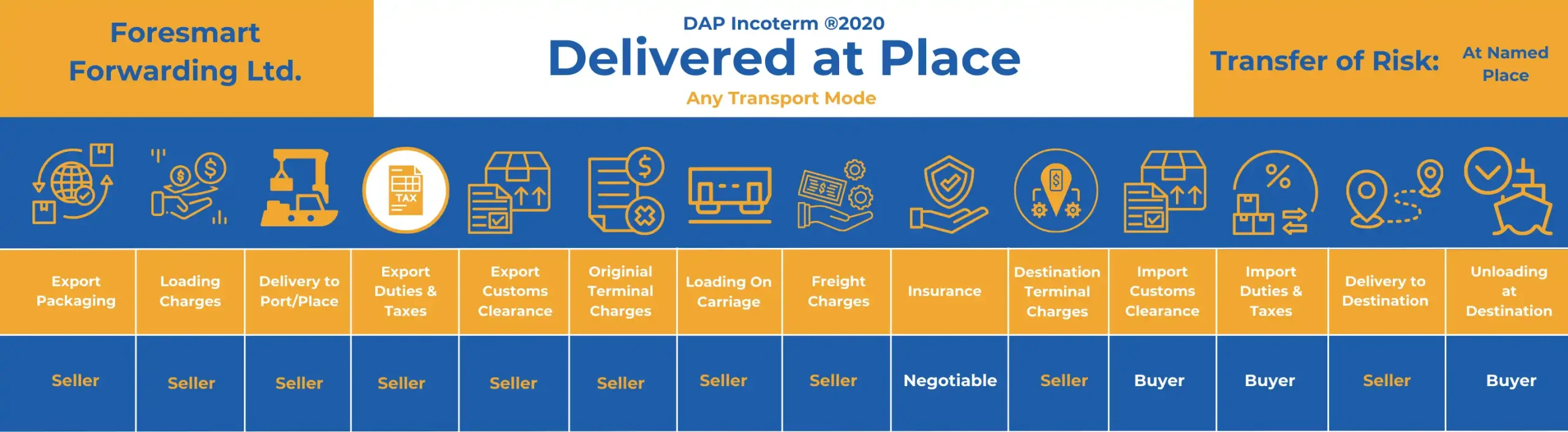
What is DAP in shipping? DAP, short for “Delivered at Place,” is an international shipping term that clearly defines where the seller’s transportation duties end and the buyer’s begin. As one of 11 Incoterms or International Commercial Terms published by the International Chamber of Commerce (ICC), DAP shipping terms provide rules for allocating costs and tasks between buyers and sellers.
In this comprehensive guide, we’ll break down key aspects of DAP Incoterms and DAP shipping, including:
What are DAP Incoterms?
DAP is an Incoterm that stands for “Delivered at Place.” The “place” referred to here is the destination named by the buyer, usually their warehouse, distribution center, or manufacturing plant. With DAP shipping terms, the seller fulfills their delivery obligation by getting the goods to the buyer’s named place, which is ready for unloading.
The key thing that differentiates DAP from other Incoterms is that the buyer takes responsibility for goods once they arrive at the agreed place of delivery. The seller does not clear goods through import customs or handle import duties and taxes. We’ll explore more details shortly.
Businesses worldwide use DAP as a standardized shipping term. First published in the Incoterms 1990 rules from the ICC, DAP shipping terms continue to be revised, most recently in Incoterms 2020.
DAP Incoterms meaning: key seller & buyer obligations
Determining the meaning of DAP Incoterms requires looking at the specific duties it creates for sellers and buyers:
Seller Responsibilities
-
Arrange and pay for transportation to bring goods to the named place
-
Cover loading costs at the origin
-
Manage transit formalities like customs documentation
-
Obtain export clearance if required
Buyer Responsibilities
-
Identify the receiving point for goods (warehouse, factory, etc.)
-
Handle clearance through import customs
-
Pay duties, taxes, and other import costs
-
Arrange and pay for unloading goods at the named place
-
Take the risk after goods are delivered to the named place
So, in essence, the seller handles logistics until goods are unloaded at the destination, while the buyer takes over from there.
DAP Incoterms 2020 vs. 2010 rules
The ICC reviews Incoterms every 10 years and makes changes based on evolving global trade needs. Understanding variations between Incoterms versions prevents confusion.
On the whole, DAP 2020 rules stayed consistent with 2010 guidelines. Two subtle updates added clarity:
-
Further precision around exactly where sellers’ duty to “deliver goods” ends – specifically the point goods are “unloaded at the place of destination.”
-
Clarification that export/import clearance formalities remain separate responsibilities – export clearance is handled by the seller, and import clearance is handled by the buyer.
Beyond these tweaks, DAP Incoterms 2010 and 2020 largely align. Those familiar with past DAP guidelines quickly adapt to current expectations. Updating commercial agreements, transportation contracts, and invoices to cite “2020 DAP Incoterms” keeps all parties synced on the latest obligations.
When should businesses use DAP shipping terms?
There are a few situations where DAP Incoterms present attractive benefits:
Buyer has import expertise – Since DAP makes buyers responsible for clearance and paying duties, it suits buyers who are highly capable of import processes. They save costs by not paying sellers to handle compliance.
No customs clearance needed – If customs clearance is not required between the import and export countries, such as in the case of trade between EU countries, using DAP terms is very suitable for the buyer.
Lower shipping costs – With fewer seller duties compared to terms like DDP, DAP pricing is often cheaper, and all else is equal. Savings pass to buyers.
Reduced risks for sellers – By limiting seller obligations to getting goods to the named place, risks linked to import delays, penalties, etc. beyond that point fall to buyers. Liability transfer is clearer.
For sellers new to a trading country or product, DAP may present excess risk. However, for established exporters shipping to capable importers, DAP offers an appealing combination of speed and cost savings.
Can DAP Incoterms be used for domestic shipping?
Yes, DAP terms can also govern shipments between partners located in the same country. International borders create added complexities around customs and duties, but DAP’s core seller/buyer split of transportation duties still provides value even on domestic routes.
Many domestic buyers and sellers leverage DAP terms rather than rely on vague shipping codes on invoices or delivery orders. Consistency helps prevent misunderstandings down the road.
What’s the difference between DAP and DDP?
Since DAP and DDP sound similar, buyers and sellers often ponder the difference:
-
With DAP shipping terms, the buyer pays import duties and taxes.
-
With DDP shipping terms, the seller handles duties and taxes.
This single distinction creates big impacts on risk and cost allocation. DAP provides more predictable liability for sellers, while DDP may bring buyers faster clearance and delivery.
Deciding between DAP and DDP shipping comes down to the buyer’s and seller’s relative appetite and capacity for handling imports. Newer partners may prefer DAP terms at first.
What risks do buyers face with DAP Incoterms?
While sellers take on more operational risks under DAP terms compared to Ex Works or other origin-focused Incoterms, buyers also face liability once goods arrive at their destination:
Delays/demurrage costs – If buyers don’t arrange customs clearance in time, storage fees can pile up at ports or warehouses.
Non-compliance fines – Buyers must understand import regulations to clear shipments properly upon arrival.
Currency swings – Fluctuations during transit can impact buyers’ outlay if paying duties in foreign currencies.
Proper insurance coverage, coordination with customs brokers, and prompt goods handling help buyers control risks under DAP shipping agreements.
Frequently asked questions about DAP shipping
Let’s recap some key questions businesses have regarding DAP Incoterms:
Who pays for cargo insurance under DAP shipping terms?
That is negotiable. In most cases, the seller pays for cargo insurance – they carry responsibility until delivery at the named place.
Who pays freight in DAP incoterms?
The seller books freight transportation and pays associated costs to the point of delivery at the destination.
Which party pays the duties for DAP shipments?
The buyer pays import tariffs and complies with customs at the destination.
Can buyers refuse goods under DAP terms?
Yes, if goods are damaged or do not meet agreed specifications, buyers can reject them upon delivery without penalty.
Do sellers need to unload shipments at the destination under DAP shipping terms?
No, sellers only make goods available for unloading. Buyers provide equipment and labor needed to offload goods.
What DAP documentation must sellers provide?
Typical export papers (commercial invoice, packing list, etc.) plus delivery order showing place of destination.
Conclusion
DAP makes an appropriate standard shipping agreement. As we’ve covered, DAP strikes a specific balance between seller and buyer duties that suits some supply chain scenarios well – especially for established import/export partners, where buyers have solid customs expertise and sellers seek to limit long-term liability over shipments.