Do you need international equipment logistics for your business or new project? Sourcing equipment from local providers might be easy, but if you are looking into cross-border equipment shipping, the process is no walk in the park.
Getting through customs clearance, legal procedures, documentation, and other complicated steps is enough to intimidate a new shipper. And most importantly, if your equipment is too large to fit the standard shipping container, the real trouble starts then.
Don’t worry; we are here to guide you through international equipment logistics so your significant investment can safely reach its destination.
Transportation options for international equipment logistics
Your shipping provider will offer you different options for your international equipment logistics, like sea freight container shipping, air freight, road transport, etc. But it all depends on your equipment. If your equipment can be disassembled, it can be transported via any of the modes mentioned above.
You can consolidate it and send it via LCL shipping, or you can hire a full container if your equipment is in bulk. However, if your equipment can’t be disassembled and can not fit into the standard 20’ or 40’ container (watch the video to learn container types and sizes), it needs specialized transportation options designed for oversized cargo.
Here are the options if you are transporting heavy and bulky equipment.
Roll-on/roll-off (Ro/Ro)
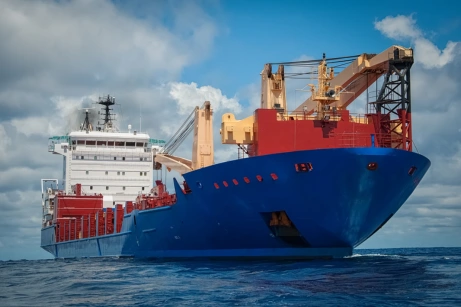
The excellent option is to put it there if your equipment is self-propelled, like if it has wheels or treads. In this shipment method, your international equipment logistics provider will drive equipment to the roll-on/roll-off vessel you choose.
Then upon arriving at the destination, your equipment will be driven off from the vessel or ship.
In other scenarios, when your equipment is not self-propelled, a container will be used to load your oversized equipment. Then, the shipping company may roll the container below deck, where it will be safe from the elements.
Lift-on/lift-off (Lo/Lo)
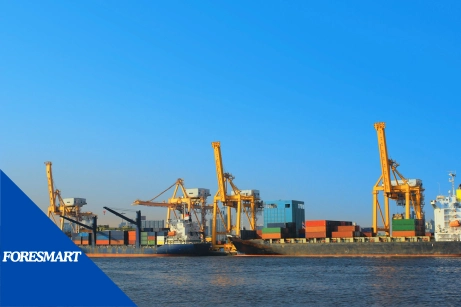
Some shipping companies do not have hull storage, so they turn to Lo/Lo. In this shipment method, an onboard crane is used to lift on and off your equipment. You might have seen the container hanging from huge cranes at shipping yards, whether on TV, in movies, or if you’ve been near one in real life.
Flat Rack Shipping
In this type of international equipment logistics, your oversized cargo is placed in a container. However, these containers are not like standard ones with 4 walls and a roof. Instead, they only have two walls or the roof is missing to accommodate the oversized equipment.
Check Flat Rack Container Dimensions
Detailed process for international equipment logistics
Now you know what options you have to ship your oversized equipment, here is a step-by-step guide to go through the shipment process in the right way. In the current scenario, we will be discussing the process when you ship your equipment abroad.
A thorough check
Before you ship your equipment internationally, make sure it’s spot on. There should be no leaks or spills, or the items you ship with so much hard work may be returned back by your customers or the shipping companies after customs inspections.
Secure loose parts
If your equipment involves bolts and movable parts, make sure the bolts are secure and tight. If there is any loose bolt left, it can damage your equipment and risk others’ equipment on the same vessel.
Protect fragile components
If your equipment has any delicate parts like glass, you need to secure them properly. But how? Padding or cushioning the material can help to protect those delicate parts from bumps or vibrations.
Mind the fluids
If your equipment contains any fuel or fluid that is not necessary during the shipment, try to drain it off. Doing this prevents the risks of spills and acts in compliance with shipping regulations and safety standards.
Measure and document
Another important step before sending your shipment is to measure the accurate size and weight of your equipment. Besides, take photographs of all the equipment you are sending abroad. This documentation is really helpful for custom clearance and insurance claims.
Choose a freight forwarder
Another key element of international equipment logistics is your freight forwarder. These experienced individuals or companies can get you through the scary part of international heavy equipment shipping with utmost ease. Regarding regulations, shipping standards of host and destination countries, reputable shipping companies, etc., you don’t need to worry about these complicated tasks when you have a good freight forwarder like Foresmart at your service.
Get quotes
It’s great to get multiple quotes for your heavy machine shipping. Your freight forwarder also has networks in the shipping industry, so they can help you get discounted offers.
Insure your equipment
You don’t have to worry much when you have a reliable shipping company and a freight forwarder at your side. But, anything can go wrong especially when you are sending your shipment across miles of ocean. So, you should insure your equipment to ensure your investment is secured.
It’s also wise to make sure every detail on your paperwork is correct. Missing or incorrect documents can lead to delays and headaches. So, you need to prepare all necessary paperwork for customs to help avoid any hold-ups.
Use secure packaging
For heavy equipment shipping via flat racks or open-top containers, you need to ensure your equipment is safely packaged. Plus, you must know the packaging regulations to avoid your equipment getting refused at the port.
Final words
International shipping logistics require careful planning in advance and a thoughtful approach. Work with an experienced freight forwarder for your international equipment logistics needs for the best outcomes.
FAQs
What documents do I need for international equipment logistics?
You are most likely to provide these documents before sending your equipment abroad:
-
A certificate of title
-
A packing list
-
Identification of both the consignee and shipper
-
Dimensions and specifications of your equipment
How to prepare my equipment before sending it internationally?
Different ports have different requirements, but one basic requirement at international ports is that your equipment must be clean and free of dust and leaks.
How do you save money in international equipment logistics?
If your equipment does not fit the standard container, you will have to pay more. However, if possible, disassemble the parts and detach the accessories to fit your equipment into the standard container.