
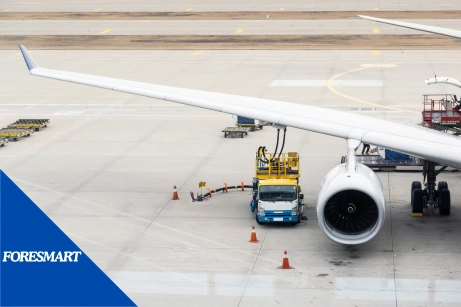
When the same thing can be delivered in a few hours by air, why do some people choose ships and trucks that take several days? The short answer: air freight is expensive. It’s 12 to 16 times more costly than sea freight shipment and 4 to 5 times more than road transport.
So what goes into air freight cost? That’s what we are going to discuss in this article. Here is why air freight is so expensive than other forms of transportation.
Fuel, space, and maintenance
Let’s first consider the factors related to the airplane itself.
Fuel Costs
Airplanes are thirsty machines. They consume a significant amount of fuel, which is one of the biggest expenses for airlines. Now you say, ships also consume fuel and so do the trucks. Then how can fuel justify the price?
The reason is the type of fuel and the amount of fuel consumed. Airplanes use kerosene as a source of fuel while ships use bunker oil. And the kerosene is quite costlier than the fuel used in ships.
Besides, the fuel per mile consumed in air freight is more than the ocean cargo. In the case of sea freight, the fuel only needs to move the ship forward, and the ship’s design uses water to keep it afloat. In contrast, airplanes need energy not just to move forward but also to generate a huge amount of lift to stay in the air.
That’s why fuel costs 40 percent of an airline’s operating costs. Another thing is the price of jet fuel keeps fluctuating. Airlines may adjust their air freight costs based on global oil and gas markets.
Fuel eats the biggest piece of cake in your air freight cost, and it’s not the only one. Space is another factor that justifies the cost of air shipment.
Less Space
The second reason why air freight costs are higher than the ocean is less space. For cargo ships, one trip can carry all the goods at once. But with air freight, you often need two or three flights to transport the same amount of cargo. Less space can also drive up prices, due to an increase in demand.
Infrastructure and Maintenance
Unlike trucks, every single component in a plane must undergo rigorous checks. You can’t just use a cheap part meant for vehicles in a plane; it has to be certified for aviation use.
A good rule of thumb is to take the cost of a similar car part and add a zero to the end. And, of course, the maintenance of such a costly body takes a lot of money, too. This adds to the overall operating cost of a plane, which in turn is reflected in air freight charges.
Other factors affecting your air freight cost
So, these are a few facts that justify the high air freight expense from the perspective of the airplane itself. However, there are still other external factors that collectively influence air freight rates. If you are planning to send shipment via air, you must know about these factors to save cost.
Weight and Dimension
The biggest challenge for airline companies is the limited capacity of the airplane. So, they need to optimize the space for better returns. If your goods are heavy or bulky, you will have to pay more for the shipment. Air freight is charged based on weight, which is assessed using density ratios, so the cargo volume matters as well.
Related Reading: How to Calculate Chargeable Weight for Air Freight
Distance and Route
Another obvious factor is distance. The longer the travel time, the higher the fuel consumption. This means subsequently higher air freight costs.
Besides, the selected route can also make a difference. If the route is common and competitive, this might charge less. On the other hand, if the carrier has to pass through uncommon and distant lanes, a high air freight cost may be incurred.
Commodity Type
Besides the weight and distance, what you are actually going to send takes a big bite of your air freight cost. If your goods require high security, specialized loading, or certified packaging, it will of course, reflect in your air freight cost.
For example, if it’s high-value electronics, the loading, unloading, and consolidation would be more meticulous. Similarly, if your goods are perishable, say fruits and vegetables, the air carrier must be equipped with refrigerators and other specialized monitoring equipment. This also incurs higher fees.
Shipment Type
Just like LCL and FCL in sea freight, your shipment type decides your air freight cost, too. If you are using the entire plane for your goods, it will come at a premium. However, if your goods are small and consolidated with other packages, it’s an economical option.
Season
Even if you carefully plan these factors in your air fright budget, you still can’t decide the final price without taking seasonal variations into account. If you are using air freight in the peak holiday season, you will meet with really high air freight costs.
The reason is obvious: the demands get high, and businesses compete for limited space. This is reflected in high air freight costs later on.
Add ons
Additional charges, such as handling fees, air freight insurance costs, air freight storage charges, specialized labeling for hazardous equipment, customs clearance assistance, etc. need to be taken into consideration as well.
You should know that there is no standard answer for international freight. Unexpected situations may occur at any time. We recommend you find a reliable freight forwarder like Foresmart to deal with your shipment and help you find the most suitable price.
Final Words
Air freight cost is a big deterrent for small businesses. However, if your goods are time-critical, you have to opt for air freight. The speed and efficiency of this transportation mode really justify the air freight cost.
FAQs
Is air freight more expensive than any other transportation mode?
Yes, air freight is more expensive than sea, road, or rail shipment due to the high fuel and operating costs involved.
How is air freight cost calculated?
Air freight cost is calculated based on shipment weight, destination, type of goods, time of year, etc.
How to reduce air freight costs?
You can try to reduce air freight costs by packaging compression, route optimization, avoiding peak season, and working with experienced freight forwarders.