
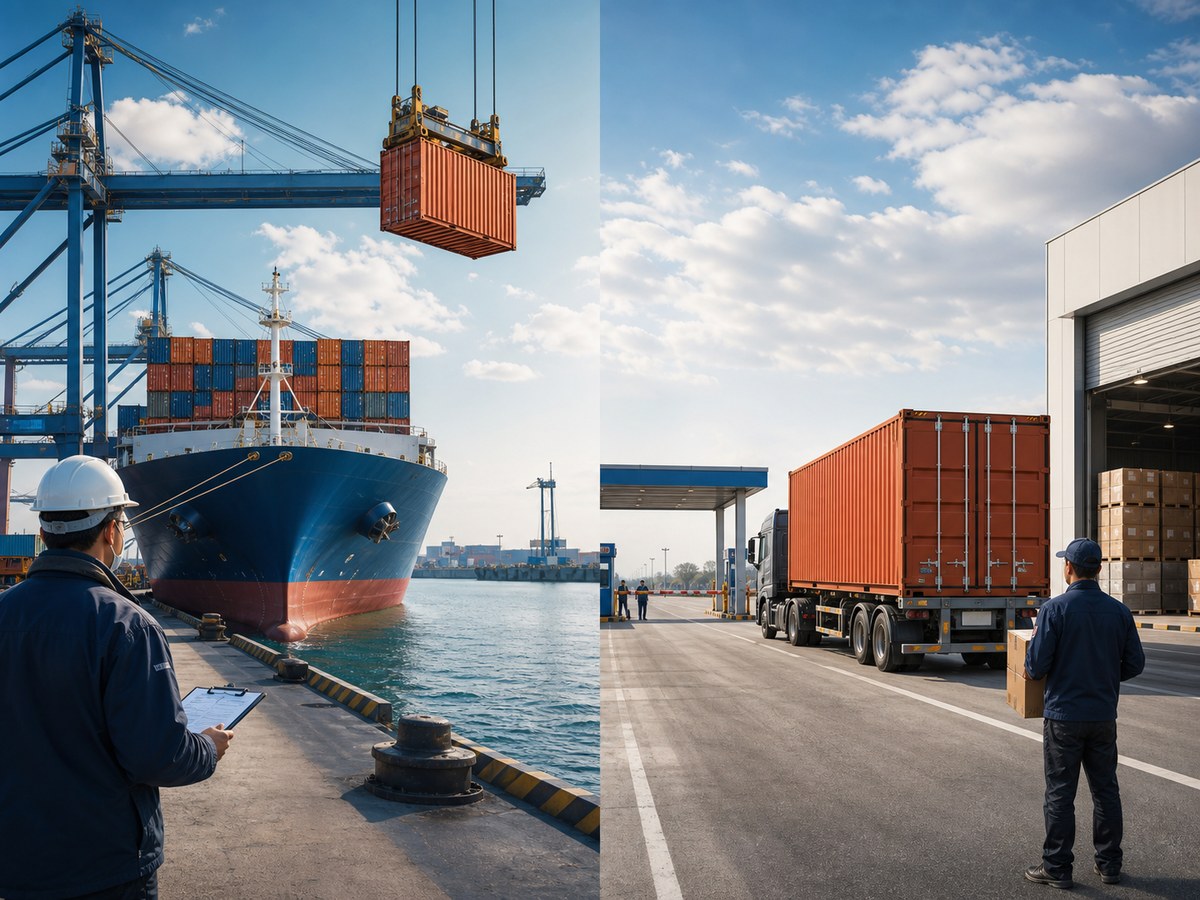
FOB leaves the buyer in charge of main carriage, import clearance, and destination costs after the goods go on board at the named port. DDP makes the seller responsible for carriage, import clearance, duties, and applicable taxes to the named destination. The right term depends on who can manage the destination process lawfully and control the full landed cost. A lower FOB goods price can still cost more after freight, entry, and delivery bills arrive.
How Do FOB and DDP Affect Total Landed Cost?
FOB separates the goods price from buyer-managed transport and import costs. DDP places most transport and import costs in the seller’s delivery price. Compare both terms against the same cargo, named place, delivery service, and shipment date.
FOB and DDP landed cost comparison](https://foresmart.com/wp-content/uploads/2026/08/fob-vs-ddp-landed-cost-comparison-1024x768-1.jpg)
Origin Charges
Under FOB, the seller pays the cost to deliver the goods on board the vessel at the named port of shipment. Under DDP, the seller also pays origin handling because delivery occurs at the named destination. The purchase order should identify cargo-specific origin work, such as nonstandard packing, inspection, or pre-carriage. The purchase order should also state any charge outside the agreed origin scope.
Main Freight and Destination Charges
Under FOB, the buyer appoints the carrier or forwarder and pays the main freight. The buyer also manages destination handling. The FOB Incoterms rule applies only to sea or inland waterway transport. Risk transfers when the goods are on board the vessel at the named port.
Under DDP, the seller contracts and pays for carriage to the named destination. The named place must be specific enough to show where the seller’s delivery obligation ends. “DDP United States” does not identify the delivery point, final delivery scope, or site restrictions that affect the transport plan.
Duties, Taxes, and Final Delivery
With FOB, the buyer handles import clearance and pays import duties, taxes, brokerage, and delivery costs after arrival. With DDP, the seller must complete import formalities and bear the duties and applicable taxes required to deliver at the named place. The DDP shipping terms must show the exact destination and state how the seller priced that responsibility.
A DDP price may include duties and taxes, but those charges still form part of the landed cost. Final unloading also needs a written answer because the buyer normally takes delivery with the goods ready for unloading.
Landed Cost Comparison
Use a like-for-like calculation. A FOB quote can look lower because more expenses appear later as freight, arrival, customs, and delivery bills. A DDP quote can be easier to approve when the seller includes those expenses in the selling price. The comparison only works when the named delivery scope is complete.
|
Cost area |
FOB responsibility |
DDP responsibility |
What to confirm |
|---|---|---|---|
|
Origin handling and export clearance |
Seller |
Seller |
Port, loading point, nonstandard handling, and export documents |
|
Main freight |
Buyer |
Seller |
Mode, carrier service, route, and delivery point |
|
Destination handling |
Buyer |
Seller when needed to complete delivery |
Terminal, warehouse, free time, and release scope |
|
Import clearance, duty, and applicable tax |
Buyer |
Seller |
Importer setup, broker, tax treatment, and payment process |
|
Final delivery and unloading |
Buyer arranges both |
Seller delivers to the named place; buyer normally unloads |
Address, access conditions, appointment, and unloading cost |
For FOB, add the goods price to the buyer’s freight, destination, import, and final delivery costs. For DDP, compare the complete delivery price with the FOB total. Add a buyer cost only when the contract assigns it to the buyer, such as unloading outside the transport contract. This calculation does not create a fixed charge model.
How Do FOB and DDP Divide Customs Responsibilities?
FOB and DDP customs responsibility](https://foresmart.com/wp-content/uploads/2026/08/fob-vs-ddp-customs-responsibility-1024x768-1.jpg)
FOB gives the buyer the contractual import responsibility. DDP gives the seller the contractual import obligation. Local customs law still decides who may make the entry. Both terms need a named place, accurate documents, and a party that can meet the destination country’s import rules.
Seller Export Clearance
Both FOB and DDP require the seller to clear the goods for export when export clearance applies. Under FOB, the seller also delivers the goods on board the buyer-nominated vessel at the named port. The commercial invoice, packing list, product description, value, origin data, and export documents should match before booking.
Buyer Import Clearance with FOB
With FOB, the buyer arranges the import broker, funds import charges, and coordinates release and final delivery. An appointed China freight forwarder can coordinate physical transport and document handoffs. Forwarder support does not replace the buyer’s importer setup, broker authorization, or entry data.
Seller Import Clearance with DDP
With DDP, the seller must complete import formalities and pay import charges. The seller must also deliver the goods to the named place. A seller may use a broker or logistics provider, but delegation does not solve a legal or tax eligibility problem. If the seller cannot complete import clearance, the parties should use a term that leaves import clearance with the buyer.
When a DDP quote includes door-to-door shipping, the written scope should identify the delivery address, receiving conditions, access limits, and unloading party. A delivery promise without those details can leave a practical gap after customs release.
Importer of Record and Entry Documents
An Incoterm does not decide who can legally act as the importer of record. For U.S. imports, settle the importer of record role, broker authorization, customs bond, and document ownership before cargo leaves China. DDP does not erase those entry requirements.
The document file should match the commercial sale and physical shipment. Review the commercial invoice, packing list, product description, classification, declared value, country of origin, permits, and delivery details. A broker can file an entry, but the filing depends on accurate information from the responsible parties.
When Should Importers Choose FOB or DDP?
Choose FOB when the buyer can manage destination logistics and wants that control. Choose DDP only when the seller can lawfully complete import clearance and gives a complete written delivery scope. Neither term is automatically less expensive.
Keeping Logistics Control with FOB
FOB fits importers that already have a preferred freight provider and a clear customs process. It also suits buyers with enough volume to manage ocean freight and destination bills. The buyer can select the carrier, compare freight options, combine supplier orders when practical, and control final delivery timing.
FOB also puts the buyer in charge when a port delay, document correction, or destination fee needs action. That control has a cost. The buyer needs staff or service providers to manage booking, import entry, cargo release, and delivery. The buyer cannot wait for the seller to resolve those issues.
Confirming Seller Eligibility for DDP
Use DDP only after the seller confirms the destination-country import setup in writing. The buyer should confirm:
- the full delivery address and any warehouse, residential, or limited-access conditions;
- the party that will make the import entry and authorize the broker;
- the duties, taxes, brokerage charges, and final delivery services included in the price;
- whether the receiver must provide documents, an appointment, or unloading equipment.
DDP can reduce the buyer’s day-to-day coordination work. The buyer has less control over the carrier, broker, and cost breakdown. A seller that cannot explain those points may not have a workable DDP setup for that destination.
Assessing Shipment Volume and Frequency
FOB often suits recurring ocean shipments because the buyer can build a repeatable freight, customs, and delivery process. The buyer may also combine orders under one freight plan when the cargo, timing, and documents permit it. DDP can suit a one-time shipment or a buyer that needs a seller-managed delivery scope and lacks destination logistics resources.
Shipment volume alone does not decide the term. A frequent importer can choose DDP for a defined lane, and a small importer can choose FOB with a capable provider. Choose the term based on who can manage the full landed cost most effectively.
Reviewing Quote and Purchase Order Terms
FOB and DDP purchase order review](https://foresmart.com/wp-content/uploads/2026/08/fob-vs-ddp-purchase-order-check-1024x768-1.jpg)
In the purchase order, write FOB [named port of shipment] Incoterms® 2020 or DDP [full named place of destination] Incoterms® 2020. The term needs the version and named location to set a usable handover point.
The quote and purchase order should use the same legal party names, cargo description, shipment mode, and delivery point. They should also match on customs role, included charges, and unloading scope. A shared freight glossary helps purchasing, logistics, and receiving teams use the same meaning for charges and release terms.
FAQs
Does FOB Apply to Air Freight?
FOB does not apply to air freight under Incoterms® 2020. Parties use FOB only for sea and inland waterway transport. For air cargo, parties usually use FCA and name the delivery point. FCA also suits containerized cargo handed to a carrier before vessel loading.
Does DDP Require the Seller to Buy Cargo Insurance?
DDP does not require the seller to buy cargo insurance for the buyer. The seller bears transport risk until delivery at the named place, so the seller may insure that risk. The sales contract should state any insurance requirement, policy scope, and claims process separately.
Does DDP Include Unloading at the Named Destination?
DDP does not require the seller to unload the goods. The seller delivers the goods on the arriving vehicle, ready for unloading. The buyer bears the unloading risk and may bear the unloading cost when the seller’s transport contract does not include it.
Can a Business Reclaim Import VAT on a DDP Shipment?
A business may reclaim import VAT only when destination-country tax rules allow it and the business holds the required tax and customs documents. DDP does not create a VAT recovery right. Confirm the importer, invoice, entry record, and tax treatment before using DDP where VAT recovery matters.
Can a DDP Shipment Go Directly to an Amazon FBA Warehouse?
A DDP shipment can go directly to an Amazon FBA warehouse when the importer setup and receiver requirements are ready. Confirm product compliance, carton labels, pallet requirements, booking rules, and the receiving appointment before cargo ships. DDP alone does not satisfy Amazon FBA receiving requirements or guarantee an appointment.