
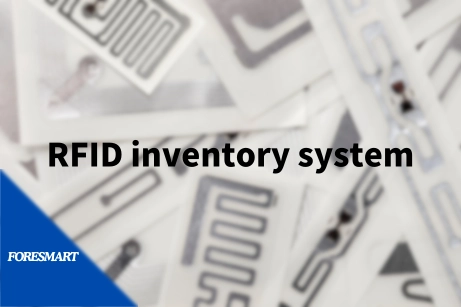
RFID is transforming the way inventory is managed and located by businesses. This is unlike barcodes, which require manual scanning; RFID tags identify and track items using radio waves, making inventory management more accurate and faster.
In this article, we will go through how the RFID inventory system assists you with warehouse management and supply chain traceability. Let’s get started!
What Is RFID Technology?
RFID (Radio Frequency Identification) uses tags with a small chip and antenna to store and transmit data wirelessly. A reader transmits radio waves, and when a tag approaches it, it responds with its information. RFID allows multiple items to be scanned at once without line of sight, enabling fast, contactless tracking.
The RFID tags are either passive or active. The passive tags lack the battery and are powered by the reader signal. Active tags contain a battery and are able to transmit signals further.
There are also special tags that are designed to perform properly on metal or in harsh environments.
How the RFID Inventory System Works?
RFID readers are attached in strategic locations in warehouses or stores, such as doors, loading areas, or storage shelves. As items with tags pass by, the reader detects their signals. The RFID inventory system provides businesses with real-time information about the stock: what was received, what was issued, and the whereabouts of items.
Benefits of an RFID Inventory System
RFID tags for inventory give importers stronger control and visibility than traditional barcodes. For importers handling bonded goods, cold storage, or metal racking, RFID performs better. Here’s why:
Operational Speed
Barcodes require line-of-sight scanning and are read one item at a time, which slows down receiving and counting. RFID, by contrast, can read many tags simultaneously without direct visibility. It is useful for container unloading, bulk stock counts, and bonded or high-value goods, where scanning items one by one with barcodes is slow and error-prone. In clothing warehouses, for example, full inventory counts take minutes rather than hours.
Accuracy and Risk-Control
Barcode labels can be easily damaged, misplaced, or scanned incorrectly, leading to documentation errors and inventory mismatches. RFID tags are more reliable in busy import environments and can trigger automatic alerts for missing items or low stock, reducing losses. It also supports customs compliance, proof of delivery, and product origin verification, and helps detect unauthorized movement or tampering.
Real-Time Visibility
Unlike the static data of a barcode, RFID automatically records time stamps at each checkpoint. It can track pallets, containers, and individual items through warehouses and during transit easily, strengthening traceability.
While barcodes are cheaper and suitable for simple operations, RFID offers importers faster processing, better accuracy, and stronger risk control.
Contact Foresmart for Inventory Solutions
RFID Integration with ERP Systems
Instead of using different systems for each department, an ERP (Enterprise Resource Planning) system can connect inventory, sales, purchasing, and accounting in one platform. When RFID is integrated with ERP, inventory data is updated automatically as goods are received, moved, or shipped. This eliminates manual data entry, reduces errors, and speeds up order processing.
In import and distribution operations, RFID tags are commonly placed on cartons, pallets, or containers, with readers installed at receiving docks, storage zones, and shipping doors. As goods move through the warehouse, stock levels in the ERP system update in real time, giving importers full visibility across locations.
Meanwhile, to be successful, RFID–ERP integration requires compatible software, proper system setup, and trained warehouse staff.
IoT and RFID
IoT (Internet of Things) refers to connected devices that collect and share data. IoT-enabled RFID tags (sometimes called sensor RFID tags) have built-in sensors that monitor things like temperature, humidity, or movement. It is especially valuable for temperature-sensitive products such as pharmaceuticals, vaccines, or chilled foods. These tags transmit data continuously to cloud systems, giving importers full visibility across containers, warehouses, and distribution points.
For example, pharmaceutical shipments can be tagged at origin. If temperatures move outside approved ranges during transit or customs clearance, the system immediately triggers alerts. This allows importers to intervene quickly.
In short, IoT-enabled RFID helps cold chain and pharmaceutical importers reduce spoilage, prevent compliance failures, and ensure product safety from origin to delivery.
Challenges and Considerations
Despite the numerous advantages of RFID, there are still certain challenges.
Cost
The initial investment for an RFID inventory system, including tags, readers, and software, can be prohibitive.
Technical Limitations
Physical obstacles like metal and liquids can interfere with RFID signals. These issues might be mitigated by selecting specialized tags and planning their placement carefully. Furthermore, RFID systems generate vast amounts of data, requiring robust software to manage it effectively.
Regulatory Compliance
Regulations governing radio frequencies vary by country. Companies must ensure their RFID systems operate on approved frequencies in their region.
Security and Privacy
Finally, there is security. Data on RFID tags must be protected to prevent unauthorized access.
How to Implement RFID in Your Inventory System
So, how to get started with an RFID inventory system? The first thing you have to do is determine your business requirements. Here are some suggestions.
Define Your Objectives
Identify the specific pain point RFID will solve, such as reducing human error in stock counts or speeding up warehouse receiving.
Select Compatible Hardware and Software
Choose tags (active or passive) and readers (handheld or fixed) that integrate seamlessly with your existing Inventory Management System (IMS) or ERP.
Run a Pilot Program
Launch the system in a controlled environment to troubleshoot interference issues or bugs before a full-scale rollout.
Scale and Optimize
Once the pilot proves successful, expand the system across your entire facility. Continuously monitor read rates and data accuracy to fine-tune the setup.
Future of RFID in Inventory and Warehouse Management
RFID stock management system has a bright future. Once equipped with AI and intelligent software, businesses can use RFID to manage stock more effectively.
AI will analyze RFID data to predict stock needs and suggest the most efficient picking routes in real-time.
Drones and robots automate inventory counts and perform 100% accurate cycle counts in minutes, reaching high shelves that would otherwise require heavy machinery.
Combining RFID with blockchain creates tamper-proof records, vital for high-value assets and anti-counterfeiting.
Conclusion
RFID inventory system is time-saving, accurate, and provides real-time stock information. With advancing technology, it is going to contribute even more to making the supply chains smarter and more reliable, giving businesses more control over their supply chain.
Frequently Asked Questions (FAQs)
How is RFID technology better than barcodes for inventory management?
RFID tags are less prone to being damaged, can read many items simultaneously, and provide accurate real-time updates. It is also helpful in automating and limiting human error.
Can RFID be integrated with any ERP or WMS (Warehouse Management System)?
Yes. The majority of the contemporary ERP and WMS systems are compatible with RFID. The selection of systems that are compatible with each other and adequate testing will result in successful integration.
Is RFID suitable for small businesses?
Yes. Small businesses can start with a pilot project in a single area and build up. There are numerous low-cost RFID and inventory management solutions in the market.
What types of items or industries benefit most from RFID in inventory management?
Industries handling high-value, perishable, or high-volume goods benefit most from an RFID inventory system. This includes healthcare, manufacturing, or food sectors. Items like pharmaceuticals, electronics, apparel, and frozen goods can be ideal candidates.
RFID tags are less prone to being damaged, can read many items simultaneously, and provide accurate real-time updates. It is also helpful in automating and limiting human error.
Yes. The majority of the contemporary ERP and WMS systems are compatible with RFID. The selection of systems that are compatible with each other and adequate testing will result in successful integration.
Yes. Small businesses can start with a pilot project in a single area and build up. There are numerous low-cost RFID and inventory management solutions in the market.
Industries handling high-value, perishable, or high-volume goods benefit most from an RFID inventory system. This includes healthcare, manufacturing, or food sectors. Items like pharmaceuticals, electronics, apparel, and frozen goods can be ideal candidates.