
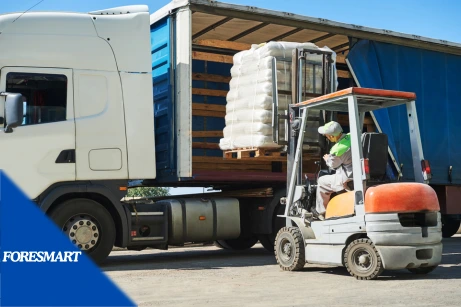
What are shipping container pallets? Shipping container pallets are important for the transportation of goods and cargo, both locally and in international supply chains since they ensure that the goods are properly handled, stored, and transported to their destination.
They are flat structures that are used when you have to support and transport your goods in a secure manner during transit. The pallets are used as a foundation for stacking as well as securing goods. Then how many pallets can fit in a 20/40-foot container?
The article below will delve into this question and explore everything you need to know about shipping container pallets, their types, dimensions, and more.
Types of Shipping Container Pallets
Shipping container pallets are of different types, depending on their material, design, and purpose. Some of the common types of shipping container pallets are below:
Wooden Pallets
These are the most traditional and commonly used pallets since they are extremely economical and robust. If damaged, any repairs can be easily done.
Softwood pallets are very lightweight and much cheaper than other wooden pallet types, however they don’t offer much durability.
The hardwood pallets are stronger in nature and are long-lasting but a little more expensive than other types.
The heat-treated pallets are specially treated in order to meet the international standards for export with respect to quarantine.
When exporting wooden pallets to countries such as shipping the United States, Canada, or Australia, fumigation is mandatory. Customs clearance at the destination port is completed with the Inspection Certificate of Fumigation. However, treated solid wood products such as painted furniture or heat-treated wood chip pallets do not require fumigation.
Plastic Pallets
They are becoming very popular because of their durability, being lightweight, and very resistant to moisture. They have designs like solid decks and open decks.
Metal Pallets
These pallets are made from either aluminum or steel and are very durable and best for heavy-duty cargo. They are widely used in pharmaceutical industries.
Composite pallets
They usually combine materials such as wood and plastic which gives off a more balanced mix of durability and affordability.
Corrugated Pallets
These pallets are built from heavy-duty cardboard and are light in weight and very cost-effective for single-use transit.
How Many Pallets Fit in a Container?
How many pallets fit in a 20′ container? And how many pallets fit in a 40’ container? In order to figure out the number of pallets that can fit into a particular container, it is necessary to know what the precise dimensions of the pallets are. Let’s explore them below:
|
Container/Truck Type |
Container Dimensions L/W/H (in m) |
Standard Pallet No. |
Standard Pallet Dimensions (in m) |
European Pallet No. |
European Pallet Dimensions (in m) |
Purpose |
|
20ft Standard |
5.9/2.35/2.39 |
10 |
1.2/1.0 |
11 |
1.2/0.8 |
Best for less volume shipments while giving space optimization. |
|
40ft Standard |
12/2.35/2.39 |
21 |
1.2/1.0 |
25 |
1.2/0.8 |
Best for medium-sized and large-sized shipments. |
|
40ft Pallet Wide |
12/2.35/2.39 |
21 |
1.2/1.0 |
30 |
1.2/0.8 |
Best for optimizing space to the maximum. |
|
45ft Standard |
13.56/2.35/2.58 |
24 |
1.2/1.0 |
27 |
1.2/0.8 |
Best for large volume shipments. |
|
45ft Pallet wide and Semi-Trailer |
13.56/2.35/2.58 |
26 |
1.2/1.0 |
33 |
1.2/0.8 |
Best for large shipments that need robust transportation material. |
How Do You Calculate How Many Pallets Fit in a Container?
Determining the number of pallets that can fit in a container is a major step when you are optimizing your shipping space. However, it is not as simple as just comparing pallet and container dimensions. You would have to take into account factors such as the type of goods that will be transported, their total weight, and how to make loading and unloading a smooth and easy process. Proper planning is a must in order to improve efficiency.
These steps may help you understand how to calculate pallet capacity:
Understand Pallet Capacity
It is essential that you identify the approximate dimensions of the pallets that you are planning to ship. For example, there is little difference between the dimensions of standard Pallets and European pallets. Moreover, it is also necessary to consider the exact height of the pallet when it is fully loaded with your goods because this will greatly impact the stacking arrangement.
Know Your Container Dimensions
You should review the inner dimensions of your container including its length, width, and height. Moreover, you should also consider variations because containers are of several dimensions such as high-cube containers that can cater to extra tall cargo because of their extra height.
Account for Space in Between Pallets
When loading pallets into the container, there must be a little space between the container pallets and the container. This will help prevent any damage to the goods as well as facilitate the loading and unloading process. It is also essential when you are transporting items that are fragile or sensitive to temperature.
Choose a Loading Pattern
You should see which loading arrangement will suit you the best according to the pallet size and the container dimensions. In straight loading, the pallets are arranged in rows whereas in pinwheel loading, the pallets are arranged in an alternative manner for space optimization. In some cases, depending on the stacking height limits and cargo stability, stacking the pallets might not be a feasible option so it is necessary to consider every aspect.
Reusable Pallets for Container Transport
After shipping your goods this time, how will you handle the used pallets? Can they be reused? Many pallets, in fact, are designed for long-term use. We will explore several aspects of reusable pallets and why they are considered an excellent choice where modern supply chains are concerned:
Cost-Effective
Even though reusable pallets are more expensive initially, because of their durability aspect, they don’t need to be replaced frequently. So in the long run, businesses are able to achieve substantial cost savings as compared to utilizing single-use pallets.
Environmental Sustainability
Reusable pallets help minimize waste by efficiently decreasing any reliance on disposable options. Reusable plastic pallets can specifically be recycled into newer pallets or other different products in their recycling phase. All this aligns with the current sustainability goals as it reduces the environmental footprint, especially on shipping operations.
Durability and Reliability
Since reusable pallets are built from plastic and metal which are robust materials, they can easily withstand heavier loads, frequent use, and harsher handling conditions. They are reliable for transporting and keeping goods from damage.
Better Hygiene
When it comes to reusable plastic container pallets, you have the added advantage of saving your goods from mold and pests and keeping them away from moisture. This is because it is extremely easy to clean as well as sanitize and it does not absorb moisture, which is why it is best for pharmaceutical and healthcare industries.
Space Efficiency
Reusable pallets generally have stackable designs, which optimizes storage as well as transport space. In turn, this decreases the overall costs that come with empty pallet returns.
Compatibility with Automation
These pallets possess very consistent dimensions and their surfaces are quite smooth which makes them compatible with systems that are automated such as conveyor belts and robotic palletizers. This increases operational efficiency while significantly decreasing the use of forklifts and manual labor.
Increased Safety
Reusable container pallets are not likely to splinter, which decreases any potential risk of workplace injuries. Reusable plastic pallets, especially with their smooth edges, increase safety.
Conclusion
When it comes to global shipping, the shipping container pallets play a major role in offering more efficient and effective solutions for the safe transportation of goods. Whether you go for wooden or plastic pallets, your choice should be based on your operational requirements as well as sustainability goals.
If you are not sure if your goods need to be palletized or what pallets you should use, consult Foresmart now for more detailed advice on shipping your cargo across borders.
FAQs
What Are Heavy-Duty Pallets for Container Shipping?
Heavy-duty pallets are specifically designed to cater to bulkier loads exceeding 1,500 kg. These pallets are generally made up of hardwood, metal, and plastic to ensure maximum durability when used in harsh conditions. These pallets are most commonly used in the automotive industry.
Is a Plastic Pallet a Better Option Than a Wood Pallet?
Plastic pallets might be a better option in certain industries that require durability and hygiene. But wooden pallets will always remain a more cost-effective solution when you need pallets for short-term use. Ultimately the decision lies on your budget and cargo.