
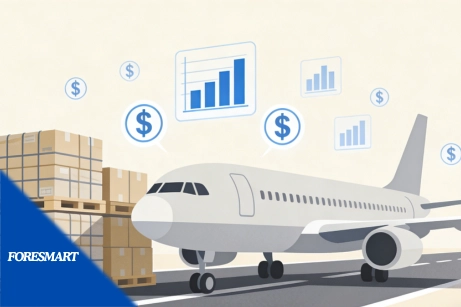
If speed matters to you, air freight can be the fastest and most reliable option. It’s faster than rail or sea, for both passengers and cargo.
Air freight is commonly used for urgent shipments or high-value items. But that speed comes with higher shipping costs and pricing factors that shippers need to understand before getting started.
In this article, we’ll explain the factors that affect air freight cost, when air freight is the best option, and how to estimate costs before shipping your goods.
Pros and Cons of Shipping Through Air
Understanding both the benefits and drawbacks of air freight can help you in deciding whether it is the best choice for your shipment or not.
Advantages of Air Freight Shipping
Fast Delivery
Aeroplanes enable your goods to move across seas and continents in just a few days.
Higher Reliability
Air freight schedules are usually more reliable and predictable than ocean freight. It has better tracking systems and fewer delays. Shipments are more likely to arrive on time, perfect for products with tight delivery windows.
Better Protection of Products
The cargo you are shipping through planes usually goes through less handling and spends less time during transit. So there is a lower risk of loss and damage.
Disadvantages of Air Freight Shipping
Higher Costs
Compared to all other shipping methods, air freight can cost several times more due to fuel charges. The air freight cost is based on both weight and size, and for bigger items, this adds up the air freight charges really quickly.
Environmental Impact
Aeroplanes produce significantly higher carbon emissions than other shipping modes. If your business is practising sustainability, this can be a major downside.
Not Best for Big or Heavy Items
Considering the costs, capacity of the plane, and flight security, air freight is an impractical choice for bulky and heavy items.
In short, air freight is ideal if speed, reliability, and product safety matter more than cost.
Air Cargo Rates Over Time
From the start of 2020, air cargo shipping rates increased drastically, nearly doubling the price, because passenger flights were limited, which reduced available cargo space. At the same time, the global demand for fast shipping increased due to disruptions in the supply chain and the rising online shopping trend. There were fewer planes and more demand, so the prices went up quickly.
Air freight is charged per kg. Before COVID-19, the international air freight rates normally ranged between $2.50 to $5.00 per kg. During the pandemic, limited space and higher demand pushed these rates much higher, often $4.00 to $8.00 per kg.
Now, as the pandemic is over and life is gradually returning to normal, the air cargo freight rates have eased. But average prices are still around $3.00 to $7.00 per kg. Planning and comparing options is important to managing your air freight cost.
Moreover, there is a difference between express air freight and standard international air freight. Express shipments are smaller, move door-to-door, and arrive within three to five days, most carried by DHL, FedEx, or UPS. You can visit their websites to learn the accurate price.
Standard air freight handles much larger shipments, involves multiple carriers, and usually requires a freight forwarder to arrange the shipping for you. For the exact air cargo cost, consult a freight forwarder like Foresmart.
How to Calculate Air Freight Cost?
Airlines charge based on chargeable weight, which is either the actual weight or volumetric (dimensional) weight, whichever is higher. To calculate volumetric weight, measure the packages’ length × width × height in meters, convert it into cubic meters, and multiply by 167.
For example, a 0.4 × 0.4 × 0.4 cm package has a volumetric weight of 10.69 kg.
If this is higher than the actual weight, you’ll be charged based on volumetric weight.
There is an even more convenient way. Many freight platforms provide an online calculation service. Simply enter the origin, destination, package size, and weight, and the calculator automatically estimates the total air freight cost, giving you a quick idea of your shipping expenses.
What Affects Your Air Freight Cost?
Besides the cargo weight and volume, air freight cost is influenced by many other factors, which we have discussed below.
Distance
Longer distances mean higher cost due to extra fuel charges.
Flight Type
Direct flights usually cost more. They are faster and involve fewer handling steps, which reduces the risk of damage or delays.
Transfer or connecting flights are cheaper because there are more routes and cargo space available, but they take longer and involve extra handling.
Type of Cargo
A special type of cargo can increase the cost. Products such as hazardous materials, temperature-sensitive medical supplies, or high-value, expensive goods that need extra handling, insurance, or safety measures cost you more.
Service Level
Delivering air freight on an urgent basis is more expensive than standard air delivery. And if you wish to deliver goods at your doorstep, the total cost can also include airport handling fees, customs brokerage, pickup and delivery services, cargo insurance, and other accessorial charges.
Fuel and Market Conditions
As oil prices change, fuel prices also change. Limited cargo space, rise in demand, rush days or global disruptions can also add to the air cargo price.
What Goods Are Generally Shipped via Air Freight?
Air freight is often chosen for products that are valuable, lightweight, and need to arrive quickly. It can be ideal for shipping products where reliability and speed matter most.
Electronics
Electronics are usually the most common items that are shipped through the air. This includes smartphones, laptops, and computer parts. Mobile and gadget companies often use air freight to meet their launch deadlines or high seasonal demand.
Apparel and Fashion Items
Clothing trends change fast, and retailers need to get new collections into their stores quickly. Air freight helps businesses avoid missed seasons and lost sales, particularly for high-value items or those that are launched as limited editions.
Medical Supplies
As many medicines are time sensitive, high in value, and require temperature control, with air freight, you can avail faster transit times and better handling.
Documents or Samples
Documents, samples, and prototypes are best shipped via air due to their small size and the urgency of their delivery. Some legal paperwork, product samples and test materials need to arrive within days and not weeks.
Seasonal Shipments
When demand for certain products spikes, such as before the Christmas holidays or during other periods of high demand, businesses use air freight to stock up quickly, ensuring their supply chains remain operational.
Frequently Asked Questions
How is air freight shipping cost calculated?
Air freight charges are based on either weight or space, whichever is greater.
Airlines use a standard rule called chargeable weight:
1 cubic meter = 167 kg
6,000 cubic centimeters = 1 kg
If your shipment is heavy and compact, you pay based on its actual weight. If your shipment is light but bulky, you pay based on the volumetric weight.
Why is air freight so expensive?
The biggest disadvantage of shipping by air is the cost. Compared to other modes of shipping, air freight can cost you around 20 times more. The main factors affecting its price are the plane’s jet fuel, maintenance, and labour fees. Click here to learn more.
What are the air freight rates per kg?
Air freight costs are measured in a price per kilogram (kg). The current international air freight rates range from $3 to $7 per kg.
Air freight charges are based on either weight or space, whichever is greater.
Airlines use a standard rule called chargeable weight:
1 cubic meter = 167 kg
6,000 cubic centimeters = 1 kg
If your shipment is heavy and compact, you pay based on its actual weight. If your shipment is light but bulky, you pay based on the volumetric weight.
The biggest disadvantage of shipping by air is the cost. Compared to other modes of shipping, air freight can cost you around 20 times more. The main factors affecting its price are the plane’s jet fuel, maintenance, and labour fees. Click here to learn more.
Air freight costs are measured in a price per kilogram (kg). The current international air freight rates range from $3 to $7 per kg.