
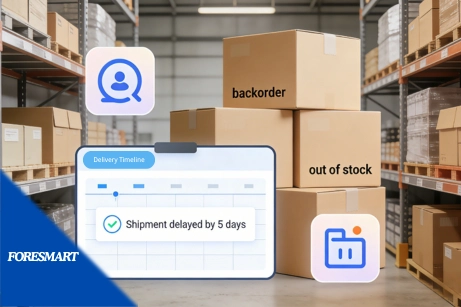
When you’re involved in online shopping, a few terms such as “back order” or “out of stock” might be at times confusing. Both sound similar, but they aren’t the same.
In this article, we’ll simply explain what backorder means, how it works, and compare it with out of stock. For both the customers and business owners, knowing the difference helps in setting clear expectations and avoiding frustration.
What Is a Backorder?
In today’s fast-paced world, customers expect products to be available right away, and they can shop without any delay. But the reality is that the inventory doesn’t always move as planned.
A backordered item refers to a product that is currently out of stock but is expected to be restocked soon. Instead of stopping sales completely, businesses allow customers to place their orders in advance, which can be delivered after a few days when new stock arrives.
Simply, the product is not available right now, but it will be available in some time.
How Backorders Work?
When a customer places an order for a backordered item, the business won’t send the goods out immediately until they stock up their inventory. The orders will be fulfilled in the sequence they were placed. Smart companies clearly mention on their site that the item is backordered and provide an expected timeline for delivery so that the customer knows what to expect.
Backorders help in avoiding lost sales during temporary stock shortages. Instead of turning customers away, sellers can backorder and keep the sale going. This strategy is particularly useful for products that are high in demand and sell out quickly.
From a customer’s point of view, backorders can be useful when they really want an item. Even if the product is out of stock, placing a backorder lets them secure it and wait, rather than searching elsewhere or risking missing out entirely.
However, backorders work well only if the communication is clear and concise. Clients need accurate updates about restocking and shipping times for their orders. Without transparency, delays can eventually lead to frustration and cancelled orders later on.
In simple terms, a backorder is a practical solution for businesses to overcome short-term gaps in stock. When managed properly, it can benefit both customers and businesses as it balances product availability with realistic delivery expectations.
What Does Out of Stock Mean?
When a product is marked “out of stock” on a business’s website, it means that it is completely unavailable for purchase. Customers cannot add it to their cart, place a preorder, or see a confirmed restock date. In this case, customers may look for the same product somewhere else, and your potential customer is lost. If we compare backorder and out of stock, the out of stock situation is more disruptive and damaging for your business.
Out-of-stock situations may happen for several different reasons, which include delayed shipping, manufacturing shortages, poor demand forecasting, or a sudden rise in customer demand. Sometimes, the issue can be temporary, such as a port congestion; other times, it might be permanent, like maybe a product is discontinued or sold only seasonally.
Being out of stock can damage businesses in several different ways. Firstly, it can lead to loss of sales. Secondly, it can create frustration, particularly if there is no clear message about when it will be restocked. If this out-of-stock situation happens frequently, over time, it can harm brand trust and make a business appear as disorganized or unreliable in most cases.
Clear communication is important in every situation. Even if the item isn’t going to restock anytime soon, mention it clearly on your business website. This will help manage expectations. Transparency shows professionalism, which can encourage your customers to return in the future rather than losing them completely to your competitors.
start your warehousing and shipping
Backorder vs. Out of Stock
Both backorder and out-of-stock mean an item is unavailable, but the difference is simple. Backorders let customers place an order and receive the item later, while out-of-stock items cannot be purchased at all.
To sum up, for customers, backorders require patience but guarantee the item. Out-of-stock items offer no such assurance. For businesses, backorders support cash flow and demand planning, while out-of-stock situations risk lost sales and reduced customer trust.
Advantages & Disadvantages of Backorders
Accepting backorders can be a smart strategy for businesses, but it also comes with certain challenges. If managed well, strong inventory management can help in even improving sales.
Pros of Backorders
Guaranteed Demand
When buyers place orders for items that aren’t in stock, it clearly shows what they want. It prevents lost sales for high-demand products.
Improved Cash Flow
Once a backorder is placed, businesses can keep the customers updated about expected delivery timelines. Moreover, in many cases, businesses take full or partial advance pre-payment, which will help them in production and improve cash flow.
Growth Potential
Businesses increase their manufacturing runs with full confidence when they know that the product is sold out already. And backorders provide valuable market insights by showing which sizes, colours, or variations are most popular.
Cons of Backorders
Order Cancellation
Longer wait times can cause customers to lose interest or switch to competitors.
Increased Customer Service Workload
Backorders can also increase customer service workload as buyers request to change or update orders. If there lack of communication, this may lead to frustration on both sides.
Potential Trust Issue
If delivery timelines are unclear or the communication is not going well, there is a trust issue. It is recommended to agree on lead times and penalties upfront.
Frequently Asked Questions (FAQs)
Is a backorder the same as out of stock?
No, they aren’t the same. Out of stock means you can’t buy the item as it’s unavailable with no clear restock date. On the other hand, a backorder means that the item is sold out now, but it will be restocked.
How long does a backorder usually take?
It largely depends on the manufacturer, supplier, and the product itself. On average, it usually takes around 14 to 21 days to fulfil a backorder. However, in some cases, it can also take longer.
What are the 4 types of inventory?
The four main types of inventory are raw materials, work-in-process, finished goods, and MRO inventory. Knowing these categories helps businesses manage stock more effectively.
No, they aren’t the same. Out of stock means you can’t buy the item as it’s unavailable with no clear restock date. On the other hand, a backorder means that the item is sold out now, but it will be restocked.
It largely depends on the manufacturer, supplier, and the product itself. On average, it usually takes around 14 to 21 days to fulfil a backorder. However, in some cases, it can also take longer.
The four main types of inventory are raw materials, work-in-process, finished goods, and MRO inventory. Knowing these categories helps businesses manage stock more effectively.