
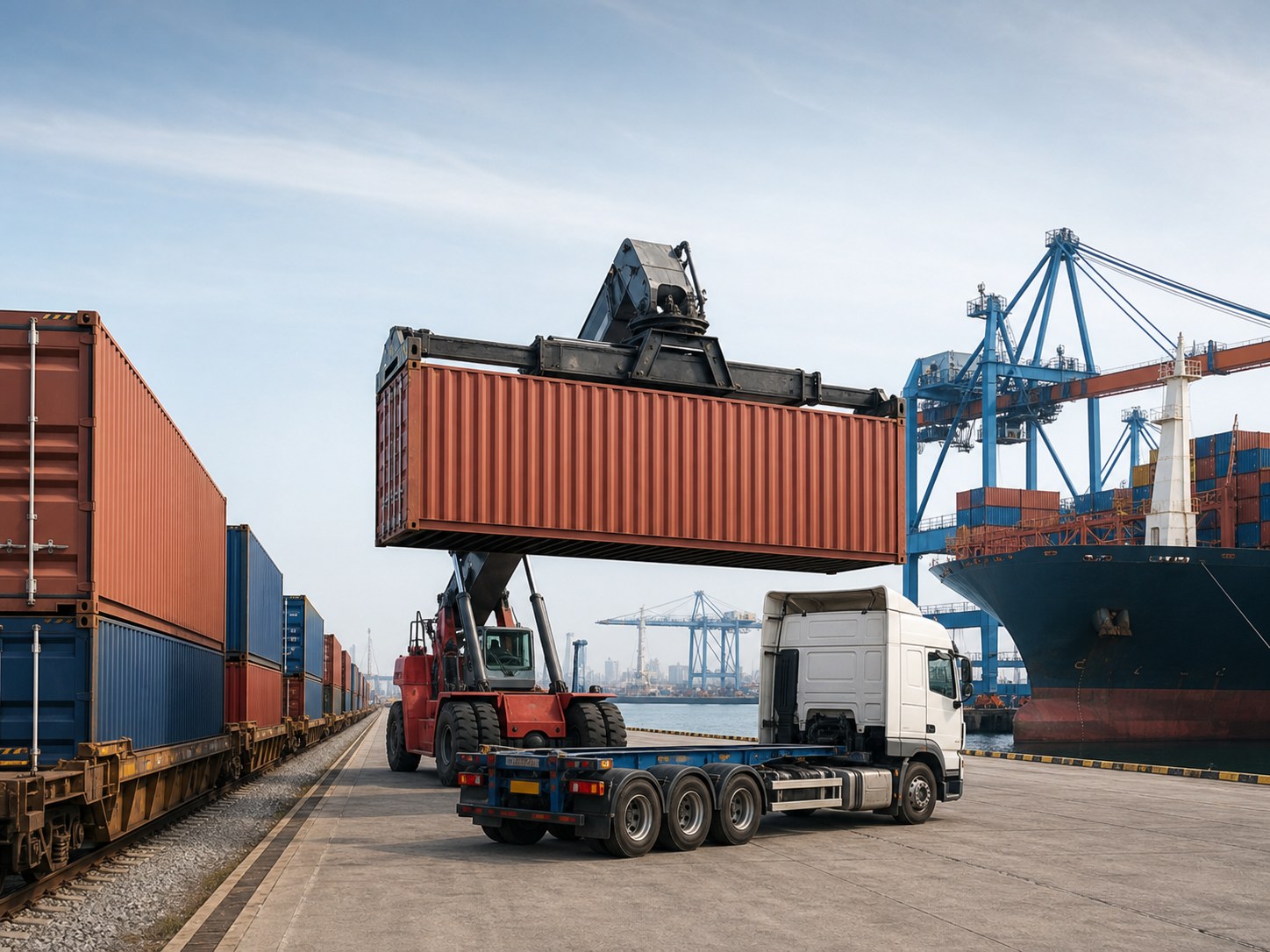
Intermodal transportation moves one shipment by two or more transport modes while the cargo normally stays inside the same loading unit. A typical route uses a truck for pickup, rail or ocean service for the main leg, and another truck for delivery. This method suits planned containerized freight when the main leg offsets the added transfers. Importers should compare the full route, schedule, charges, and responsibility terms before booking.
What Is Intermodal Transportation?
Intermodal transportation moves goods in the same container, trailer, or other loading unit across two or more transport modes. Carriers transfer the unit between vehicles without unloading the cargo inside. If workers unpack the goods and reload them into another unit, the operation includes transloading.
How Does Intermodal Transportation Work?
An intermodal shipment links pickup, terminal transfer, main carriage, and final delivery into one route. Different carriers may operate each leg. The difference between a freight forwarder and a carrier determines who transports the unit and who coordinates the route.
Origin Pickup and Initial Transport
A trucker collects the loaded unit from the shipper and moves it to a seaport or rail terminal. Freight teams call this short truck leg drayage. Before dispatch, the booking party should confirm:
- Cargo description, weight, and dimensions
- Container or trailer type and identification number
- Seal number and dangerous goods status
- Terminal cutoff and receiving requirements
The shipper should keep loading photos, the pickup record, and the equipment interchange receipt. These records establish the unit’s condition when custody first changes.
Main Transport and Terminal Transfers
Rail, ocean, or inland waterway service carries the unit over the longest leg. For example, sea freight from China may connect origin drayage with destination trucking or rail. At each terminal, lifting equipment moves the unit between vehicles while the cargo stays packed inside.
Each transfer creates a cutoff and a custody handoff. A late truck may miss the planned train or vessel, even when the carrier has confirmed main-leg space. The route plan should therefore include transfer time, terminal requirements, and the next available departure.
Delivery to the Final Destination
After arrival, the terminal releases the unit when customs and payment requirements are complete. A destination trucker then collects it for final delivery.
The delivery order should state:
- Whether the driver drops the unit or waits for unloading
- Who books the delivery appointment
- Who returns the empty equipment and where
- When free time ends
If the receiver is not ready, the unit may remain at the terminal or with the trucker. Storage, demurrage, detention, or redelivery charges may then apply.
How Is Intermodal Transportation Different from Multimodal Transportation?
Intermodal transportation focuses on how the loading unit moves between modes. Multimodal transportation describes any shipment that uses two or more modes. Neither term alone confirms the contract structure or the party responsible for the complete route.
|
Decision point |
Intermodal transportation |
Multimodal transportation |
|---|---|---|
|
Loading unit |
Cargo normally stays in one unit |
Cargo may stay in one unit or move between units |
|
Mode changes |
Terminals transfer the unit |
Providers may transfer either the unit or the cargo |
|
Typical route |
Truck, rail, and truck with one container |
Any planned combination of road, rail, sea, or air |
|
What the label confirms |
Physical handling method |
Use of multiple transport modes |
Definitions Used Across the Freight Industry
Formal transport terminology treats intermodal transportation as a narrower type of multimodal transportation. Commercial usage is less consistent. Some providers use “intermodal” mainly for rail and truck service, while others apply it to container routes that include ocean transport. A quote should name every mode and transfer point.
Loading Unit Handling
The practical difference is whether workers handle the loading unit or the cargo itself. An intermodal transfer lifts the sealed container or trailer. Transloading requires workers to move cartons, pallets, or machinery into different equipment. Importers should ask whether any transfer requires workers to unpack or restow the cargo.
Contracts and Carrier Responsibility
Contract responsibility comes from the bill of lading, waybill, service agreement, and applicable law. The words “intermodal” and “multimodal” do not assign liability.
The route may use separate contracts for drayage, rail, and ocean service. It may instead use one through bill that places contractual responsibility with one operator. Importers should confirm the contracting carrier, liability limits, claim deadline, and legal forum before pickup.
When Should Importers Use Intermodal Transportation?
Intermodal transportation fits planned freight when a long main leg can justify extra terminal transfers. The route also needs suitable equipment, practical terminal access, and enough time to recover from a missed connection.
Suitable Routes and Cargo
Intermodal transportation generally fits containerized shipments that can move through established port, rail, and trucking networks without repacking.
|
Stronger fit |
Needs closer review |
|---|---|
|
Practical terminal access at both ends |
Long or costly drayage at either end |
|
Long main leg with schedule flexibility |
Urgent cargo with little recovery time |
|
Cargo that fits available loading units |
Oversized or unusually fragile cargo |
|
Stable temperature requirements |
Perishable or tightly controlled cargo |
Cargo type does not decide the mode by itself. Importers must compare the complete door-to-door route because terminal charges and long drayage legs can erase a lower main-leg rate.
Potential Cost and Cargo Handling Advantages
Intermodal transportation may lower line-haul cost when rail or ocean service replaces a suitable long truck leg. The saving depends on drayage distance, terminal charges, equipment supply, and seasonal capacity.
Keeping cargo in one sealed unit also reduces direct handling during mode changes. This limits some handling exposure, but it does not prevent damage from poor packing, load shift, condensation, vibration, or rough unit movement.
Transit, Terminal, and Capacity Limits
Intermodal schedules connect separate services, so capacity on one leg does not secure the next leg. Common failure points include:
- A late pickup that misses the terminal cutoff
- A confirmed vessel space without a matching rail slot or chassis
- Customs or security holds that extend terminal dwell
- A missed connection that pushes the unit to a later departure
Compare the full door-to-door schedule rather than the published main-leg transit time. The booking should include transfer buffers and a recovery process for missed connections.
Booking Details to Confirm
Approve a booking only when the written quote identifies the complete route and responsibility split.
- Name every mode, terminal, carrier, and expected transfer.
- Define whether the service is door to door, port to door, or terminal to terminal.
- Identify the contracting carrier and the transport document for each leg.
- Separate drayage, terminal handling, main freight, customs, delivery, and possible accessorial charges.
- Record cutoffs, connection assumptions, free time, storage rules, and empty-return terms.
- Confirm insurance endpoints, covered modes, exclusions, limits, and claim contacts.
- Assign customs filing responsibility and list documents required before arrival.
- Provide the references used to track the container, rail move, and final delivery.
A quote remains incomplete when it omits transfer points, free time, or estimated destination charges. Foresmart’s freight forwarding services can combine origin pickup, main transport, customs support, and delivery under a route-specific quote.
FAQs
Does One Cargo Insurance Policy Cover Every Leg of an Intermodal Shipment?
One cargo policy can cover every leg only when its schedule and transit clause cover the full movement. The listed endpoints, transport modes, temporary storage, exclusions, and termination conditions must match the booked route. Ask the insurer to confirm coverage in writing before pickup because carrier liability does not replace cargo insurance.
How Is an Intermodal Shipment Tracked When Different Carriers Handle Each Transport Leg?
Intermodal tracking combines carrier milestones under one shipment record. A container tracking tool may show the ocean leg, while the forwarder connects rail, truck, and delivery updates. Tracking does not always provide continuous GPS data, so importers should confirm which events update automatically and which depend on manual carrier reports.
What Happens if an Intermodal Shipment Misses a Rail or Vessel Connection?
The terminal usually holds the unit until the carrier secures another departure. The missed connection may delay final delivery and create storage, handling, or equipment charges. The lead provider should issue a revised schedule, explain the recovery plan, and identify which contract controls any resulting cost.
Can Customs Authorities Open or Hold a Sealed Intermodal Container for Inspection?
Yes. Customs authorities may hold and open a sealed container when local law permits an inspection. The seal records access but does not prevent examination. Inspection, handling, and transport costs may fall to the importer under local rules and the transport contract. Record any replacement seal before transit resumes.
Who Pays Demurrage, Detention, or Terminal Storage After an Intermodal Delay?
The carrier or terminal invoices the party permitted under its tariff, contract, and applicable law. Another agreement may allow that party to recover the cost elsewhere. Incoterms do not replace transport contracts. Review destination charges, free time, invoice deadlines, and dispute terms before the shipment begins.
One cargo policy can cover every leg only when its schedule and transit clause cover the full movement. The listed endpoints, transport modes, temporary storage, exclusions, and termination conditions must match the booked route. Ask the insurer to confirm coverage in writing before pickup because carrier liability does not replace cargo insurance.
Intermodal tracking combines carrier milestones under one shipment record. A container tracking tool may show the ocean leg, while the forwarder connects rail, truck, and delivery updates. Tracking does not always provide continuous GPS data, so importers should confirm which events update automatically and which depend on manual carrier reports.
The terminal usually holds the unit until the carrier secures another departure. The missed connection may delay final delivery and create storage, handling, or equipment charges. The lead provider should issue a revised schedule, explain the recovery plan, and identify which contract controls any resulting cost.
Yes. Customs authorities may hold and open a sealed container when local law permits an inspection. The seal records access but does not prevent examination. Inspection, handling, and transport costs may fall to the importer under local rules and the transport contract. Record any replacement seal before transit resumes.
The carrier or terminal invoices the party permitted under its tariff, contract, and applicable law. Another agreement may allow that party to recover the cost elsewhere. Incoterms do not replace transport contracts. Review destination charges, free time, invoice deadlines, and dispute terms before the shipment begins.