When deadlines bite, inventory runs low, or a remote site needs an oversized piece of equipment, you might need a cargo charter. It is a logistics tool that businesses, governments, or NGOs use when normal freight options can’t meet their speed or routing needs.
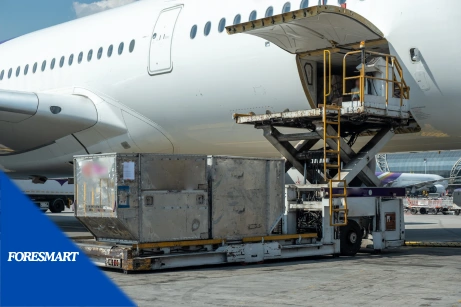
Cargo plane charter means renting an entire aircraft to move goods instead of buying space alongside other shippers. You don’t share the hold, the schedule, or the chain of command. That gives you the power over departure time, airfield choice, or loading sequence. For time-sensitive, oversized, hazardous, or very high-value shipments, this means saved days, lower risk, and counterintuitively lower total cost when you factor in lost sales, storage, and insurance claims.
Read on to learn why air cargo charter matters, how it changed during the pandemic, and how to book one the smart way.
Why Businesses Choose Cargo Charter?
Air freight charter answers three main problems: time, control, and access.
Speed
A dedicated aircraft can fly direct routes with no transfers and often gets airborne in far less time than queued scheduled service. In critical supply chains, minutes matter, and charter converts minutes back into revenue.
Control
You set departure/arrival airports and timing. You choose the handling at the origin and destination. That’s the difference between “wait and hope” and “we’re on the runway by 14:00.”
Access
Cargo charters reach airports that scheduled cargo services don’t. They’re ideal for landlocked or remote locations, disaster zones, or sites with short operating windows.
Other perks of freight air charter follow naturally. Higher security because the aircraft carries only your goods. Less warehousing because shipments arrive faster. And often simpler, lighter packaging than would be required for rugged sea shipments.
Types of Aircraft You’ll See on a Freight Charter
-
Purpose-Built Freighters (such as 747 freighters, 777Fs): these maximize payload and are tailored for heavy or oversized shipments.
-
Converted Freighters/Preighters: during the pandemic, many operators used passenger airframes to carry cargo either in seats or after removing seats – the so-called “preighter.” That boom was real in 2020, but the importance of preighters has receded as passenger flying returned and dedicated cargo capacity grew.
-
Medium turboprops and narrow-body freighters: excellent for point-to-point regional work and short-field access.
Match aircraft to cargo. Heavy, dense consignments need freighters. Time-critical small consignments may go on a smaller, faster jet.
Why Cargo Charter Suddenly Mattered More?
COVID-19 changed freight flows overnight. Passenger flights, which carry a lot of belly cargo, disappeared, warehouses faced lockdowns, and demand for PPE, vaccines, and medical kits exploded. In 2020, many airlines turned passenger planes into cargo workhorses. Entire industries adopted charter solutions to plug gaps in critical supply chains. Since then, overall air cargo capacity has recovered and even expanded. When disruption hits, charter is often the fastest, most reliable fix.
The Numbers That Matter
Market analysts estimated the global air charter services market at roughly USD 26.6 billion in 2019, with projections to grow in the following years as demand shifted toward renting aircraft. That early-pandemic forecast reflected the sudden spike in demand for air cargo charters.
IATA’s industry reporting shows that air cargo capacity and ton-kilometer demand rebounded quickly in the years after 2020. This means more available lift overall, but charters remain the go-to for missions where time and control dominate the equation.
When to Use Cargo Charter?
Chartering is more than sticker price. Think in total cost of ownership:
-
If a missing part stops production, each hour can cost far more than a charter ticket.
-
If a medical supply is life-saving, the calculus is immediate.
-
If freight is high-value or hazardous, minimizing handling and exposure cuts insurance costs and risk premiums.
For many such use-cases, chartering the whole aircraft reduces hidden costs tied to delay, damage, or complex routing.
What You Need to Book a Freight Charter
Your freight forwarder will ask for shipping details – the more precise you give, the faster and more accurate the quote:
-
Shipper & consignee contact details (names, phone numbers, emails).
-
Billing data and agreement.
-
Pickup and delivery addresses, special instructions.
-
Ready time and required delivery time (time zone explicit).
-
Piece count, weights, and dimensions.
-
Cargo UN number and class. Hazmat declaration or other specialized cargo documents if applicable.
-
Required services: door-to-door, door-to-airport, airport-to-airport, on-site handlers, special equipment (tail-ramp, crane).
Good brokers will ask these questions up front and can often show you options within hours. If your broker can’t answer questions about handling, certifications, or routing, treat that as a red flag.
How to Choose a Cargo Charter Partner
Price matters, but reliability wins long-term. Ask your potential partners that provide cargo charter services:
Do they have experience with your cargo type? Can they provide references and case studies?
What insurance and contingency plans do they carry?
How do they handle customs and ground logistics at both ends?
Do they provide real-time tracking and single-point communication?
A broker with deep relationships with cargo charter airlines will present multiple aircraft options, explain trade-offs (cost vs. speed vs. payload), and help you lock in permits and slots quickly.
Risks and Environmental Considerations
Be aware! Shifting a shipment from sea to air can multiply emissions dramatically, even if it saves days. A cargo charter flight is carbon-intensive compared to sea or rail.
Recent analyses show air freight emissions rose significantly in the post-pandemic rebound, which has pushed some shippers to weigh emissions as part of their freight decision. If emissions matter to your company, discuss fuel-saving routing, cargo consolidation, and possible offsets with your broker.
Practical Tips that Save Time and Money
-
Be precise with dimensions and weights. Under-reporting or over-reporting causes delays and costs more money.
-
Plan customs paperwork early. A single missing shipping document can stop an otherwise-ready charter from unloading.
-
Bundle multiple urgent shipments when possible.
-
Think cross-border handling: who clears customs, who delivers final-mile? Make responsibilities explicit in the contract.
-
Request a simulation of loading for awkward pieces. Pictures and a short video help a lot.
Final Word
Cargo charter is part of a resilient supply-chain strategy. Use it when lead times matter and the cost of delay outstrips the flight cost. Despite post-pandemic growth in capacity and broker expertise, it still pays to be organized, clear, and decisive.