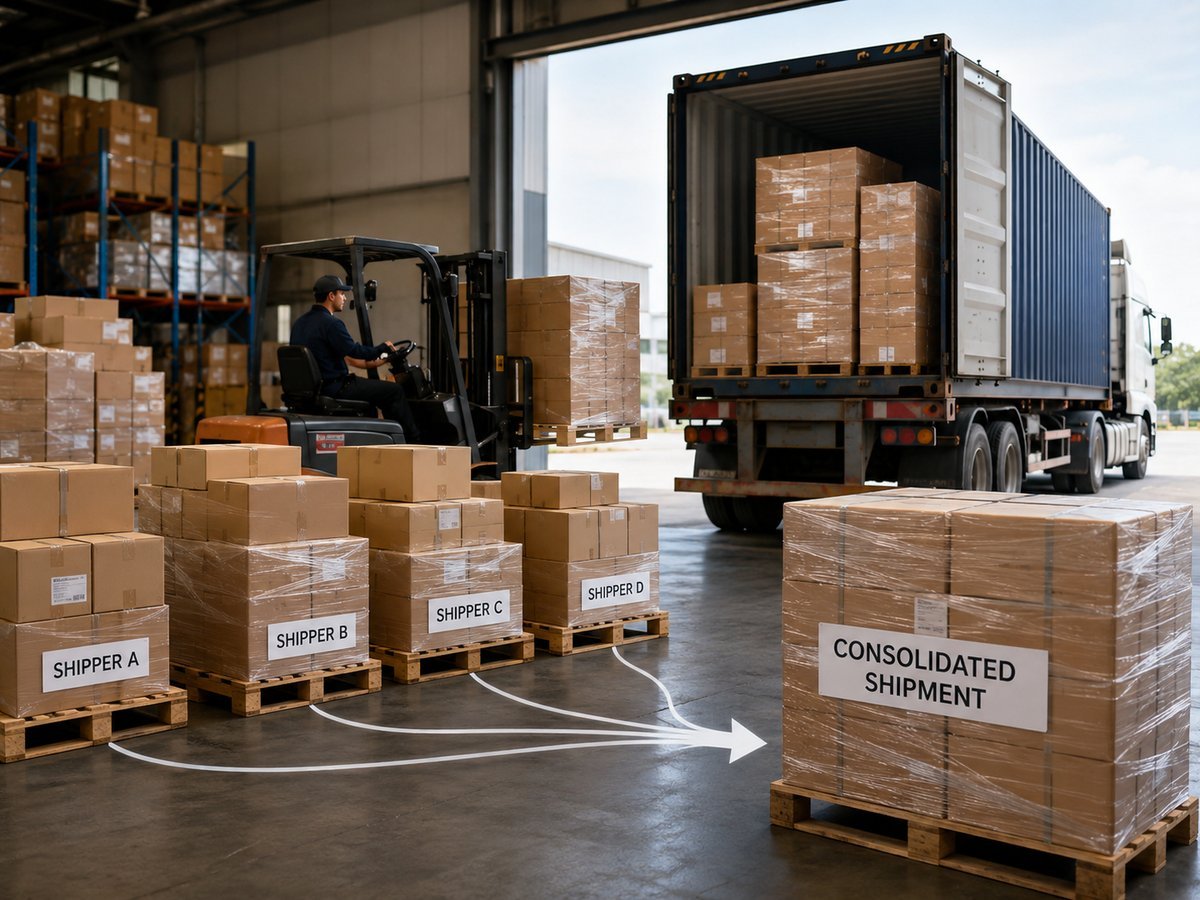
When a shipment is too small to fully use the space in a truck or container, shipping the cargo separately often increases the cost per unit. Consolidated freight combines multiple shipments going to similar destinations, which helps reduce unused space.
This article explains the meaning of consolidated freight, how the process works, the main pros and cons, and how to choose a freight provider. The information can help businesses decide whether consolidated freight fits their shipping needs.
What Is Consolidated Freight?
Consolidated freight combines multiple smaller shipments into one larger shipment for transportation. It is commonly used for ground, air, and ocean freight. Consolidated freight is suitable for businesses that ship smaller loads and want to reduce shipping costs per unit.
How Does Consolidated Freight Work?
Consolidated freight usually involves four steps: shipment preparation, warehouse receiving, consolidated shipping, and separation at the destination.
Book and Prepare the Shipment
Before shipping, confirm the cargo quantity, weight, volume, destination, and delivery time. The cargo should also be packed and labeled. The required shipping documents should be prepared so the warehouse can receive and sort the cargo correctly.
Receive Cargo at the Consolidation Warehouse
The cargo is sent to a designated consolidation warehouse. After receiving the cargo, the warehouse checks the quantity, packaging, and labels. The cargo is then sorted by route and destination.
Combine Cargo Into One Shipment
Freight consolidators combine cargo going to the same or nearby destinations into one larger shipment. The combined shipment is then sent to the destination. This arrangement can make better use of space in trucks, containers, or other transport equipment.
Separate Cargo at the Destination Warehouse
After the shipment reaches the destination warehouse, the cargo is separated based on the order or delivery details. Each shipment is then prepared for final delivery.
What Services Can Be Included in Consolidated Freight?
In addition to combining shipments, a China freight forwarder can add support services based on the cargo type, shipping route, and delivery requirements.
Temporary Warehouse Storage
If other shipments have not arrived yet, the cargo can be stored at the warehouse for a short time. Temporary storage is useful when cargo needs to wait for the next scheduled consolidation or for other orders to arrive.
Customs Documentation Support
Cross-border shipments usually require a commercial invoice, packing list, and other customs documents. The freight provider can check whether the documents are complete and help reduce delays caused by missing or incorrect information.
Shipment Tracking and Status Updates
After the cargo enters the shipping process, customers can track the shipment at key stages. Common updates include warehouse receiving, shipment consolidation, departure, arrival at the destination, and delivery arrangement.
Final Delivery Arrangement
If final delivery is needed, the freight provider can arrange delivery after the cargo is separated at the destination. The delivery method depends on the delivery address, cargo quantity, and required delivery time.
What Are the Pros and Cons of Consolidated Freight?
Consolidated freight can help businesses lower shipping costs for smaller loads, but the process may add extra handling steps. Before choosing consolidated freight, businesses should consider shipment size, delivery time, and cargo type.
Pros of Freight Consolidation
Consolidated freight combines multiple smaller shipments into one larger shipment. Compared with shipping each load separately, consolidation can spread some transportation and handling costs across multiple shipments. This can help reduce shipping costs per unit.
Reduced Exposure to Minimum Charges
Some freight services have minimum charges. When a shipment is small, the actual freight cost may be lower than the minimum charge. Combining several shipments can reduce the number of times a business pays a minimum charge.
Improved Space Utilization
Smaller shipments may leave unused space in a truck, container, or other transportation equipment. Freight consolidation combines different loads to make better use of the available space.
Greater Flexibility for Smaller Shipments
A shipment may not be large enough for a full truckload or full container. Consolidated freight gives businesses another shipping option. Businesses do not always need to wait for more cargo before arranging transportation.
Cons of Consolidated Freight
These downsides weigh most on tight deadlines and fragile or high-value cargo.
Possible Delivery Delays
Consolidated freight may require extra time while other shipments arrive at the warehouse. After arrival at the destination, the combined shipment must also be separated and sorted. These steps can make delivery slower than direct shipping.
More Complex Shipment Coordination
Consolidated freight may involve multiple shipments, orders, and delivery addresses. The freight provider must coordinate warehouse receiving, cargo sorting, loading, and final delivery. A problem at any stage can affect the shipping schedule.
Additional Cargo Handling
Cargo is usually combined at the consolidation warehouse and separated again at the destination warehouse. These extra handling steps can increase the risk of damage if the packaging is not strong enough.
Limited Suitability for Certain Cargo Types
Fragile goods, dangerous goods, temperature-sensitive cargo, and urgent shipments may need separate review. Cargo with special handling, storage, or transit-time requirements may not be suitable for consolidated freight.
Consolidated Freight vs. LCL Shipping: What Is the Difference?
Consolidated freight and LCL shipping can both be used for smaller shipments, but the two terms do not mean the same thing. Consolidated freight is a broader shipping arrangement, while LCL sea freight is a specific type of ocean freight service.
|
Comparison Point |
Consolidated Freight |
LCL Shipping |
|---|---|---|
|
Definition |
A shipping arrangement that combines multiple shipments |
An ocean freight service that combines cargo from multiple shippers in one container |
|
Transportation Modes |
Ground, and ocean freight, including cross-border moves |
Used only for ocean freight |
|
Common Use Case |
Multiple orders need to be shipped together |
A single ocean shipment does not fill a full container |
|
Main Pricing Factors |
Transportation mode, route, shipment size, and included services |
Cargo volume, chargeable weight, and destination charges |
|
Main Question to Consider |
Does the business need to combine multiple orders or shipping steps? |
Is LCL more suitable than booking a full container? |
How Should Businesses Choose a Consolidated Freight Provider?
Businesses should not choose a consolidated freight provider based on price alone. The review should also cover route coverage, consolidation schedules, warehouse operations, and shipment tracking.
Check Route and Transportation Coverage
First, confirm that the provider covers the origin, destination, and final delivery area. For cross-border shipments, check whether the provider can arrange ground, air, or ocean freight based on the shipping route.
Review Consolidation Schedules and Transit Times
Consolidated freight often requires several shipments to arrive before departure. Businesses should confirm the consolidation schedule, expected departure date, and total transit time. This can help prevent long waiting periods from affecting delivery plans.
Assess Warehouse and Cargo Handling Capabilities
Consolidated freight may involve warehouse receiving, sorting, combining, and separating cargo. The provider should have suitable warehouse space and clear handling procedures. For fragile goods, oversized cargo, or shipments with special packaging requirements, confirm that the provider can handle the cargo properly.
Compare Pricing and Service Terms
When comparing quotes, review transportation fees, storage fees, handling fees, document processing fees, and final delivery charges. Businesses should also check minimum charges, extra fees, and liability terms instead of comparing base rates alone.
Review Tracking and Communication Support
Businesses should confirm how often shipment updates are provided, how problems are reported, and which communication channels are available. Fast communication can help address missing documents, schedule changes, or delivery changes before the problems cause delays. Foresmart can arrange a cargo consolidation service based on the shipping route and cargo requirements. The team can also help customers track key shipment stages.
Conclusion
Consolidated freight combines multiple smaller shipments, reduces unused shipping space, and may lower transportation costs. It can support cross-border shipments by ground, air, or ocean. Consolidated freight is suitable for businesses that have smaller loads but still need to ship on schedule.
Consolidated freight also adds warehouse receiving, cargo separation, and shipment coordination steps. Before choosing a shipping option, businesses should consider shipment size, delivery time, cargo type, extra fees, and the provider’s route coverage. For smaller ocean shipments, businesses should also compare the total cost of LCL and FCL shipping.
FAQ
Is Freight Consolidation the Same as LCL Shipping?
Not exactly. Freight consolidation is a broader shipping arrangement that can be used for ground, air, and ocean freight. LCL refers specifically to ocean freight, where cargo from multiple shippers shares one container.
How Long Does Freight Consolidation Take?
Transit time depends on the route, transportation mode, and consolidation schedule. Compared with direct shipping, freight consolidation may require extra time for warehouse receiving and separation at the destination. Cross-border shipments may also require time for customs clearance and final delivery arrangements.
Can Shipments From Multiple Suppliers Be Consolidated?
Yes. Shipments from multiple suppliers can be sent to a consolidation warehouse and combined based on the destination and shipping plan. Before shipping, confirm that the packaging, labels, and customs documents are complete.
How Is Freight Consolidation Priced?
Pricing depends on the transportation mode, shipment size, route, and included services. Ocean LCL rates are usually based on cargo volume or chargeable weight. Storage, handling, customs clearance, and final delivery may add extra costs.
Not exactly. Freight consolidation is a broader shipping arrangement that can be used for ground, air, and ocean freight. LCL refers specifically to ocean freight, where cargo from multiple shippers shares one container.
Transit time depends on the route, transportation mode, and consolidation schedule. Compared with direct shipping, freight consolidation may require extra time for warehouse receiving and separation at the destination. Cross-border shipments may also require time for customs clearance and final delivery arrangements.
Yes. Shipments from multiple suppliers can be sent to a consolidation warehouse and combined based on the destination and shipping plan. Before shipping, confirm that the packaging, labels, and customs documents are complete.
Pricing depends on the transportation mode, shipment size, route, and included services. Ocean LCL rates are usually based on cargo volume or chargeable weight. Storage, handling, customs clearance, and final delivery may add extra costs.