

Importers can control accessorial charges by declaring exact cargo and delivery details and pricing optional services before booking. A low base rate can rise when extra handling, waiting, or storage falls outside the quote.
Other triggers include inaccurate weight and restricted delivery. The tariff, quote, and service records determine whether each fee applies and support later disputes.
What Are Accessorial Charges in Freight Shipping?
Old Dominion Freight Line defines accessorial charges as fees for services beyond standard freight transport. Carrier tariffs or pricing agreements define each fee, trigger, rate, and exception.
Fees Added to the Base Freight Rate
A base rate normally covers movement between stated points under standard loading, handling, and delivery conditions. Extra labor, equipment, time, space, or risk can add fees.
The quote should separate base linehaul or international freight, fuel surcharges, origin and destination handling, customs costs, and accessorial services.
A quote marked “accessorials excluded” leaves the final amount open until the carrier records what happened during handling, transit, and delivery.
Services Requested in Advance and Fees Added Later
Importers can book liftgate service, hazardous handling, delivery appointments, inside delivery, and oversized handling before pickup. Advance notice lets the carrier price the work and assign suitable equipment.
Other fees follow recorded events such as reweighing, driver detention, redelivery, or storage. Validity depends on the quoted scope, tariff trigger, and service records, not when the fee appears.
Charges Often Confused With Accessorial Fees
| Cost term | What the charge covers | Why the distinction matters |
|---|---|---|
| Base freight rate | Standard transportation between quoted points | Extra services may remain outside the rate |
| Fuel surcharge | Adjustment under the carrier’s fuel formula | Carriers often price fuel separately |
| Destination charge | Planned terminal, documentation, or local handling | A destination charge in shipping may be standard, while storage or redelivery needs a trigger |
| Customs duty or tax | Government import charge | A carrier may collect it, but the government sets it |
| Accessorial charge | Extra service, time, equipment, or handling | The tariff or contract defines the trigger and rate |
Carrier wording varies. Compare each invoice label with the contract and tariff before treating two fees as duplicates.
What Are the Most Common Freight Accessorial Charges, and When Do They Apply?
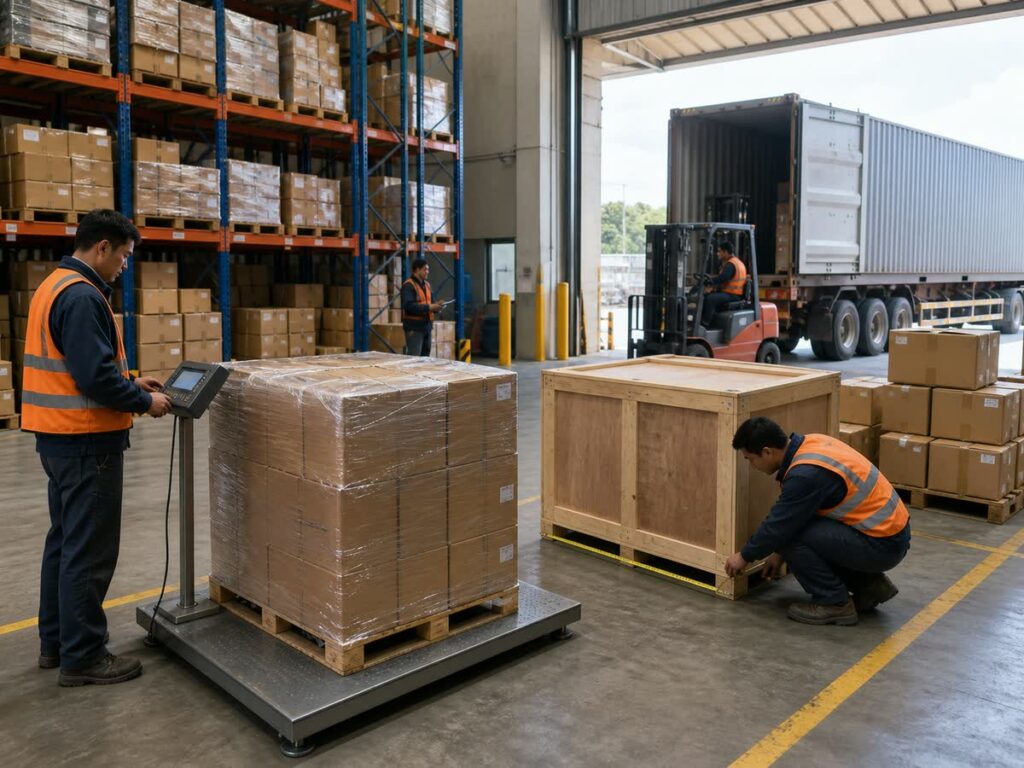
Common accessorial charges arise from inaccurate cargo data, nonstandard handling, restricted delivery, waiting time, equipment use, and storage. One shipment can trigger multiple fees when separate conditions apply.
Weight, Dimensions, and Handling Fees
| Charge | Common trigger | Importer action before booking |
|---|---|---|
| Reweigh and reclassification | Recorded weight or class differs from the bill of lading | Send final weight, dimensions, density, commodity, and NMFC details when applicable |
| Oversized or overlength freight | A unit exceeds tariff length or space limits | Send packed dimensions, center of gravity, and loading method |
| Hazardous material handling | Cargo falls under dangerous-goods rules | Declare the class and provide required documents, labels, and emergency details |
| Sorting, rehandling, and pallet services | Loose, mixed, damaged, or unsecured cargo needs extra work | Define the sorting, repacking, and pallet work |
A reweigh fee may be separate from the rate correction. If verified weight, density, or class changes, the carrier may also recalculate the transportation charge. Use final packed measurements, not supplier estimates.
Pickup and Final Delivery Fees
| Charge | Common trigger | Importer action before booking |
|---|---|---|
| Delivery appointment or notification | The receiver requires notice or a time window | Give the contact, hours, booking process, and notice period |
| Liftgate service | The site lacks a suitable dock or forklift | Confirm pallet weight, dock height, forklift capacity, and ground access |
| Inside pickup or delivery | The driver moves freight beyond the normal handoff point | Define the handoff point, distance, stairs, doors, and labor |
| Residential, limited access, or remote area service | The address or site falls under a tariff rule | Describe access, trailer limits, security, and receiving hours |
| Redelivery | The receiver cannot accept the shipment | Confirm the appointment, cargo details, and unloading plan |
Carrier tariffs often list residential and limited access delivery separately. A commercial site may qualify when it restricts truck entry, operating hours, security clearance, or unloading.
Define inside delivery in writing because carrier handoff points differ. Name the exact doorway or placement point in the quote.
Waiting Time, Storage, and Equipment Fees
| Charge | Common trigger | Importer action before booking |
|---|---|---|
| Driver detention | Loading or unloading exceeds free time | Confirm free minutes, billing increments, and timestamps |
| Container demurrage | A container stays at the terminal beyond free time | Track availability, customs release, last free day, and pickup |
| Container detention or per diem | Equipment stays outside the terminal beyond free time | Confirm return location, depot hours, appointments, and condition rules |
| Port, terminal, or warehouse storage | Cargo remains beyond the allowed period | Confirm start time, daily rate, minimum, and release rules |
Ocean demurrage and detention use different clocks. Demurrage usually tracks terminal time. Detention or per diem usually tracks equipment time outside the terminal. The applicable tariff controls.
The Federal Maritime Commission’s 2024 rule sets billing deadlines for U.S. ocean demurrage and detention. Vessel-operating common carriers and marine terminal operators generally have 30 days after charges were last incurred. NVOCCs generally have 30 days from the underlying invoice date. Other accessorials may follow different deadlines.
How Do Carriers Calculate Accessorial Charges?

Carriers calculate accessorials with the unit and rate in the tariff, contract, or quote. Minimums, maximums, free time, and negotiated terms can change the result.
Pricing by Shipment, Stop, Hour, Day, or Weight
| Pricing unit | Typical use | Calculation risk |
|---|---|---|
| Per shipment | Reweigh, documents, hazardous handling, redelivery | One event may trigger multiple fees |
| Per stop | Appointment, limited access, liftgate | Pickup and delivery may count separately |
| Per pound or hundredweight | Overlength, storage, area service | A minimum may override the calculation |
| Per hour or time fraction | Detention, labor, special equipment | The carrier may round partial intervals up |
| Per container per day | Demurrage, detention, terminal storage | Daily rates may rise by tier |
| Per unit or piece | Sorting, labeling, pallet work | Poor packaging may increase the unit count |
FedEx Freight’s FXF 100 Series Rules Tariff uses shipment, weight, time, and daily units. The shipment’s governing terms set the payable rate.
Minimum Charges and Tiered Rates
A minimum creates a billing floor, even when a weight calculation is lower. Tariffs may also set maximums, length bands, area tiers, or rising daily rates.
Ask for the unit rate, minimum, maximum, free allowance, and tier breaks. A rate without those conditions does not show the likely exposure.
Carrier Tariffs, Quote Exclusions, and Invoice Codes
The tariff defines each service, trigger, calculation, and exception. A negotiated quote may replace selected rates when it names the covered items. Booking and delivery records show what the parties requested or the driver recorded.
Invoice codes may shorten terms found in a freight glossary, but the tariff still controls the charge.
Match each invoice code to the dated quote, tariff item, bill of lading, and service record. Weight certificates or timestamps should support measured charges.
Red flag: “Accessorials as incurred” or “destination charges at actual cost” without a tariff reference, estimate, or approval process. The importer cannot test the charge before booking.
Who Is Responsible for Accessorial Charges?
Foresmart freight payer contract review](https://foresmart.com/wp-content/uploads/2026/08/accessorial-charges-payer-contract-scope-1024x768.jpg)
The transportation contract controls carrier billing, while the sales contract divides costs between buyer and seller. The party that caused a fee may differ from the named payer.
Payer Named in the Quote or Contract
The carrier usually invoices the payer named in the quote, credit agreement, bill of lading, or service contract. A consignee may cause detention while the carrier bills the shipper. The sales contract determines whether the shipper can recover that cost.
Shipper, Consignee, and Third-Party Billing
| Billing setup | Usual carrier billing path | Point to confirm |
|---|---|---|
| Prepaid | Shipper or named payer | Whether prepaid includes later accessorials |
| Collect | Consignee | Whether the consignee accepted liability |
| Third-party | Broker, forwarder, buyer, or another account | Authorization, markup terms, and dispute contact |
“Prepaid” may cover only transportation. The quote should state whether the payer also accepts conditional accessorials.
A China freight forwarder may pass accessorials through at cost or include them in its rate. The agreement should identify the model.
Incoterms, Named Places, and Service Scope
Incoterms allocate selected costs, tasks, and risks under the sales contract. The International Chamber of Commerce recommends stating the rule, exact named place, and “Incoterms 2020.” Incoterms do not replace the carrier contract. The carrier may bill one party while the sales contract assigns the cost to the other.
Charges Caused by Delays or Site Conditions
A missed appointment may cause redelivery and storage. An incorrect declared weight may cause reweighing and a rate correction. Incomplete release documents may add terminal time.
Do not assign fault from the invoice description alone. Use emails, appointment records, release times, gate transactions, and proof of delivery to identify who controlled the event.
How Can Importers Prevent and Dispute Accessorial Charges?

Importers can reduce accessorial charges by pricing known services before booking and documenting conditional events. Accurate cargo, site, equipment, and free-time details make invoices easier to predict and dispute.
Checking Quote Inclusions, Free Time, and Exceptions
Before cargo moves, confirm which origin, linehaul, destination, and delivery services the quote includes. Record accessorial rates, estimates, caps, and tariff references. State the free-time period, approval rules, and events outside the quote scope.
The quote should also state the Incoterm and named place, exclusions, final address coverage, and escalation contact. An unexplained all-in price leaves little evidence when the invoice changes.
Providing Accurate Cargo and Address Details
Send final piece and pallet counts, packed weight, dimensions, commodity, packaging, stackability, freight class when applicable, and dangerous-goods status.
Provide the physical gate, site type, receiving hours, contact, dock, forklift capacity, trailer limits, and security steps. Foresmart can price planned services and flag fees that still depend on actual events.
Confirming Equipment, Access, and Appointments
Confirm how the shipment will leave the trailer. Check dock height, forklift capacity, gate limits, liftgate needs, pallet jacks, and inside service before booking.
Foresmart’s door-to-door shipping can combine international freight, customs clearance, duties paid under DDP, and final delivery. The quote should still mark liftgate, limited access, waiting, storage, and redelivery as included, excluded, or conditional.
Reviewing Proof of Delivery, Timestamps, Tariffs, and Invoice Codes
Keep one evidence file with:
- Proof of delivery and driver timestamps
- Appointments, call logs, and receiver emails
- Certified weight, dimensions, class, and inspection notes
- Container availability, customs release, last free day, and return records
- Quote version, tariff item, invoice code, and calculation
A proof of delivery may confirm the stop without proving driver waiting time. Detention needs timestamps.
Filing a Billing Dispute With Supporting Records
File a written dispute within the contract or tariff deadline. Address one charge at a time:
- Identify the invoice line, amount, code, and quantity.
- Request the tariff item and trigger record.
- Attach the quote, contract, timeline, and conflicting evidence.
- Request a correction, credit, waiver, or recalculation and track the case deadline.
For FMC-regulated demurrage and detention, the billed party must receive at least 30 calendar days to seek mitigation, refund, or waiver. Other accessorials may have shorter deadlines. Ask whether paying the undisputed balance can release the cargo while the disputed line remains open.
FAQs About Accessorial Charges
Can Importers Negotiate Accessorial Charges Before Booking a Shipment?
Yes. Importers can negotiate rates, minimums, free time, caps, or included services after confirming cargo and site conditions. Government duties, taxes, and some terminal charges remain outside the carrier’s control.
Can One Shipment Have Multiple Accessorial Charges?
Yes. A residential delivery may also trigger appointment, liftgate, inside delivery, and detention fees. Check whether one tariff item already includes another service before accepting stacked charges.
Can a Freight Forwarder Add a Markup to Carrier Accessorial Charges?
Yes, when the agreement allows a service margin or administrative fee. An NVOCC may also sell transport at its own rate. Confirm whether each line is a pass-through cost, marked-up service, fixed fee, or estimate.
Can Accessorial Charges Increase a Shipment’s Customs Value or Import Duties?
Separately identified post-import delivery fees usually do not enter U.S. transaction value. CBP also excludes documented actual freight and insurance when transaction-value rules apply. Packing costs, assists, selling commissions, royalties, and qualifying resale proceeds may increase customs value.
Can Unpaid Accessorial Charges Delay Cargo Release or Final Delivery?
Yes. A carrier, terminal, warehouse, or forwarder may hold cargo when the service terms require payment. A dispute does not remove the hold automatically. File quickly and confirm the release condition in writing.