
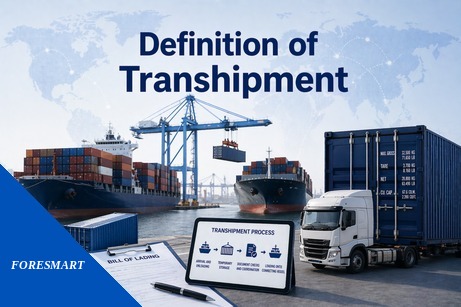
According to UNCTAD’s Review of Maritime Transport 2024, global container trade grew by more than 6% in 2024, with Asia handling 63% of all containerized cargo. Transhipment moves containers between vessels at an intermediate hub port. The process connects trade lanes that no direct shipping route covers.
This guide covers what transhipment means, how each stage of the process works, and how it compares to direct shipping. Covered topics include the main risks shippers face at hub ports and practical steps to reduce delays, cargo damage, and liability disputes.
What Is Transhipment in Shipping
Transhipment is the transfer of cargo from one vessel to another at an intermediate hub port, before the goods reach their final destination.
The port handling this cargo transfer is called a transhipment hub. Singapore, Rotterdam, Port Klang, and Colombo rank among the busiest transhipment hubs globally, each sitting at the crossroads of major ocean trade lanes.
Shippers may also see transhipment spelled as transshipment, the standard American English variant. The term also appears as transit shipment or indirect shipment in some shipping contracts and trade documents.
How Does the Transhipment Process Work
Transhipment operations require precise coordination among port terminals, shipping lines, and freight forwarders. The transfer typically follows four distinct stages at a major hub port.
Step 1: Arrival and Unloading at the Hub Port
The process begins when terminal operators unload the inbound containers from the arriving feeder vessel. Working with shore cranes, they immediately scan each unit into the port management system. This initial scan generates the data required for real-time cargo tracking.
Step 2: Temporary Storage and Handling
Unloaded cargo enters temporary storage at a secure container yard (CY) or bonded terminal to await the connecting vessel. Because this layover can last from a few days to over a week, shippers face increased risks of port congestion delays.
Step 3: Documentation Checks and Transfer Coordination
Port authorities must digitally verify critical shipping documents, such as the bill of lading, before authorizing the cargo transfer. Transhipped cargo bypasses local import customs clearance because the goods do not enter the domestic market. However, digital systems must still approve the transit status to validate the container for its outbound voyage.
Step 4: Loading onto the Connecting Vessel
Specialized port machinery loads the retrieved containers onto the secondary carrier to begin the final transit leg. This connecting ship is usually a larger mother vessel assigned to deep-sea routes. Once the crew securely lashes the cargo, the vessel departs the hub to resume its journey toward the final destination.
What Are the Benefits and Risks of Transhipment
Transhipment expands global trade connectivity but introduces physical cargo-handling vulnerabilities.
Key Benefits of Transhipment
Indirect routing optimizes ocean carrier networks and directly benefits shippers in pricing and capacity.
- Lower Freight Shipping Costs: Shippers typically secure lower freight rates by booking indirect voyages. Ocean carriers and freight consolidators achieve economies of scale by aggregating cargo onto massive mother vessels. This volume strategy passes financial savings directly down the supply chain.
- Expanded Global Port Coverage: Indirect routes integrate isolated regional markets into the global container network. Feeder vessels must transport cargo from shallow-water ports to deep-sea hubs because modern mega-ships require deep-water infrastructure to dock.
- Increased Scheduling Flexibility: Major transhipment hubs provide highly frequent sailing options. If a primary carrier overbooks a vessel, freight forwarders can rapidly reroute containers onto alternative ships to protect final delivery schedules.
Common Transhipment Risks to Consider
Transhipment risks stem primarily from extended transit timelines and repetitive mechanical handling.
- Higher Risk of Cargo Damage: Additional physical handling directly increases the probability of impact. Because terminal cranes must lift and reposition the cargo multiple times, fragile goods face higher exposure to mechanical shocks.
- Extended Transit Times and Delays: Indirect routing inherently lengthens the total voyage duration. Hub port congestion or delayed feeder arrivals frequently cause missed vessel connections. These disruptions trap containers in storage yards and compromise lean inventory schedules.
Rolled Cargo and Demurrage Penalties: Ocean carriers routinely roll cargo when connecting mother ships hit capacity limits. These unexpected hub layovers delay final delivery. This disruption constantly triggers unexpected demurrage charges at the transhipment terminal.
Transhipment vs Direct Shipment: What Is the Difference
Direct shipment moves containers from the origin port to the final destination without offloading.
Cost Efficiency
Direct shipping commands premium freight rates, while transhipment drastically reduces shipping costs. Ocean carriers charge higher prices for non-stop routes because they secure accelerated delivery.
Indirect routing allows operators to consolidate wide-ranging cargo onto mega-ships, which significantly lowers the per-container transit cost.
Transit Time and Speed
Direct shipment moves cargo significantly faster than indirect routing. A direct vessel travels continuously without intermediate port offloading. Because transhipped cargo must wait for connecting vessels at a hub, this mandatory layover adds days or weeks to the total transit schedule.
Port Coverage and Flexibility
Transhipment networks provide broader geographic market access than direct shipping lines. Direct ocean routes largely restrict operations to major deep-sea ports handling massive trade volumes.
Shippers moving goods from smaller regional terminals rely on transhipment because modern mega-vessels cannot physically access shallow coastal infrastructure.
Risk of Delays and Damage
Transhipment introduces higher risks of port delays and physical cargo damage. Direct shipment minimizes physical intervention because terminal cranes handle containers only at the origin and destination.
Transhipment requires multiple mid-voyage loading sequences. This repetitive handling increases the probability of mechanical impact and exposes the cargo to unpredictable hub congestion.
Transhipment vs Direct Shipment Comparison Table:
The following table contrasts the core operational tradeoffs between direct routing and transhipment.
|
Metric |
Direct Shipment |
Transhipment |
|
Transit Speed |
Faster |
Slower |
|
Freight Cost |
Premium |
Economical |
|
Cargo Handling |
Minimal |
Repetitive |
|
Damage Risk |
Lower |
Higher |
|
Port Coverage |
Restricted |
Expanded |
Direct routing secures faster transit and minimizes cargo damage. When shippers utilize transhipment networks, they trade this protective speed for lower freight costs and broader geographic access.
How Can Shippers Reduce Transhipment Risks
Shippers manage the delays and handling risks of transhipment through three core strategies.
Partner with an Experienced Freight Forwarder
Experienced freight forwarders navigate complex port networks to prevent costly routing errors.
Hub schedules change rapidly. Shippers rely on forwarding experts to secure reliable cargo transfers. Global logistics providers like Foresmart use over 15 years of operational data to identify the best connecting vessels. This active route management bypasses congested terminals and reduces unexpected cargo layovers.
Ensure Real-Time Cargo Tracking
Digital visibility systems track exact container locations during hub port layovers.
Tracking software immediately alerts logistics managers if port operators miss a scheduled loading sequence. Shippers use these instant alerts to execute backup plans before minor delays cause severe supply chain disruptions.
Invest in Comprehensive Cargo Insurance
Purchasing marine cargo insurance protects cargo against terminal handling accidents. Standard ocean carrier liability limits rarely cover the exact value of goods damaged during transhipment. If terminal equipment damages a container, this policy secures financial compensation regardless of port authority disputes.
Conclusion
Transhipment expands global market access and lowers ocean freight costs.
Indirect routing introduces transit delays and physical handling risks. Shippers mitigate these vulnerabilities through digital tracking and expert logistics partnerships. Global providers like Foresmart design custom routing solutions that safeguard cargo, optimize transit schedules, and reduce total supply chain expenses.
Frequently Asked Questions (FAQs)
Does Transhipment Require Customs Clearance at the Hub Port?
No. Transhipped cargo bypasses import clearance at the intermediate hub because the goods never enter the domestic market. Port authorities verify digital transit documents instead. The actual customs clearance process happens at the destination port.
Does Transhipment Always Cause Delays?
No, but indirect routing relies on scheduled transit layovers. Ocean carriers build these transfer windows directly into the original voyage timeline. Unpredictable port congestion or missed vessel connections trigger unexpected supply chain delays.
Who Is Responsible if Cargo Is Damaged During Transhipment?
The primary ocean carrier holds liability for cargo damage across the entire voyage, including intermediate hub transfers. While the carrier remains legally responsible, maritime regulations restrict standard financial payout limits. Shippers secure full compensation against handling accidents by purchasing comprehensive marine insurance.
No. Transhipped cargo bypasses import clearance at the intermediate hub because the goods never enter the domestic market. Port authorities verify digital transit documents instead. The actual customs clearance process happens at the destination port.
No, but indirect routing relies on scheduled transit layovers. Ocean carriers build these transfer windows directly into the original voyage timeline. Unpredictable port congestion or missed vessel connections trigger unexpected supply chain delays.
The primary ocean carrier holds liability for cargo damage across the entire voyage, including intermediate hub transfers. While the carrier remains legally responsible, maritime regulations restrict standard financial payout limits. Shippers secure full compensation against handling accidents by purchasing comprehensive marine insurance.