
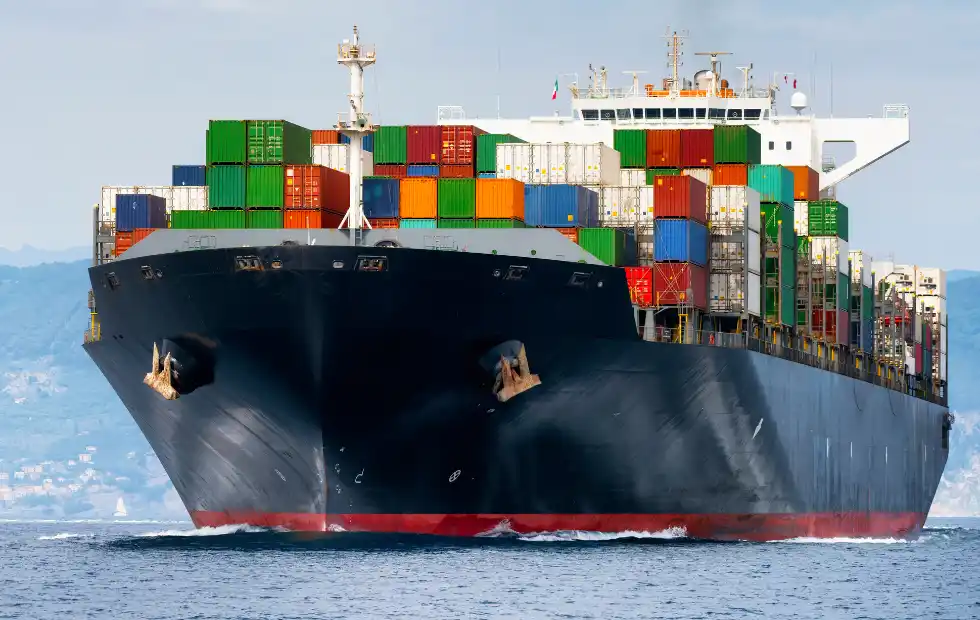
LCL (Less than Container Load) allows importers to pay only for the space their cargo actually occupies in a container, without taking on the cost of a full box. For importers dealing with smaller volumes, frequent shipments, or a growing order book, LCL offers a low-barrier entry point into ocean freight.
That said, LCL is not the right fit for every situation. It comes with its own cost structure, transit characteristics, and operational risks — and understanding those differences is what makes the decision a sound one.
This article walks through how LCL works, what the full costs actually look like, when it makes sense (and when it doesn’t), the key risks to watch for, practical ways to keep costs and risks in check, and a direct comparison with air freight for smaller shipments.
How Does LCL Shipping Work?
Before deciding whether LCL is right for your cargo, it helps to understand exactly how it operates within the supply chain — especially the steps that most articles skip over.
The core mechanism of LCL is consolidation: your cargo does not get its own container. Instead, it is grouped at a CFS (Container Freight Station) with other shippers’ goods heading in the same direction, then loaded together into a standard container and shipped as a combined load.
The full process unfolds in five stages:
- Pickup and Delivery to CFS Cargo is collected from the supplier’s factory or warehouse and transported to a CFS near the origin port. There, it is weighed, measured, palletized or crated as needed, and staged alongside other shipments awaiting consolidation.
- Consolidation and Export Customs Clearance CFS staff load cargo from multiple shippers into a single container, organized by destination or trade lane. Once stuffed, the container goes through export customs and is moved to the port terminal for vessel loading.
- Ocean Main Leg The container ships to the destination port. This is the most visible line item on any quote — but on many trade lanes, it is not the most expensive part of the journey.
- Deconsolidation at Destination CFS On arrival, the container is transported to a destination CFS where it is unstuffed. Each shipper’s cargo is sorted out and held separately, ready for pickup or onward delivery.
- Inland Delivery Cargo is trucked from the destination CFS to the importer’s warehouse or final delivery address.
The most important distinction from FCL is this: an FCL shipment is sealed from origin to destination and handled only twice. An LCL shipment goes through four to five separate handling operations along the way. This structural difference is what drives the variations in transit time, damage risk, and cost composition between the two — and it is the foundation for every decision that follows.
What Does LCL Shipping Actually Cost?
Once you understand how LCL moves, the next question is the obvious one: what does it actually cost? This is also where importers most commonly run into surprises.
LCL is priced on a W/M (Weight or Measurement) basis: the chargeable unit is whichever is greater between the cargo’s volume in CBM and its weight converted at a ratio of 1 CBM = 1,000 kg. In practical terms, light cargo with large dimensions is charged by volume; dense, heavy cargo may be charged by weight. Most freight forwarders apply a minimum charge of 1 CBM — even if your actual shipment is smaller, you will be billed for a full cubic meter.
On the China-to-US trade lane, basic LCL ocean freight typically runs around $50–$80 per CBM, with some forwarders quoting $80–$150 per CBM depending on the route and season. But that figure is only the first line of the invoice — not the total you will pay.
A complete LCL quote is typically broken down as follows:
|
Fee Type |
What It Covers |
How It’s Charged |
|
Origin CFS Charge |
Consolidation handling, warehousing |
Per CBM or flat per shipment |
|
Ocean Freight |
Port-to-port sea transportation |
Per CBM / W/M |
|
Destination CFS Charge |
Deconsolidation, sorting, storage |
Per CBM or flat per shipment |
|
Customs Clearance Fee |
Import declaration service |
Flat per shipment |
|
Inland Delivery |
Truck transport from CFS to warehouse |
By address / distance |
|
Documentation Fee |
Bill of lading, ISF filing, etc. |
Flat per shipment |
The key takeaway: many importers focus on the ocean freight rate and overlook the destination CFS charge — which is often the least transparent and most variable part of the entire quote. At major US West Coast ports and leading European hubs, destination CFS handling fees can actually exceed the main ocean freight charge. Always ask for an itemized breakdown across the full journey, not just a door-to-door total.
It is also worth noting that once your shipment approaches 15 CBM, you should request an FCL quote alongside your LCL pricing from a sea freight service that can price both options. The per-CBM cost of LCL can add up quickly at higher volumes, to the point where a 20-foot container, even if not completely full, may work out cheaper overall.
When Should You Choose LCL Over FCL?
With a clear picture of LCL’s cost structure, the practical question becomes: when does choosing LCL actually make sense, and when should you look elsewhere?
Four scenarios where LCL is the right call:
- Shipments between 1 and 15 CBM: This is LCL’s core sweet spot. Below 15 CBM, LCL is generally more economical than booking a full container. You pay only for the space you use, with no cost for empty container capacity.
- First orders or testing a new supplier: When you are not yet confident enough in a product or supplier to commit to large volumes, LCL lets you complete a small-scale trial without overcommitting on freight. It limits both inventory risk and upfront shipping cost.
- Frequent replenishment on lean inventory: For importers who want to keep stock levels tight, LCL supports higher-frequency, smaller-batch shipments without waiting for cargo to build up to a full container. This reduces inventory carrying costs and lowers the risk of dead stock.
- Consolidating cargo from multiple suppliers: If you are sourcing from several factories at once — with each supplier’s volume too small to justify its own container — a freight forwarder can consolidate everything at a single CFS into one LCL shipment, reducing coordination complexity and duplicate handling charges.
When FCL is likely the better choice:
|
Decision Factor |
Lean Toward LCL |
Lean Toward FCL |
|
Cargo volume |
1–15 CBM |
15 CBM and above |
|
Transit time sensitivity |
Flexible (can absorb 3–7 extra days) |
Tight deadline |
|
Cargo type |
General goods, durable items |
Fragile, high-value goods |
|
Customs risk tolerance |
Lower concern |
Prefer no shared-container exposure |
|
Shipment frequency |
High-frequency, small batches |
Low-frequency, large volumes |
The bottom line: CBM is the starting point, not the only factor. If your cargo is high-value, fragile, or time-critical, even a shipment as small as 8–10 CBM may justify FCL — because the additional handling and shared-container customs risk that come with LCL can cost more than the freight savings are worth.
What Are the Real Risks of LCL Shipping?
The reasons to choose LCL are usually straightforward. What catches importers off guard are the risks that tend to be underestimated until they show up in an unexpected invoice or a missed delivery window.
Transit delays: expect 3–7 extra days
Because LCL cargo must be consolidated at origin and deconsolidated at destination, it typically takes 3–7 days longer than an equivalent FCL shipment. On less popular trade lanes, this gap can be wider — CFS operators need to accumulate enough cargo before a container is ready to ship. If your replenishment plan has limited buffer, LCL’s schedule variability can disrupt your entire inventory cycle.
Cargo damage risk: the cost of multiple handlings
As outlined earlier, LCL cargo goes through at least four to five separate handling operations across the full journey. Each one is an opportunity for damage — particularly at the destination CFS during deconsolidation, where multiple shippers’ goods are mixed together and handlers may not be familiar with the specific packaging requirements of each shipment. For fragile items or precision equipment, this risk is not trivial.
Customs spillover risk: the variable you cannot control
This is the most underestimated operational risk in LCL shipping. If another shipper’s cargo in the same container triggers a customs examination, the entire container may be held for inspection — including your goods — until the process is complete. As an importer, you have essentially no control over this outcome, yet you bear the waiting time and any resulting storage charges.
Choosing a freight forwarder with strong consolidation practices — one that screens cargo types carefully before loading — is the most effective way to reduce this exposure.
Space reliability on thin trade lanes
While LCL is generally easier to book than FCL during peak seasons, on lower-volume trade lanes the sailing frequency for LCL services is limited to begin with. During busy periods, consolidation timelines can stretch significantly as operators wait to fill enough cargo to justify a departure.
How to Reduce Costs and Risks When Shipping LCL
Given LCL’s inherent cost structure and operational risks, the question is not just whether to use it — it is how to use it well.
Optimize packaging to eliminate dead space
LCL is billed by CBM, so any packaging waste translates directly into unnecessary cost. Avoid oversized boxes that leave large gaps around the product, minimize filler materials that inflate volume, and use standard carton dimensions wherever possible to allow efficient stacking at the CFS. For multi-SKU shipments, consolidating onto shared pallets rather than shipping as loose pieces helps reduce both volume and handling complexity.
Get your documents right before the cargo moves
Commercial invoice, packing list, HS code, and consignee details are the four documents that customs clearance depends on. An error in any one of them can cause cargo to be held at the destination CFS, triggering storage fees and potential demurrage. HS code accuracy deserves particular attention — a misclassification can flag an inspection that delays not only your shipment but potentially other cargo in the same container.
Choose a forwarder with fixed sailing schedules
There is a significant difference between forwarders who wait until a container is full before shipping and those who operate on fixed weekly LCL departures regardless of how full the load is. For importers with any degree of time sensitivity, the latter is worth prioritizing — and it should be a specific question during the quoting process, not an assumption.
Consolidate multi-supplier cargo into a single LCL shipment
If you are ordering from multiple factories, avoid running separate LCL bookings for each. Bringing all cargo together at a single CFS and shipping as one consignment reduces duplicated documentation fees, lowers per-shipment handling costs, and gives you a single tracking reference for the entire order.
Request a full itemized quote, not just a total
As discussed, the destination CFS charge is the most variable and least visible part of an LCL quote. Before committing to a forwarder, request a line-by-line breakdown covering every stage: origin CFS, ocean freight, destination CFS, customs clearance, and final delivery. A forwarder’s value is not just measured by the ocean freight rate it can offer — it is measured by how transparent and controllable its destination-end pricing is.
LCL vs. Air Freight: Which Is Better for Small Shipments?
With a solid understanding of how LCL works in practice, one more common decision remains for importers handling smaller volumes: LCL or air freight? The answer is rarely just about which one is cheaper, since air freight cost, LCL fees, transit time, and cargo risk all affect the final choice.
|
Comparison Factor |
LCL Ocean Freight |
Air Freight |
|
Cost level |
$50–150/CBM |
$5–8/kg (2025 reference) |
|
End-to-end transit (China to US) |
25–40 days (including CFS at both ends) |
3–10 days door-to-door |
|
Best cargo volume |
1–15 CBM |
Under 0.5 CBM / under 300 kg |
|
Heavy cargo advantage |
W/M pricing favors dense goods |
Volumetric weight inflates cost for heavy cargo |
|
Cargo safety |
Higher handling exposure, elevated damage risk |
Fewer handoffs, generally safer |
|
Schedule flexibility |
Fixed sailing windows, limited flexibility |
Multiple daily flights, highly flexible |
The bottom line: for shipments over 0.5–1 CBM where timing is not urgent, LCL is usually the more economical option. For high-value goods, tight deadlines, or very small volumes, air freight is more appropriate.
One scenario worth calling out specifically is heavy cargo. LCL is typically 70–90% cheaper than air freight overall, and this gap widens considerably for dense shipments. Air freight uses volumetric weight pricing, which penalizes cargo with a high density-to-volume ratio. LCL’s W/M rule, by contrast, is more favorable for heavy goods — a 500 kg shipment that is physically compact could cost a fraction of the equivalent air freight charge when shipped by LCL. The comparison should never be limited to freight rates alone. The real calculation is total landed cost — including the inventory carrying cost and capital tied up during the additional transit time that LCL requires.
Conclusion
LCL is a practical and cost-effective tool, but it is not the automatic answer for every small import shipment. Its real advantage is concentrated in a specific range: cargo volumes between 1 and 15 CBM, flexible timelines, and general goods that can withstand the handling involved. As volumes approach full-container territory, or when cargo is fragile, high-value, or time-sensitive, FCL or air freight deserves a serious look.
Making the right call starts with getting a transparent, fully itemized quote — not just a competitive ocean freight rate.
Foresmart provides detailed LCL and FCL quotes with LCL charges based on actual CBM measured at Foresmart’s own warehouse, not estimated volume. If you want to understand which shipping method best fits your cargo and timeline, contact Foresmart for a quote and a straightforward assessment.
FAQ
Can I ship a single carton by LCL?
Technically yes, but most freight forwarders apply a minimum charge of 1 CBM. If your shipment is well below that threshold, the effective cost per unit will be disproportionately high. For very small single-carton shipments, express courier or air freight is usually a more practical and cost-effective choice.
How long does LCL shipping take from China to the US?
Port-to-port ocean transit runs approximately 15–20 days to US West Coast ports and 25–35 days to East Coast ports. Adding 5–7 days for origin consolidation and 3–5 days for destination deconsolidation and delivery, the full door-to-door timeline typically ranges from 25 to 45 days. Expect the higher end during peak seasons.
Does LCL shipping require a customs broker?
Yes. LCL imports require formal customs clearance just like any other ocean freight shipment. Some freight forwarders include customs brokerage as part of their service, but it is important to confirm upfront whether the quote includes ISF filing and customs clearance fees, or whether those are billed separately.
Is cargo insurance necessary for LCL shipments?
Strongly recommended. The multiple handling stages involved in LCL create meaningfully higher damage exposure than FCL. Standard bill of lading liability caps are typically far below the actual value of the cargo, meaning that without insurance, an importer recovering from a damage claim is likely to receive only a fraction of what was lost.
What happens if my LCL cargo is delayed because of another shipper in the same container?
If a co-loaded shipment triggers a customs examination, the entire container is typically held pending inspection, including your cargo. You are not liable for the inspection costs associated with the other shipper’s goods, but you will absorb the waiting time and any storage charges that accrue while your cargo sits at the CFS. This is one of the clearest reasons why the consolidation practices of your chosen freight forwarder matter as much as the rate they quote.
Technically yes, but most freight forwarders apply a minimum charge of 1 CBM. If your shipment is well below that threshold, the effective cost per unit will be disproportionately high. For very small single-carton shipments, express courier or air freight is usually a more practical and cost-effective choice.
Port-to-port ocean transit runs approximately 15–20 days to US West Coast ports and 25–35 days to East Coast ports. Adding 5–7 days for origin consolidation and 3–5 days for destination deconsolidation and delivery, the full door-to-door timeline typically ranges from 25 to 45 days. Expect the higher end during peak seasons.
Yes. LCL imports require formal customs clearance just like any other ocean freight shipment. Some freight forwarders include customs brokerage as part of their service, but it is important to confirm upfront whether the quote includes ISF filing and customs clearance fees, or whether those are billed separately.
Strongly recommended. The multiple handling stages involved in LCL create meaningfully higher damage exposure than FCL. Standard bill of lading liability caps are typically far below the actual value of the cargo, meaning that without insurance, an importer recovering from a damage claim is likely to receive only a fraction of what was lost.
If a co-loaded shipment triggers a customs examination, the entire container is typically held pending inspection, including your cargo. You are not liable for the inspection costs associated with the other shipper’s goods, but you will absorb the waiting time and any storage charges that accrue while your cargo sits at the CFS. This is one of the clearest reasons why the consolidation practices of your chosen freight forwarder matter as much as the rate they quote.