
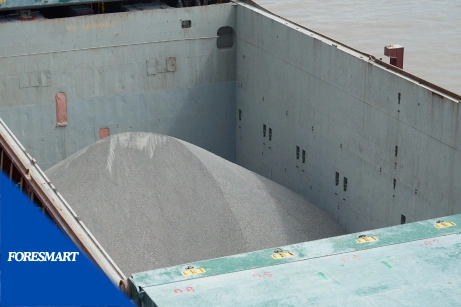
Loose cargo is a category of freight that does not adhere to the traditional standards of containerization and palletization, as it is transported non-packaged, irregularly shaped, or oversized. Far from being a relic of antiquated shipping practices, uncontainerized cargo shipping remains a dynamic and strategic option in modern logistics, mainly for bulky handling, general freight transportation, and non-containerized cargo trade.
From raw materials to heavy machinery, bulk cargo can be shipped efficiently without heavy packaging, often through ports with less advanced infrastructure.
What Is Loose Cargo: Beyond Container Limits
Roughly speaking, loose-loaded goods come in two forms.
-
Bulk Cargo: Bulk cargo is transported in large quantities without packaging. It can be further divided into dry bulk, like grains or coal, and liquid bulk, like crude oil or liquefied natural gas (LNG).
-
Break-Bulk Cargo: Break-bulk refers to packaged items that are too large or irregular for containers and are handled piece by piece, such as machinery, steel, or vehicles.
Loose cargo shipping is more flexible compared to container shipping. It’s used for commodities and large industrial goods that don’t fit into containers and is often the go-to choice when shipments require customized logistics.
Loose Cargo Shipping vs. Containerization
The most prevalent form of shipping is loading goods into ISO containers, a standardized and efficient way that does not subject high-value goods to theft or poor weather.
For bulk and break-bulk cargo shipping, the goods are individually wrapped (such as in boxes or drums) or remain unpackaged, but not containerized. The bulk cargo, unfit-for-container pieces, is poured or pumped directly into the ship, and break-bulk is usually loaded and secured piece by piece with cranes or forklifts. This needs specialized handling and often higher insurance coverage.
Challenges in Loose Cargo Handling
Labor & Crane Intensive
In contrast to the automation-driven container yards, loose shipment requires manual loading via cranes and local skilled labor, resulting in higher dockside costs and slower turnaround.
Increased Damage & Security Risks
Both exposure and manual loading open the door for damage or theft, requiring further handling considerations. Comprehensive insurance policies are necessary when shipping non-containerized cargo.
Pricing and Planning Complexity
The containers’ rates are flat. However, loose freight pricing, which is by handling requirements, cargo weight, and overall dimension, requires more nuanced estimates and closer logistics coordination.
Vessel Availability Constraints
Not all carriers have multi-purpose vessels, so the scheduling is trickier and may be less regular than liner container schedules.
Best Practices in Managing Loose Freight
Load Securing Is Non-Negotiable
Research suggests that cargo shift is a factor in 7% of truck accidents. This indicates that braces, straps, dunnage, and well-planned load configuration play an important role in either ensuring safe transit or leading to a catastrophe.
Tailor Equipment to Cargo
Platforms, step-decks, and flatbeds are particularly useful for oversized and oddly shaped loose items.
Choose the Correct Vessel Type
Heavy-lift ships, often having onboard cranes and modular holds, reduce the need for port gear, so loading and unloading at minor ports is convenient.
Plan With Precision
Comprehensive manifests, load diagrams, and pre-shipment audits together can greatly reduce loading mistakes and facilitate automated transfers.
Embrace Automation
Movement of loose cargo nowadays can be simplified with equipment like Automated Truck Loading Systems (ATLS), roller beds, or live floors.
Experts Collaboration
Multiple engineering teams, freight forwarders, customs brokers, and other logistics partners are critical in overcoming the regulatory, technical, and lifting obstacles for project cargo.
When Loose Cargo Shipping Outperforms Containerization
Oversized Items That Defy Containers
Stuff like prefabricated buildings, turbines, or chassis, more than container limits, have to be shipped as loose freight.
Time and Volume Efficiency
In some cases, by skipping packing steps, loose cargo can compress loading timelines, a game-changer in project-driven supply chains.
Bulk commodities delivered directly by volume also maximizes efficiencies, not broken into containerized parcels where packaging introduces waste and expense.
Infrastructure Limitations
In less-equipped or rural areas, loose freight may be the only shipping possibility because there are no container docks or cranes.
What’s Next With Uncontainerized Cargo
-
Vessel Innovation and Modular Design: New vessel designs include modular holds, along with stronger cranes that are designed to safely and efficiently handle loose shipments.
-
Automation & Robotics in Loading: Progress is being made pertaining to the introduction of robotic bulk loaders, as well as sensor-guided cargo positioning and automated securing systems to speed up port operations with better safety levels.
-
Focus on Sustainability: Bulk carriers lead the way with green fuels and emission reductions.
-
Digital Logistics Platform: AI-driven route planning, cargo tracking, and digital quoting tools increase transparency.
-
Market Growth in Emerging Regions: As developing economies continue to expand infrastructure, the use of uncontainerized cargo logistics, particularly for infrastructure, mining, and agriculture, is increasing.
Smart Ports for Loose Cargo
When shipping bulk and break-bulk cargo, smart ports will use AI-powered systems, big data, and in some cases blockchain, for an advanced orchestration of port operations. These allow for real-time shipment visibility and control for non-standard load movements, improving efficiency even for non-containerized cargo.
Smart port ecosystems also deliver real-time visibility and dynamic cargo control for massive leaps in berth scheduling, crane, and even truck control. These ports are not tied to the inflexible container-based workflow. They cut down on downtime and increased the throughput beyond container terminals.
Conclusion
Nowadays, shipping loose cargo like bulk commodities or oversized freight might be easier than you thought. Despite issues such as expense and resource intensity, technology, smart planning, and cooperating with a reliable freight forwarder like Foresmart can make your loose-loaded freight logistics smoother than ever.
Frequently Asked Questions (FAQs)
How to define loose cargo in shipping?
It means cargo that is transported unpacked, rather than being stuffed into containers. These include machines, automobiles, steel items, and oversized cargo, where special ways of handling are needed.
What’s the difference between bulk cargo and break-bulk cargo?
Bulk cargo is transported in large quantities with no packaging being used (such as grain, oil, or coal), whereas break-bulk cargo includes individual items, usually irregular in shape or size, which cannot be stacked into a container.
Is shipping loose cargo more expensive?
Generally, yes. Loose freight comes with extra expenses that may come from required handling equipment, more manpower, and longer time of loading or unloading times. Despite this, it is still crucial to the industry of non-containerized cargo and oversized freight services.
It means cargo that is transported unpacked, rather than being stuffed into containers. These include machines, automobiles, steel items, and oversized cargo, where special ways of handling are needed.
Bulk cargo is transported in large quantities with no packaging being used (such as grain, oil, or coal), whereas break-bulk cargo includes individual items, usually irregular in shape or size, which cannot be stacked into a container.
Generally, yes. Loose freight comes with extra expenses that may come from required handling equipment, more manpower, and longer time of loading or unloading times. Despite this, it is still crucial to the industry of non-containerized cargo and oversized freight services.