
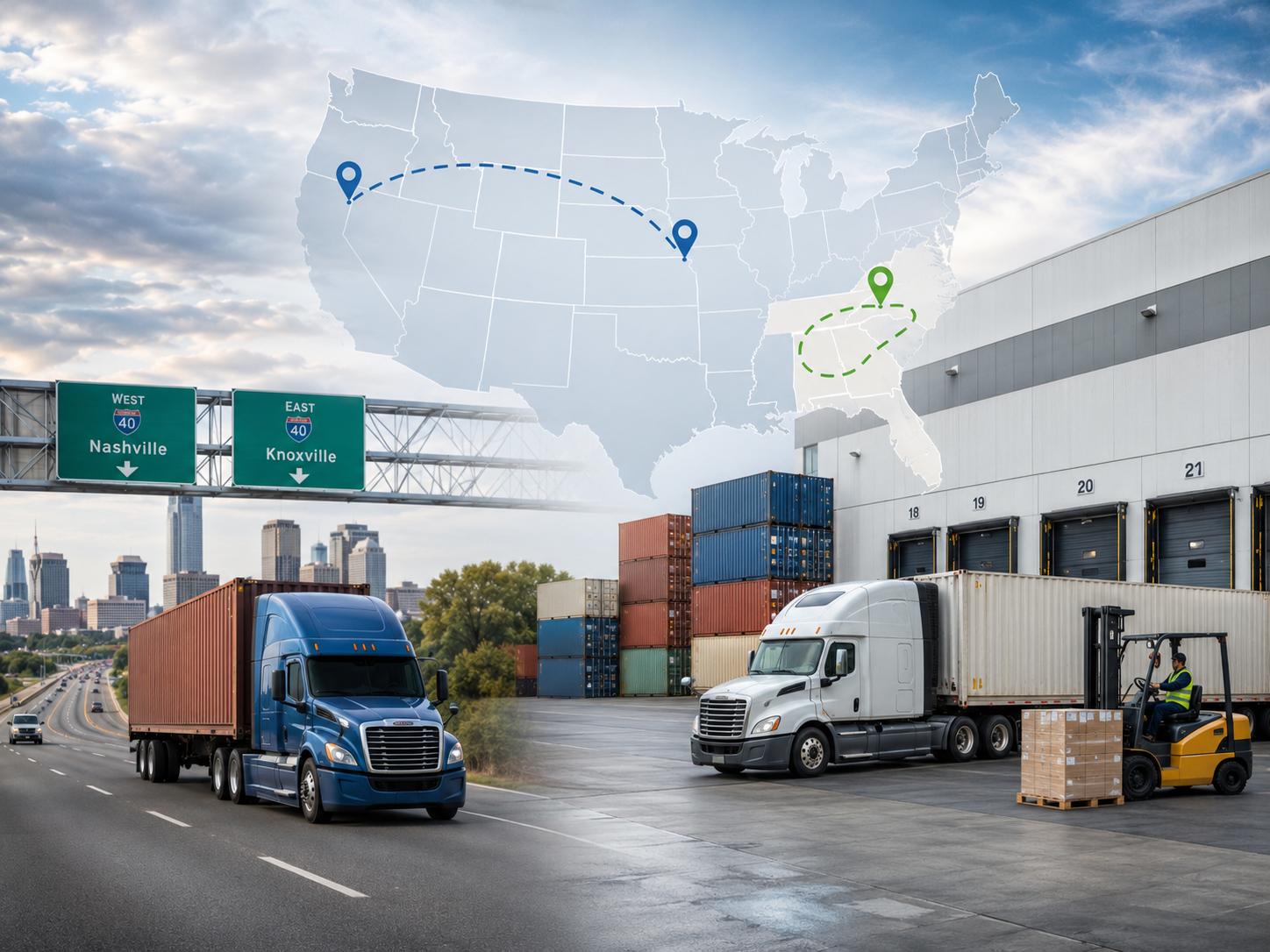
Interstate vs intrastate shipping depends on the full commercial route, not just the distance a truck drives. Interstate shipping crosses state lines or belongs to trade that starts or ends outside the state. Intrastate shipping stays inside one state and does not continue an out-of-state or international movement.
This matters after cargo reaches the United States. Classification can affect carrier authority, insurance, delivery planning, and partner selection.
What Does Interstate Shipping Mean?
Interstate shipping means freight moves between states or forms part of trade that starts or ends outside the state. In trucking, the label can apply even when one truck trip stays inside one state.
The FMCSA USDOT guidance says interstate commerce includes transportation between one state and a place outside that state, including outside the United States. FMCSA also includes two places in one state when the freight belongs to trade that starts or ends outside the state or country.
That detail matters for imported cargo. A container can arrive from China, move from a US port to a same-state warehouse, and still belong to interstate commerce if that truck move continues the import plan.
What Does Intrastate Shipping Mean?
Intrastate shipping means freight starts and ends inside the same state and does not belong to a broader interstate or international movement. A warehouse delivery, retail transfer, or supplier shipment can be intrastate when the commercial movement stays within one state.
Distance does not decide the answer. A short port move can be interstate if the cargo continues an import shipment. A longer same-state move can be intrastate if the goods already sit in local inventory. This is why domestic shipping still needs a route check.
What Is the Difference Between Interstate and Intrastate Shipping?
Interstate shipping follows the full trade path, while intrastate shipping stays inside one state as a separate domestic movement. The difference affects the regulator, carrier registration, and inland planning.
|
Factor |
Interstate Shipping |
Intrastate Shipping |
|---|---|---|
|
Freight path |
Crosses state lines or belongs to out-of-state or foreign trade |
Starts and ends inside one state |
|
Regulator |
FMCSA and federal rules often apply |
State agencies often take the lead |
|
Carrier checks |
USDOT number and sometimes MC authority |
State permits and sometimes USDOT, depending on the state |
Freight Route
Interstate shipping follows the shipment’s commercial path, not only the road route. Intrastate shipping starts and ends inside one state and does not continue an import, export, or state-to-state move.
Regulatory Scope
Interstate freight often falls under FMCSA and federal safety rules. Intrastate freight often depends on state agencies, though state rules can still refer to federal safety standards.
Carrier Registration
Interstate carriers may need USDOT identification and, for some operations, MC authority. Intrastate carriers may need state permits, insurance filings, or USDOT identification, depending on state rules and cargo.
Import Shipment Status
Imported cargo can keep its interstate or foreign-commerce status during the US inland leg. Once goods become local inventory, a later same-state delivery may become intrastate if the new movement starts and ends inside that state.
Why the Difference Matters for Freight Buyers
The interstate or intrastate label affects carrier checks, cost planning, and receiver requirements. A wrong assumption can slow pickup or leave claim terms unclear.
Carrier Authority
Carrier authority should match the actual shipment. FMCSA says commercial vehicles hauling cargo in interstate commerce need a USDOT number when the vehicle or cargo meets listed thresholds.
Some interstate operations need more than a USDOT number. FMCSA says companies that transport federally regulated commodities owned by others, or arrange that transport for compensation in interstate commerce, generally need operating authority, often shown as an MC, FF, or MX number.
Insurance and Claims
Insurance terms can change by carrier role, cargo type, and route. The buyer should check cargo liability terms before booking, especially after customs release.
Pricing and Accessorials
Interstate and intrastate freight can use different rate logic. Common charges include linehaul, fuel surcharge, tolls, appointments, detention, storage, and port handoff charges. Short drayage moves can still involve terminal wait time, chassis use, and appointment limits.
Delivery Appointments
Receiver rules can matter as much as carrier authority. Amazon FBA, retail distribution centers, job sites, and commercial warehouses often require appointments, labels, pallet standards, and proof of delivery. These requirements make last-mile logistics part of booking.
How Interstate and Intrastate Rules Affect China to USA Imports
China to USA imports often include a US inland leg after ocean freight, air freight, customs clearance, or CFS release. That inland leg may look domestic, but the freight can still belong to the import plan.
Port and Airport Handoff
Imported cargo often changes hands at a port, airport, rail ramp, CFS, or warehouse. Plan the US inland move before cargo becomes available.
Door-to-Door Delivery
Door-to-door delivery can combine supplier pickup, international freight, customs clearance, duty payment when the buyer selects DDP, and final delivery. The US domestic leg still needs the right carrier setup.
Amazon FBA and Warehouse Delivery
Amazon FBA delivery adds appointment, label, carton, pallet, and carrier-acceptance rules. A correct interstate or intrastate label will not solve a shipment that fails Amazon receiving requirements.
China-Side Consolidation
China-side consolidation can reduce problems before freight reaches the United States. Foresmart can consolidate goods from multiple Chinese suppliers through warehouses in 10 Chinese cities before export. This gives the US inland partner better cargo data and delivery instructions.
Where Foresmart Fits in the Shipment
Foresmart fits into the international freight chain as a coordinator, not as a state legal adviser or domestic-only US trucking company.
China-Origin Freight Planning
Foresmart is a global freight forwarder and NVOCC for China-origin freight. Foresmart can coordinate supplier pickup, consolidation, sea freight, air freight, customs clearance, DDP delivery when selected, and final delivery through suitable partners.
Trust Signals for International Forwarding
Foresmart is FMC-licensed, code 031352, and a WCA member, ID 130815. These credentials support international forwarding trust. They do not mean Foresmart holds every US intrastate trucking authority.
Shipment Details for a Quote
A useful quote needs supplier addresses, pickup windows, cargo type, weight, CBM, pallet details, delivery address, receiver type, appointment rules, and FBA or warehouse requirements. For shipping from China to the USA, these details help Foresmart choose the right inland partner.
How to Classify a Shipment Before Booking
Classifying the shipment starts with the commercial route. Look beyond mileage and ask where the cargo movement begins, where the cargo ends, and whether the domestic move continues an import plan.
Shipment Origin and Final Destination
Start with the real origin and final consignee. If the cargo starts in China and ends at a US warehouse, the truck move may still belong to the import movement.
Carrier Authority and Insurance
Ask whether the carrier has the right USDOT number, MC authority, state permit, and insurance. The answer depends on the route, commodity, carrier role, and state rules.
Domestic Delivery Type
Identify whether the domestic leg is drayage, FTL, LTL, rail ramp delivery, parcel handoff, or final delivery. Each service type has different equipment and appointment rules.
Accessorial Needs
Check liftgate, residential delivery, inside delivery, appointment delivery, storage, detention, limited access, and proof-of-delivery needs before booking. These details can decide whether the truck completes delivery.
Common Mistakes When Comparing Interstate and Intrastate Shipping
Most mistakes come from reducing the issue to distance. The better question is whether the freight is a local shipment or part of a larger trade movement.
Judging Only by Mileage
A short move is not automatically intrastate. A port move inside one city can still belong to foreign commerce when the truck carries imported cargo to the next planned stop.
Assuming Local Means Simple
Local delivery can still involve strict rules. The carrier may need state registration, a USDOT number, insurance filings, hazmat controls, or delivery equipment.
Ignoring Shipment Continuity
Shipment continuity decides gray areas. If cargo still moves under the original import plan, the domestic leg may not be a separate local shipment.
Misreading DDP
This term is about payment responsibility and service scope. It does not make duties disappear, and it does not guarantee a fixed customs outcome. The domestic leg still needs the right carrier, appointment plan, and delivery instructions.
Overlooking FBA and Warehouse Rules
Amazon FBA and commercial warehouses can reject or delay freight for appointment, labeling, pallet, or packaging issues. These receiver rules can matter as much as classification.
Final Booking Check
Before booking, confirm the shipment origin, final consignee, weight, CBM, carrier authority, insurance terms, delivery type, appointment needs, and receiver rules. If cargo starts in China and ends in the United States, treat the inland leg as part of the import plan until the forwarder or carrier confirms the setup.
FAQs
Is interstate shipping only when a truck crosses a state line?
No. Interstate shipping can apply even when one truck trip stays inside one state, if the cargo belongs to trade that starts or ends outside that state or outside the United States. For importers, a short port move can still count as interstate commerce when the move continues a China to USA shipment.
Can a shipment from China to a US warehouse include an interstate leg?
Yes. A shipment from China to a US warehouse can include an interstate leg when the inland truck, rail, or drayage move remains part of the same import movement. The domestic leg may start at a port, airport, rail ramp, or CFS and end at a warehouse, FBA facility, or final consignee.
Do interstate carriers always need a USDOT and MC number?
Not always. FMCSA says commercial vehicles hauling cargo in interstate commerce need a USDOT number when the vehicle or cargo meets listed thresholds. An MC number depends on the operation type. For-hire carriers and transport arrangers handling federally regulated commodities in interstate commerce may need operating authority.
Is port drayage interstate or intrastate shipping?
Port drayage can be interstate or intrastate, depending on the cargo’s full movement. A container hauled from a US ocean port to a nearby warehouse may still be interstate commerce if the move continues an international shipment. The same local route could be intrastate for domestic stock moving only within one state.
What should importers ask before booking domestic delivery?
Importers should ask where the freight legally starts and ends, what carrier authority applies, what cargo insurance covers, and what delivery rules the receiver requires. The shipper should also confirm appointment windows, pallet standards, liftgate needs, residential limits, detention rules, storage fees, and proof-of-delivery requirements before booking.
No. Interstate shipping can apply even when one truck trip stays inside one state, if the cargo belongs to trade that starts or ends outside that state or outside the United States. For importers, a short port move can still count as interstate commerce when the move continues a China to USA shipment.
Yes. A shipment from China to a US warehouse can include an interstate leg when the inland truck, rail, or drayage move remains part of the same import movement. The domestic leg may start at a port, airport, rail ramp, or CFS and end at a warehouse, FBA facility, or final consignee.
Not always. FMCSA says commercial vehicles hauling cargo in interstate commerce need a USDOT number when the vehicle or cargo meets listed thresholds. An MC number depends on the operation type. For-hire carriers and transport arrangers handling federally regulated commodities in interstate commerce may need operating authority.
Port drayage can be interstate or intrastate, depending on the cargo’s full movement. A container hauled from a US ocean port to a nearby warehouse may still be interstate commerce if the move continues an international shipment. The same local route could be intrastate for domestic stock moving only within one state.
Importers should ask where the freight legally starts and ends, what carrier authority applies, what cargo insurance covers, and what delivery rules the receiver requires. The shipper should also confirm appointment windows, pallet standards, liftgate needs, residential limits, detention rules, storage fees, and proof-of-delivery requirements before booking.