
According to the International Maritime Organization (IMO), a verified gross mass declaration is a prerequisite for loading any packed container onto a vessel. Under SOLAS regulation VI/2, effective July 1, 2016, containers without a confirmed gross weight on file are denied loading at the terminal.
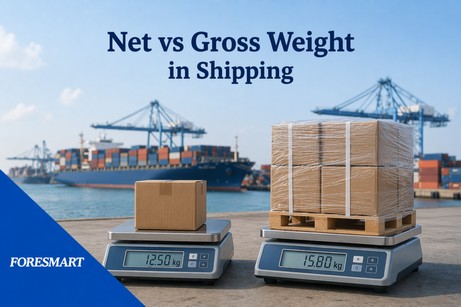
Net weight covers the product alone. Gross weight adds packaging, pallets, and the container’s tare weight. Mixing up the two produces an inaccurate VGM. That mistake holds cargo at the port, delays shipments, and triggers customs penalties. This guide shows how to get both numbers right.
What Is Net Weight?
Net weight is the weight of the product itself, excluding all packaging, containers, and shipping materials. On a commercial invoice or packing list, net weight is recorded separately from gross weight to isolate the product weight from packaging.
The Role of Net Weight in Shipping
Net weight is recorded on packing lists, customs declarations, and the commercial invoice. For weight-based duties, customs authorities assess charges on the product’s weight, not the packaging around it. Reporting a lower weight can flag the shipment for a customs audit, while an inflated figure increases duty costs on weight-based tariff lines.
How to Calculate Net Weight
Net weight is the gross weight of a shipment minus its tare weight.
- Net Weight = Gross Weight − Tare Weight
Tare weight covers everything that is not the product: boxes, pallets, foam inserts, strapping, and dunnage. Weigh the fully packed shipment first. Subtract the combined weight of all packaging materials.
For multi-unit shipments with identical products, weigh one unit without packaging, then multiply by the total unit count.
What Is Gross Weight?
Gross weight is the total weight of a shipment, including the product, all packaging materials, and pallets. For containerized shipments, gross weight also includes the container itself.
The Role of Gross Weight in Shipping
Gross weight is one of the primary figures carriers use to price freight. Road and sea carriers base their rates on gross weight. Air carriers use the greater of gross weight and volumetric weight as the billable figure. An understated gross weight on a bill of lading can result in shipment holds, reweigh surcharges, and amended freight invoices.
Customs and transport authorities use gross weight on declarations and shipping documents to verify that shipments stay within legal weight limits. A declared gross weight that exceeds legal weight limits can delay clearance at the border.
How to Calculate Gross Weight
Gross weight is the net weight of the goods plus the tare weight of all packaging materials.
- Gross Weight = Net Weight + Tare Weight
Weigh the fully packed shipment on a calibrated scale.
For containerized shipments, add the container’s tare weight to the packed cargo weight. Container tare weight is marked on the container door panel.
What’s the Difference Between Net Weight and Gross Weight
Net weight covers the product alone. Gross weight covers the product plus all packaging, pallets, and container weight. In practice, gross weight is measured directly on a scale, while net weight is derived by subtracting tare weight. That distinction changes how freight is priced, how duties are assessed, and which party bears liability for an incorrect declaration.
Included Components
Net weight includes only the goods being shipped. No boxes, no filler, no pallet, no container.
Gross weight includes the goods plus every layer around them: inner packaging, outer cartons, cushioning materials, pallets, strapping, and dunnage. For full container load (FCL) shipments, gross weight also includes the container’s tare weight.
Key Stakeholders
Customs authorities use net weight to calculate weight-based import duties. Buyers and sellers use it to verify the quantity of goods in a transaction. Compliance teams use it to confirm product specifications against purchase orders.
Carriers use gross weight to price freight and allocate vessel or aircraft space. Terminal operators use it to verify the VGM before loading. Transport authorities use it to enforce vehicle and bridge weight limits.
Shipping Documentation
Net weight is recorded on commercial invoices and packing lists.
Gross weight is recorded on bills of lading, shipping instructions, VGM declarations, and customs declarations.
Packing lists typically carry both figures side by side.
Net vs Gross Weight Comparison Table
Seven factors separate net weight from gross weight in day-to-day shipping operations.
|
Factor |
Net Weight |
Gross Weight |
|
Definition |
Weight of the product only |
Product + all packaging + container |
|
Formula |
Gross Weight − Tare Weight |
Net Weight + Tare Weight |
|
Measurement |
Derived by subtraction |
Measured directly on a scale |
|
Primary Users |
Customs authorities, buyers, sellers |
Carriers, terminal operators, transport authorities |
|
Pricing Role |
Duty and tariff calculation |
Freight rate calculation |
|
Key Documents |
Commercial invoice, packing list |
Bill of lading, VGM declaration, customs declaration |
|
Compliance Risk |
Incorrect figure triggers customs audits and duty adjustments |
Incorrect figure blocks vessel loading under SOLAS |
One wrong figure can hold cargo at the carrier, the terminal, or customs.
Why Accurate Weight Calculations Matter in Logistics
Weight errors affect every party in the supply chain. The financial and compliance impact scales with shipment volume.
Controlling Shipping Costs and Freight Rates
Freight rates are tied primarily to gross weight. Overstate it and you pay for capacity you never used. Understate it and the carrier applies a reweigh surcharge after loading.
Accurate weight data also strengthens rate negotiations. Shippers with consistent, verified figures can benchmark freight spend per kilogram across carriers and lanes.
Streamlining Customs Clearance and Documentation
Customs authorities cross-check weight figures across multiple documents. A net weight mismatch between the commercial invoice and the packing list flags the shipment for inspection.
Weight discrepancies on import declarations can trigger a formal audit. Audits delay clearance and may result in adjusted duty assessments, penalties, or both.
Meeting Customer Expectations
Buyers expect the delivered weight to match the invoiced weight. A shortfall raises questions about product loss, theft, or short-shipping. An overage suggests packaging weight was billed as product.
For weight-based commodities, even small discrepancies affect the buyer’s unit cost.
Preventing Costly Discrepancies and Returns
Weight mismatches between the invoice and the received goods are a common trigger for chargebacks. The buyer’s receiving team weighs inbound cargo against the purchase order. A discrepancy outside the agreed tolerance typically generates a formal dispute.
Returns from weight disputes add reverse logistics costs. The shipper pays for return freight, re-inspection, and repackaging.
Complying with Safety and Vehicle Weight Limits
Road, rail, and sea transport are subject to legal weight limits. A vehicle that exceeds its gross vehicle weight rating faces fines, impoundment, or denied passage at weigh stations. An overloaded container can be rejected at the port.
Accurate gross weight reporting also protects against safety incidents. Overloaded vehicles have longer braking distances and higher rollover risk.
Common Mistakes and Misconceptions About Net Weight and Gross Weight
Most weight errors in shipping do not come from bad math. They come from skipped steps and wrong assumptions.
The Tare Weight Omission
Some shippers report net weight as gross weight by leaving tare weight out of the calculation. The VGM then does not match the container’s verified mass at the terminal. We know firsthand how stressful calculating precise FCL tare weights can be. That’s why our logistics team here at Foresmart handles all VGM declarations for our clients, ensuring your shipments meet SOLAS requirements without any costly loading delays.
Gross vs. DIM Weight Confusion
Gross weight and dimensional (DIM) weight are not interchangeable. Gross weight is the actual measured weight of the shipment. DIM weight is a pricing formula based on the package’s volume. Air and parcel carriers typically bill on whichever figure is higher. Using gross weight without knowing how to calculate volumetric weight can lead to under-billed shipments and retroactive surcharges.
Incorrect Customs Declarations
Listing gross weight in the net weight field on a customs declaration overstates the dutiable weight. Listing net weight in the gross weight field understates the shipment’s total mass. Either error can trigger an inspection, a duty reassessment, or a penalty.
Unverified Weight Estimates
Estimating weight from product catalogs or prior shipments skips actual measurement. Packaging materials, moisture content, and pallet weight vary between batches. A shipment weighed on a calibrated scale eliminates guesswork and the disputes that follow.
Tips for Accurate Weight Calculations
Four practices reduce weight errors across inbound and outbound shipments.
Using Calibrated Commercial Scales
Use NTEP-certified or trade-approved scales for all shipment weighing. Calibrate scales on a fixed schedule, not just when readings look off. A 0.5% drift may seem minor on a single carton. Applied to a full container load, that percentage produces a weight gap large enough to trigger a reweigh surcharge.
Standardizing Packaging Materials
Assign a fixed tare weight to each packaging configuration. Record the weight of every box type, pallet, and cushioning material in a reference table. When packaging materials change, update the tare values before the next shipment.
Weighing After Final Assembly
Weigh the shipment after all packing, labeling, and palletizing is complete. Strapping, corner protectors, or stretch wrap added after the recorded weight are not captured. The declared gross weight then falls short of the actual figure.
Automating with Shipping Software
Shipping platforms can pull tare weight from stored packaging profiles and calculate net and gross weight automatically. Automated calculations reduce manual entry errors. Weight figures stay consistent across the commercial invoice, packing list, and bill of lading.
Conclusion
Net weight is the product alone. Gross weight is the product plus all packaging and container weight. Every freight invoice, customs declaration, and VGM filing depends on both figures being correct.
Weigh on calibrated scales after final packing. Standardize tare weights by packaging type. Verify that weight figures match across all shipping documents before cargo leaves the facility. If managing these strict weight declarations is slowing down your operations, our sea freight services at Foresmart can take over the compliance work to keep your cargo moving.
Frequently Asked Questions (FAQs)
Is the Shipping Label Based on Gross or Net Weight?
Shipping labels use gross weight. The label reflects the total weight of the package, including the product and all packaging materials. Carriers rely on this figure to sort, route, and bill the shipment. For air and parcel shipments, carriers bill based on dimensional weight if it exceeds the gross weight.
How Do I Find the Tare Weight of a Shipping Container?
The tare weight is printed on the container’s door panel, next to the container number and max gross weight. It is also listed on the Container Safety Convention (CSC) plate. If the markings are unreadable, request the tare weight from the shipping line or container depot.
Does Gross Weight Include the Pallet?
Yes. Gross weight includes the pallet. If the shipment is containerized, gross weight also includes the container’s tare weight. Omitting the pallet weight from the gross weight figure understates the total and can trigger a reweigh surcharge.
Shipping labels use gross weight. The label reflects the total weight of the package, including the product and all packaging materials. Carriers rely on this figure to sort, route, and bill the shipment. For air and parcel shipments, carriers bill based on dimensional weight if it exceeds the gross weight.
The tare weight is printed on the container’s door panel, next to the container number and max gross weight. It is also listed on the Container Safety Convention (CSC) plate. If the markings are unreadable, request the tare weight from the shipping line or container depot.
Yes. Gross weight includes the pallet. If the shipment is containerized, gross weight also includes the container’s tare weight. Omitting the pallet weight from the gross weight figure understates the total and can trigger a reweigh surcharge.
