
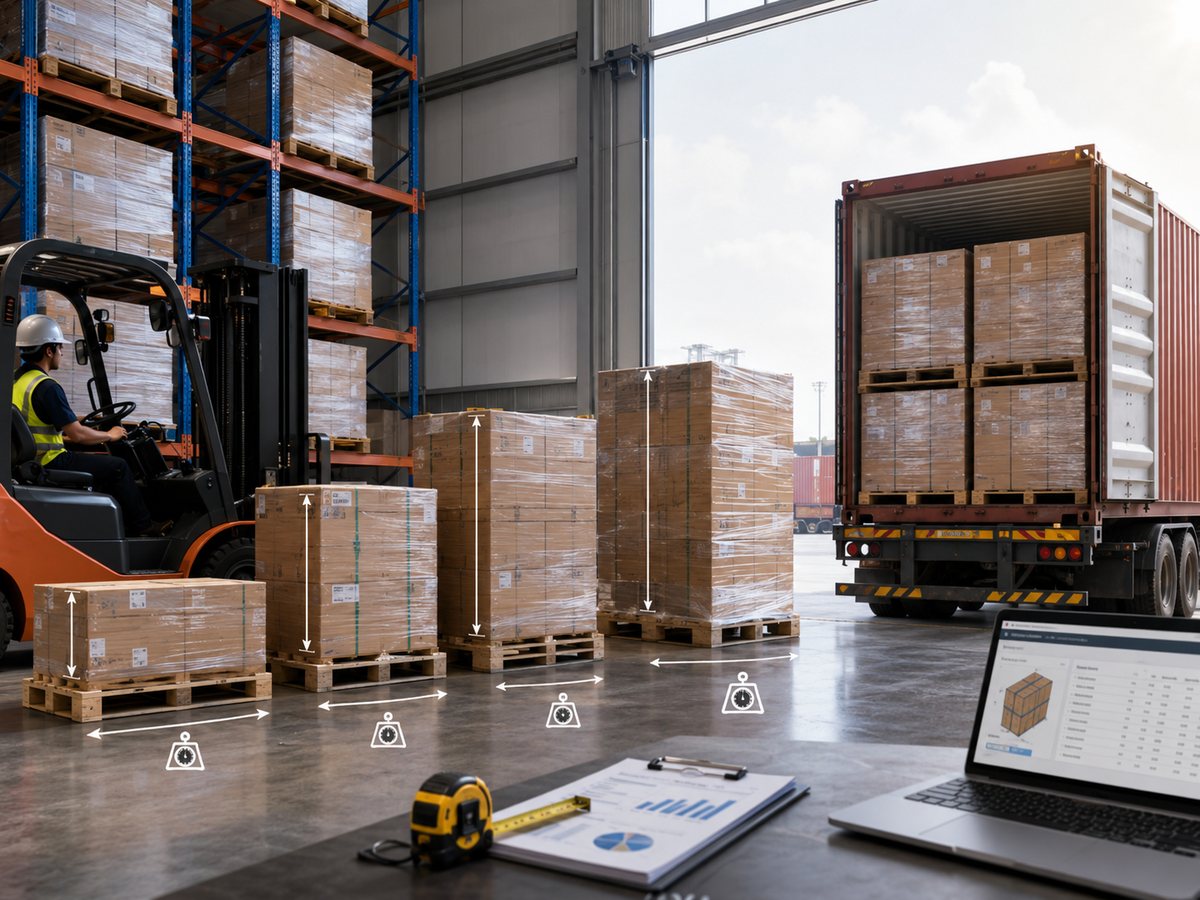
Standard pallet dimensions affect the freight quote before the cargo leaves the supplier’s warehouse. A pallet that looks normal on the warehouse floor can add CBM, change air freight chargeable weight, waste container floor space, or create receiving problems at an Amazon FBA warehouse.
This guide gives the common pallet sizes, then shows how loaded pallet dimensions, tare weight, and stackability affect shipping cost and container fit. Use the tables and checks before asking a supplier or freight forwarder for a final quote.
What Are Standard Pallet Dimensions for Shipping?
Standard pallet dimensions depend on the destination market, warehouse equipment, and cargo handling path. In North America, the common reference size is 48 x 40 inches. For Europe, a Euro pallet uses a 1200 x 800 mm footprint. ISO 6780:2003 covers principal dimensions and tolerances for intercontinental flat pallets, so the market decides the standard pallet size.
|
Pallet Type |
Dimensions in Inches |
Dimensions in mm |
Typical Use |
Shipping Note |
|---|---|---|---|---|
|
North American standard pallet |
48 x 40 in |
1219 x 1016 mm |
U.S. warehousing, retail, domestic distribution, imports to North America |
Common reference size for U.S. freight quotes |
|
Euro pallet |
47.2 x 31.5 in |
1200 x 800 mm |
Europe-bound freight, retail, warehousing, road transport |
EPAL lists the EPAL 1 pallet at 1200 x 800 x 144 mm with an approximate 25 kg weight |
|
1200 x 1000 mm pallet |
47.2 x 39.4 in |
1200 x 1000 mm |
International shipping, industrial cargo, regional distribution |
Gives a wider footprint than a Euro pallet |
|
1100 x 1100 mm pallet |
43.3 x 43.3 in |
1100 x 1100 mm |
Asia-Pacific cargo, square carton loads, export packing |
Square footprint can fit some cartons better but may waste container floor space |
|
Australian standard pallet |
45.9 x 45.9 in |
1165 x 1165 mm |
Australia-bound freight and local warehousing |
Usually needs destination-side confirmation before export packing |
|
Custom or oversized pallet |
Varies |
Varies |
Machinery, long cartons, fragile cargo, irregular loads |
Needs full loaded dimensions, photos, and handling notes before quoting |
The table gives the base footprint. A freight quote needs the loaded pallet dimensions, including cartons, wrap, edge protection, top boards, and any overhang. A 48 x 40 inch pallet with cartons leaning past the deck is no longer a clean 48 x 40 inch shipping unit.
The ISO sizing reference comes from ISO 6780:2003, and the Euro pallet height and weight notes come from EPAL Euro pallet specifications.
How Pallet Dimensions and Weight Affect Shipping Cost
Pallet dimensions affect shipping cost because carriers price cargo by space, weight, or both. LCL and warehouse charges often use CBM, while air freight uses chargeable weight. For buyers comparing freight forwarding services, pallet data turns a rough estimate into a quote that matches the cargo the carrier will move.
Loaded Pallet Dimensions and CBM
The calculation uses length, width, and height. For palletized cargo, the measurement must include the finished load, not the empty pallet base.
Use this formula:
CBM = length (m) x width (m) x height (m) x pallet count
For LCL pricing, the CBM calculation should use the finished pallet size because the quote still depends on the actual packed measurement.
Gross Weight and Pallet Tare Weight
Gross weight includes the goods, the pallet, cartons, wrap, straps, and any top protection. Pallet tare weight is the pallet’s own weight, and the tare number changes by material, moisture level, deck design, and repair history.
Ask the supplier for gross weight per loaded pallet, not only product net weight. A shipment may look light by carton count, then become heavier after wood pallets and packing material add weight. This weight matters for trucking, warehouse handling, customs documents, and some minimum charge rules.
Air Freight Chargeable Weight
Air freight uses the higher number between actual gross weight and chargeable weight for air freight. A tall pallet with light goods can cost more by volume than by scale weight.
For air cargo, do not stack cartons high just to reduce pallet count. An uneven or oversized pallet may raise chargeable weight, block airline handling, or require repacking before departure. If the cargo is urgent, confirm airline and forwarder handling limits before the supplier builds the pallet.
How Pallet Dimensions Affect Container Fit
Pallet dimensions affect container fit because the pallet footprint controls floor space, while pallet height controls usable volume. A 20ft or 40ft container may have open cubic space above the cargo, yet the floor can still be full if the pallet footprint does not match the container width.
20ft Container Floor Space
A 20ft container has limited floor length, so pallet footprint and orientation matter. Standard pallets may fit differently when the warehouse loads pallets straight, turns them, mixes them with loose cartons, or works around door clearance and loading equipment.
Do not treat a 20ft container as a pure math box. Real loading also depends on pallet condition, carton overhang, cargo weight distribution, and whether pallets can be safely stacked. Detailed pallet-count logic belongs in a container loading article, while this section explains why the pallet footprint matters.
40ft Container Floor Space
A 40ft container gives more floor length, but the container width still limits pallet placement. A pallet that wastes 2 inches across the width can leave dead space that cannot hold another pallet or a stable carton stack.
For FCL shipments, the right pallet size depends on the loading goal. Some shipments need maximum carton count. Others need fast unloading, forklift access, or lower damage risk. Check the cargo plan against actual shipping container dimensions before the supplier builds all pallets.
Stackable vs. Non-Stackable Pallets
Stackable pallets can reduce wasted vertical space, but the cargo must support the load above. Weak cartons, uneven tops, fragile goods, liquids, and mixed carton heights often make a pallet non-stackable.
Tell the forwarder whether each pallet is stackable before quoting. A non-stackable pallet can use the same floor footprint as a stackable pallet but take more container volume because nothing can safely sit above the load.
How to Choose the Right Pallet Size for Your Shipment
The right pallet size is the size that matches the cargo, destination warehouse, transport mode, and loading plan. A pallet should protect the goods without creating dead space, excess CBM, or receiving problems.
LCL Shipments
For LCL shipments, choose a pallet size that keeps cartons within the pallet edge and gives a clean loaded measurement. Oversized pallets can raise shared-container cost because the shipment pays for the space the pallet blocks, not only the cargo sitting on the wood.
LCL cargo also moves through more handling points. A clean pallet with no overhang is easier to move by forklift and less likely to catch on nearby cargo.
FCL Shipments
For FCL shipments, pallet size should match the container loading plan. The goal may be full container use, safe weight distribution, easy unloading, or damage control.
If the shipment is near a full container load, ask for a basic loading plan before mass palletizing. A supplier may choose a convenient warehouse pallet size that leaves avoidable gaps inside the container.
Amazon FBA Shipments
Amazon FBA shipments need pallet dimensions, labels, carton condition, and appointment details that match the current receiving rules in Seller Central. Amazon requirements can change by region, fulfillment center, and shipment type, so the final rule check should happen before pickup.
For China-origin sellers, Amazon FBA shipping also needs clean labeling and stable pallets because receiving problems can lead to delay, rework, or extra storage time. Do not rely on a supplier’s local pallet habit if the cargo is going straight to an Amazon warehouse.
Multi-Supplier Shipments from China
Multi-supplier shipments need pallet decisions after consolidation, not before each supplier ships alone. If every supplier uses a different pallet size, the final load may waste container space or need repacking.
Foresmart’s freight consolidation service can combine cargo from multiple Chinese suppliers, then repack or palletize the shipment in one loading plan. This process helps buyers control CBM, reduce scattered handling, and avoid paying for multiple small shipments that could move together.
Common Pallet Dimension Mistakes That Raise Shipping Costs
Most pallet problems start before booking. A quote can be wrong when a buyer measures the pallet too early, measures the base only, or treats the cargo as stackable without checking the load.
Measuring the Pallet Base Only
The empty pallet base is not the shipping size. The correct measurement is the final loaded pallet after cartons, wrapping, top boards, and edge protection are in place.
This mistake can change the CBM after pickup. If the packed pallets are larger than the quoted dimensions, the forwarder may need to revise the quote, change the loading plan, or arrange repacking.
Ignoring Carton Overhang
Carton overhang makes a pallet wider or longer than the base. Overhang also exposes carton corners to forklift contact and nearby cargo.
Keep cartons inside the pallet edge whenever the product shape allows. If the product shape forces overhang, measure the widest point and send photos before booking.
Using a Pallet Size That Does Not Match the Destination
A pallet that works in a supplier’s warehouse may not match the destination warehouse. The receiving side may have rack limits, forklift limits, dock rules, or retail handling rules.
Ask the buyer, 3PL, retailer, or Amazon workflow for destination pallet rules before packing. Changing pallets after arrival usually costs more than choosing the right footprint at origin.
Treating All Pallets as Stackable
Stackability is a cargo condition, not a pallet label. Mark a pallet non-stackable when the goods cannot support top weight, the upper surface is uneven, or the cargo could crush under another pallet.
Wrong stackability information can break the loading plan. The forwarder may reserve less space than the cargo needs, and the warehouse may need to rebuild the load before departure.
What Details Should You Give a Freight Forwarder?
Send the finished pallet data before asking for a final quote. A clear quote request should include:
- Pallet count
- Full loaded pallet dimensions
- Gross weight per pallet
- Stackable or non-stackable status
- Pallet material, such as wood, plastic, or plywood
- ISPM 15 stamp status for international wood packaging
- Photos of finished pallets
- Origin city and pickup address
- Destination address, warehouse name, or Amazon FBA warehouse code
- Delivery restrictions, dock rules, and receiving appointment needs
If the pallets are not finished yet, send expected dimensions and mark the numbers as estimates. A freight forwarder can price an estimate, but ask the forwarder to check the quote again after the supplier confirms the packed pallet size.
FAQ
Can Cartons Ship Without Pallets?
Cartons can ship without pallets when the shipment is small, light, and safe to handle by carton. Loose cartons may work for some LCL or express shipments, but palletizing often protects cargo during forklift handling, warehouse sorting, and container loading. Ask the forwarder before choosing loose cartons for heavy or fragile goods.
Do International Wood Pallets Need an ISPM 15 Stamp?
International wood pallets usually need ISPM 15 treatment and a visible IPPC mark when the pallets move across borders. IPPC ISPM 15 applies to wood packaging material used in international trade, including pallets, crates, and dunnage. Plastic, plywood, and processed wood may follow different rules, so confirm the packaging material before pickup.
Can Mixed Pallet Sizes Ship Together in One Shipment?
Mixed pallet sizes can ship together, but the loading plan becomes harder. Different footprints can leave dead space inside a container, make stacking unsafe, or slow warehouse handling. Send each pallet size separately in the quote request so the forwarder can calculate CBM and container fit correctly.
Can Amazon FBA Reject a Pallet for Size or Condition?
Amazon FBA can delay, refuse, or rework palletized cargo when the shipment does not match current receiving rules, labels, appointment details, or pallet condition requirements. The safest step is to check Seller Central rules before pickup and confirm the pallet plan with the forwarder. Do not assume a supplier’s normal pallet size is acceptable for FBA receiving.
What Happens if Pallet Dimensions Change After Booking?
If pallet dimensions change after booking, the freight quote and loading plan may need revision. Larger pallets can raise CBM, change air freight chargeable weight, or reduce the number of pallets that fit in a container. Send the updated dimensions before pickup so the forwarder can correct the booking before cargo reaches the warehouse.
Cartons can ship without pallets when the shipment is small, light, and safe to handle by carton. Loose cartons may work for some LCL or express shipments, but palletizing often protects cargo during forklift handling, warehouse sorting, and container loading. Ask the forwarder before choosing loose cartons for heavy or fragile goods.
International wood pallets usually need ISPM 15 treatment and a visible IPPC mark when the pallets move across borders. IPPC ISPM 15 applies to wood packaging material used in international trade, including pallets, crates, and dunnage. Plastic, plywood, and processed wood may follow different rules, so confirm the packaging material before pickup.
Mixed pallet sizes can ship together, but the loading plan becomes harder. Different footprints can leave dead space inside a container, make stacking unsafe, or slow warehouse handling. Send each pallet size separately in the quote request so the forwarder can calculate CBM and container fit correctly.
Amazon FBA can delay, refuse, or rework palletized cargo when the shipment does not match current receiving rules, labels, appointment details, or pallet condition requirements. The safest step is to check Seller Central rules before pickup and confirm the pallet plan with the forwarder. Do not assume a supplier’s normal pallet size is acceptable for FBA receiving.
If pallet dimensions change after booking, the freight quote and loading plan may need revision. Larger pallets can raise CBM, change air freight chargeable weight, or reduce the number of pallets that fit in a container. Send the updated dimensions before pickup so the forwarder can correct the booking before cargo reaches the warehouse.