
Container freight station (CFS) is where items are organized for transportation. The main role of a CFS is to ensure that items being shipped are loaded and unloaded safely into and from the containers. In this article, we’ll discuss CFS in shipping, why it’s important in logistics, and more. Let’s begin!
What Is a Container Freight Station (CFS)?
When it comes to modern economics, trade, in one form or another, is the backbone. Every day, millions of products are shipped by land, air, and sea to meet the growing demands and necessities of multiple businesses and consumers.
However, getting these goods from one place to another is often challenging. Efficient planning, operations, and logistics play key roles in the entire shipping process. One of the most critical facilities is the CFS. A container freight station is a cargo facility where items are sorted, stored, and prepared before import and export. It helps manage the complex process of moving items across borders.
To make the shipping process easier, products from different companies are consolidated into a single full container at the CFS before being shipped to the destination country. In addition, a CFS is also used to deconsolidate products from the containers it receives. The consolidation and deconsolidation process involves packing and unpacking, sorting, and so on. The cargo processed in this facility is often categorized as LCL goods, yet CFS sometimes handles FCL goods as well.
Apart from this, CFS also helps manage other important tasks in international shipping. Inspections, packing, and short-term storage for empty containers are all common examples of such tasks, improving the shipping process by making it more organized and efficient.
Container Freight Station Vs Traditional Warehouse
It’s also easy to confuse a container freight station with a traditional warehouse. However, they are entirely different. A CFS focuses on short-term storage and handling goods right before shipping. A warehouse, on the other hand, is used for storing products or materials over a longer period of time and such products are, most of the time, part of a company’s inventory.
Is CY and CFS in Logistics the Same Thing?
The short answer is no! Container Freight Station (CFS) is sometimes confused with Container Yard (CY). Both CFS and a shipping courtyard (CY) are two different things.
A container yard is a storage area where containers are held temporarily before being loaded onto a ship or after being unloaded from one. It is usually located within or near the port, handling full container load shipments. In contrast, a container freight station is a place where goods are consolidated or deconsolidated inside containers, located near the port or freight terminal.
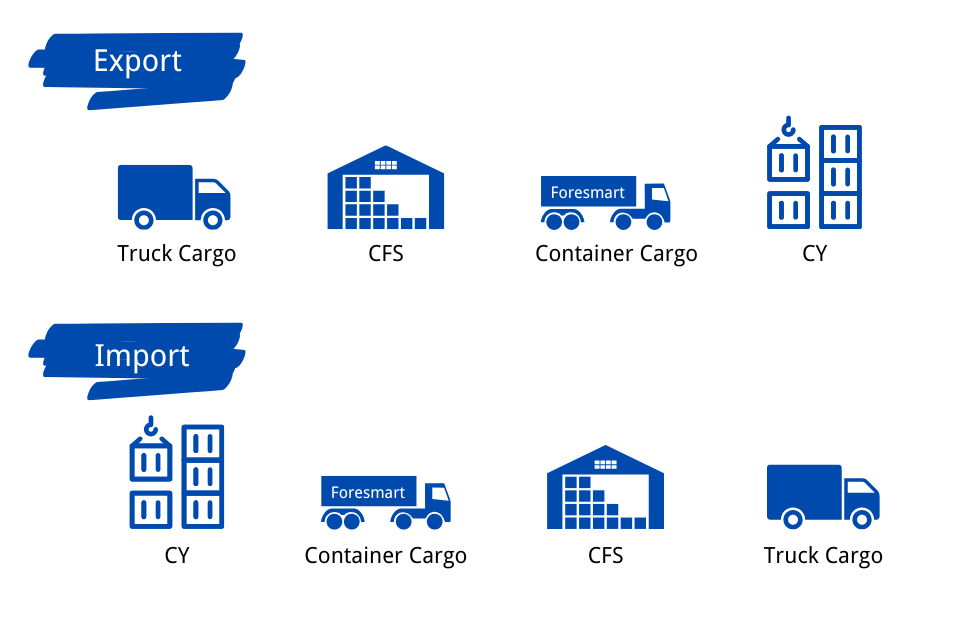
Here is how your LCL shipment is processed:
What Is the Container Freight Station’s Role in Shipping?
The fundamental role of CFS in shipping is to streamline cargo movements throughout the entire supply chain and make logistic operations more efficient. CFS is necessary for both importers and exporters when it comes to managing goods in less time and with less hassle, which, in turn, translates into increased profits.
Some of the key roles and functions of CFS include:
Consolidation and Deconsolidation
This is one of the primary functions of container freight stations. Consolidation is when multiple items from different companies are combined into a single container for them to be exported. Deconsolidation, on the other hand, is when items arriving in containers are separated from each other and then sorted and either shipped or stored based on their further delivery location.
Documentation
When goods arrive at the CFS, waiting for the next shipment, documentation work related to import or export, such as customs declarations, can be processed at this stage.
Inspection of Cargo
This is another essential function of CFS as the facilities ensure that customs representatives have a secure and streamlined environment where they can inspect the items and determine whether they meet regulations or not.
What Are the Benefits of Using Container Freight Station?
CFS in international shipping can be beneficial for both importers and exporters in today’s fast-paced global trade environment. Some of the key benefits of CFS include:
Flexible Cargo Handling and Storage
A CFS is designed to hold goods for a short amount of time before shipping. The CFS allows businesses to sort and make some last-minute adjustments to cargo, which in turn, can improve their cargo handling flexibility.
Improved Security Measures
Most CFS facilities are fully equipped with security equipment that includes cameras and detectors and also have secure storage areas. Having goods stored in facilities with such equipment helps businesses ensure that their products or materials are not damaged or stolen.
Less Risk for Detention Charges
Detention charges are fees or penalties that companies must pay when shipping containers are not returned to the provider within the agreed-upon timeframe. These delays can happen for various reasons. However, container freight stations help facilitate efficient consolidation and deconsolidation, which allows containers to be emptied more quickly and returned on time, reducing the risk of detention fees.
Related Reading: Detention Fees or Demurage Fees?
How Do Container Freight Station Work in International Shipping?
When it comes to CFS operations in international shipping, the exact step for the entire process can vary from one provider to the other or based on the shipment itself. However, a general sequence of CFS shipping includes:
Receiving Cargo
This is the first stage of the process when a CFS facility gets hold of the cargo. In this stage, some documents like a shipping bill are checked and the shipment is logged into the system.
Handling
At this stage, workers begin sorting the CFS cargo. Export cargo is consolidated into containers, while import cargo is deconsolidated from them.
Customs Clearance:
The customs documentation is prepared and submitted to customs for inspection. The goods may undergo a random customs inspection at this stage.
Dispatch – After customs clearance is completed, the export goods in the container can begin their journey to the destination. The imported goods can then be sent to the final consignee.
Conclusion
A container freight station is a facility designed to process and hold shipments for a short period of time. By learning about CFS freight, companies will be more familiar with logistic operations, and make more informed shipping decisions.
Frequently Asked Questions (FAQs)
What are CFS charges?
Goods handled by a Container Freight Station (CFS) are charged for services such as loading and unloading, consolidation and deconsolidation, storage, handling, and other related activities.
Why are CFS shipments categorized as LCL?
Because most LCL shipments are consolidated or deconsolidated in the freight container station.
Is a CFS facility different from a warehouse?
Yes, a CFS transport facility is different from a warehouse since it’s designed to store items on a temporary basis. Whereas, a warehouse is used as a permanent or long-term storage option.