
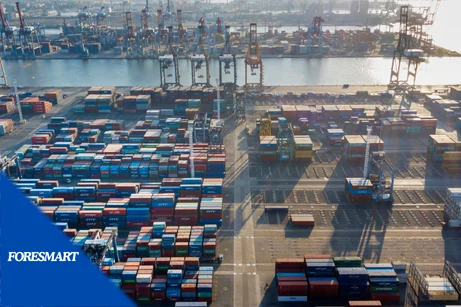
A freight terminal is a facility where cargo transfers between transport modes or gets processed for further distribution. Every shipment passes through at least one terminal before reaching its final destination.
Maritime cargo volume has grown from roughly 4 billion tons in the mid-1990s to over 11 billion tons today (UNCTAD). As volume rises, delays and inefficiencies at any single terminal ripple across entire supply chains, driving up costs and stretching delivery timelines. Understanding how terminals work helps shippers avoid those bottlenecks.
Four Types of Freight Terminals
Freight terminals vary based on the cargo they handle and the transport mode they connect. Some handle a single transport mode. Intermodal terminals process multiple modes within one facility, giving shippers more routing options. Knowing which type matches your shipment prevents costly detours and delays down the line.
Truck Terminals
Truck terminals are the most common type of freight terminal. They serve as the final consolidation point before cargo reaches its destination, handling both short-haul and long-haul shipments.
At a truck terminal, cargo arrives from various origins, gets unloaded, sorted by destination, and loaded onto outbound trucks for last-mile delivery. Because trucks move in and out constantly, these terminals sit near highways or urban centers to keep local distribution fast.
Rail Terminals
Rail terminals load and unload cargo from trains across rail networks. They include cranes, loading docks, and storage areas designed for bulk goods.
Rail freight moves large volumes of raw materials like grain, coal, lumber, and industrial chemicals that trucks cannot handle efficiently. A single freight train carries the equivalent of 280 truckloads, making rail terminals essential for heavy or high-volume shipments.
Shippers often use rail terminals as a middle link, connecting ocean freight arriving at a port with inland destinations hundreds of miles away.
Air Terminals
Air terminals, located at airports, process cargo destined for air transport. They handle time-sensitive, high-value, or temperature-controlled shipments that need the speed of air freight.
These terminals require specialized equipment. Cold storage units maintain temperature for perishable goods and pharmaceuticals. X-ray scanners and security screening areas meet aviation safety standards. High-value electronics and luxury goods move through restricted-access zones.
Air terminals operate on tight schedules because cargo planes have strict departure windows. The faster goods move through the terminal, the faster they reach their destination.
Marine Terminals
Marine terminals handle ocean freight. When people refer to “port terminals,” they are usually talking about marine terminals within a larger port facility.
Large container ships dock at these terminals, where heavy-duty cranes load and unload shipping containers. Trailers and straddle carriers move containers between the ship, storage yards, and truck or rail connections. Marine terminals also maintain specialized zones for perishable goods, hazardous materials, and oversized cargo.
As the entry point for most international trade, marine terminals set the pace for the entire supply chain. Congestion at a marine terminal ripples outward, delaying trucks, trains, and downstream warehouses.
Key Benefits of Freight Terminals
Three operational advantages make freight terminals indispensable to modern logistics: they centralize coordination, speed up cargo movement, and provide real-time visibility.
Centralized Coordination
A freight terminal brings every party in the shipping process to one location. Carriers, customs brokers, freight forwarders, trucking companies, and warehouse operators all work within the same facility.
This centralization matters because shipping problems rarely stay contained. A customs delay, a missing document, or a damaged container requires immediate communication between multiple parties. When everyone operates from the same terminal, resolution happens faster.
Foresmart’s door-to-door freight services depend on this kind of coordination. From pickup through consolidation, ocean or air freight, customs clearance, and last-mile delivery, every handoff passes through a terminal where timing and communication determine outcomes.
Faster Cargo Movement
Terminals minimize the time cargo spends sitting still. Goods arrive, get processed, and move on to the next leg of the journey within hours, not days.
Specialized equipment accelerates this process. Heavy-duty cranes move containers that would take a labor crew days to handle. Automated sorting systems route packages to the correct outbound transport. Conveyor systems transfer goods between storage areas and loading docks without manual lifting.
Real-Time Visibility and Security
Modern freight terminals use surveillance systems, GPS tracking, and digital inventory management to monitor cargo at every stage. Shippers receive status updates as goods move through the terminal, from arrival to departure.
This visibility serves two purposes. First, it protects cargo. Theft, damage, and misrouting drop when goods are tracked continuously. Second, it builds trust. Customers who can see where their shipment is at any given moment feel more confident in their logistics provider.
Port vs. Freight Terminal: What Is the Difference?
The confusion between ports and freight terminals shows up in nearly every shipping conversation. The distinction matters because it affects how you plan storage, transit times, and costs.
What a Port Does
A port is a large geographical facility with multiple operations. It includes terminals, anchorages, navigation channels, and administrative areas. A port always sits near water, such as a sea, river, or lake, and serves as a trade gateway for an entire region. Major ports like Shanghai, Rotterdam, and Los Angeles handle millions of containers each year through multiple specialized terminals within the same facility.
What a Freight Terminal Does
A freight terminal is a specific area within a port or an inland logistics hub. It handles the loading, unloading, and storage of particular cargo types. A single port may contain several terminals, each dedicated to a different function, such as container handling, bulk cargo, or roll-on/roll-off vehicles. Outside of ports, truck terminals and rail terminals operate independently at inland locations.
Key Differences at a Glance
|
Feature |
Port |
Freight Terminal |
|
Location |
Always near water (sea, river, lake) |
Inside a port or inland logistics hub |
|
Scope |
Large facility with multiple operations |
Single-function area for specific cargo |
|
Contains |
Terminals, anchorages, channels, offices |
Loading docks, storage areas, equipment |
|
Cargo types |
Handles all types through sub-terminals |
Specialized for one cargo type |
|
Operators |
Port authorities, government agencies |
Private companies, logistics firms |
|
Examples |
Port of Shanghai, Port of Rotterdam |
Container terminal, rail freight depot |
Think of it this way: every freight terminal inside a port serves a defined role, but not every freight terminal is part of a port. Truck terminals and rail terminals, for example, sit inland, far from any waterfront.
How to Choose the Right Freight Terminal
Selecting the right terminal depends on four factors: cargo type, destination, timeline, and cost. Getting any one of these wrong can cascade into delays and unexpected charges.
Match Cargo Type to Terminal
The type of cargo you ship determines which terminal category fits. Perishable goods need cold storage at air or marine terminals to maintain temperature throughout handling. Bulk raw materials like grain and coal move through rail terminals designed for high-volume loading. High-value, time-sensitive items such as electronics and pharmaceuticals require the speed and security of air terminals. Matching cargo type to terminal type prevents damage, spoilage, and unnecessary handling costs.
Map Your Full Route
Your cargo’s origin and final destination shape which terminals connect most efficiently. An ocean shipment might arrive at a marine terminal, transfer to rail for the inland leg, then move to a truck terminal for last-mile delivery.
Mapping the full route before booking reveals which terminals link together smoothly and where bottlenecks might form. Shippers who skip this step often discover mid-journey that two terminals in their chain have no direct connection, forcing expensive transloading or re-routing.
Factor in Your Timeline
Urgency drives terminal selection. Air terminals cost more but move goods through in hours. Rail terminals handle large volumes at moderate speed. Truck terminals offer the most flexibility for last-mile delivery. A shipment with a tight deadline may justify air terminal fees, while a bulk order with a longer lead time can rely on rail or marine terminals to keep costs down.
Balance Total Cost, Not Just Terminal Fees
The cheapest terminal per unit may not be the cheapest overall. A low storage fee means nothing if the terminal lacks refrigerated containers, rail access, or security infrastructure, forcing you to pay for re-handling at a second facility. Foresmart’s consolidated freight service combines smaller shipments from multiple Chinese suppliers into a single container, reducing per-unit terminal and transport costs. For shippers moving goods from multiple origins, consolidation at the right terminal saves both time and money.
Common Mistakes Shippers Make with Freight Terminals
Importers and exporters frequently overlook these pitfalls. Avoiding them protects both your budget and your delivery timeline.
Prioritizing Storage Fees Over Capabilities
A terminal with the lowest storage fees may lack refrigerated containers, rail connections, or security infrastructure. The real cost shows up when cargo needs re-handling at a second facility because the first one cannot support cold chain, oversized loads, or high-security requirements. That re-handling doubles both transit time and total cost, erasing any savings from the lower storage rate.
Ignoring Terminal Capacity During Peak Seasons
Terminals fill up during holiday shipping surges and year-end rushes. Booking space early prevents cargo from sitting at a port with no available slot on an outbound vessel or truck. Shippers who wait until the last minute often face premium surcharges, demurrage and detention fees, or forced rerouting to less convenient terminals, all of which erode margins.
Skipping Customs Documentation
Incomplete or inaccurate paperwork holds cargo at the terminal while customs officials verify details. Freight forwarders handle documentation as part of their service, preparing and reviewing paperwork before cargo arrives at the terminal. This pre-clearance prevents holds that typically add two to five days to transit time, with each day increasing storage charges.
Conclusion
Every freight shipment passes through at least one terminal, and that single handoff can determine whether cargo arrives on time or sits in storage for days. The terminal you choose, the documentation you prepare, and the logistics partner you work with all shape the outcome.
For shippers sourcing from China, Foresmart manages the full journey from supplier pickup through terminal processing, ocean or air freight, customs clearance, and final delivery. With NVOCC and FMC certifications and a WCA global network, our team coordinates every terminal handoff so your cargo keeps moving.
Frequently Asked Questions (FAQs)
What Is a Freight Terminal?
A freight terminal is a facility where cargo transfers between transport modes, gets stored temporarily, or is processed for further distribution.
What Are the Four Types of Freight Terminals?
The four types are truck terminals, rail terminals, air terminals, and marine terminals. Each handles cargo for a specific transport mode.
What Is the Difference Between a Port and a Freight Terminal?
A port is a large facility near water with multiple operations. A freight terminal is a specific area within a port or inland hub that handles particular cargo types.
What Is a Private Freight Terminal?
A private freight terminal is owned by a logistics company or manufacturer, typically near ports or industrial zones, and may serve third-party clients.
How Long Does Cargo Stay at a Freight Terminal?
Cargo typically stays at a terminal for a few hours to several days, depending on the transport mode, customs processing, and terminal congestion levels.
A freight terminal is a facility where cargo transfers between transport modes, gets stored temporarily, or is processed for further distribution.
The four types are truck terminals, rail terminals, air terminals, and marine terminals. Each handles cargo for a specific transport mode.
A port is a large facility near water with multiple operations. A freight terminal is a specific area within a port or inland hub that handles particular cargo types.
A private freight terminal is owned by a logistics company or manufacturer, typically near ports or industrial zones, and may serve third-party clients.
Cargo typically stays at a terminal for a few hours to several days, depending on the transport mode, customs processing, and terminal congestion levels.