
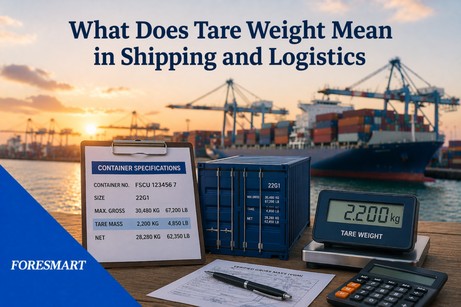
Tare weight is the weight of an empty shipping container. IMO SOLAS rules require an accurate Verified Gross Mass (VGM) before any vessel loading. If your declared weights miss the actual figures, carriers enforce severe penalties.
According to The Loadstar, Japanese carrier ONE applies a $2,000 discrepancy fee per container. The financial risk doesn’t stop there. Inaccurate tare weights disrupt customs declarations and trigger rolled shipments. Read on to locate the exact tare weight on a container and reduce it to protect your profit margins.
What Is Tare Weight
Tare weight is the mass of an empty shipping container’s permanent structure. This physical unit includes the steel framework, wooden flooring, and internal securement rings. Even though carriers do not charge freight rates for the metal box itself, you must add this exact figure to your cargo weight when you submit your final VGM for port clearance.
The Three Types of Tare Weight in Logistics
Shippers track different tare weight metrics as a container moves through the supply chain. Because initial freight estimates cannot pass final port clearance, you must update your data before loading. To avoid VGM penalties, match your current shipping phase to one of these three specific categories.
Actual Tare Weight
Actual tare weight is the exact mass of a specific container. Terminal operators determine this precise figure when they weigh the empty unit on a certified scale. This official measurement serves as the only acceptable baseline for your final VGM declaration.
Average Tare Weight
Average tare weight is a standardized figure applied to a fleet of identical containers. Shipping lines calculate this metric when they sample a production batch to find the mean mass. Logistics providers rely on this general number for early capacity planning before they secure a specific physical box.
Estimated Tare Weight
Estimated tare weight is a temporary approximation. Shippers use this baseline figure during the initial booking phase when they forecast freight costs. You must replace this rough estimate with an actual scale weight before you submit official customs documentation.
Types of Tare Weight Comparison Table
Use this comparison table to quickly match your current shipping phase with the correct tare weight metric.
|
Tare Weight Type |
Technical Definition |
Primary Use Case |
Accuracy Level |
|
Actual Tare Weight |
Exact scale mass of a specific container |
Final VGM port clearance |
High |
|
Average Tare Weight |
Standardized mean mass of a container fleet |
General logistics capacity planning |
Medium |
|
Estimated Tare Weight |
Approximated mass before physical scaling |
Initial freight cost forecasting |
Low |
To avoid port delays, always replace estimated figures with the actual tare weight before final customs clearance.
How to Find the Tare Weight on a Shipping Container
Apply one of three specific industry methods to locate the exact empty mass of your container. Guessing this metric invalidates your Verified Gross Mass (VGM) and triggers rejected customs declarations.
The Container CSC Plate
Inspect the Container Safety Convention (CSC) plate for the fastest physical verification. Manufacturers rivet this metal badge directly onto the exterior door of an ISO-certified shipping container. Look for the line labeled “TARE MASS” to extract the factory weight in both kilograms and pounds.
The Official Shipping Documents
Extract the empty mass from your logistics paperwork when the physical box remains off-site. Freight forwarders list the estimated tare weight on the initial booking confirmation and the Master Bill of Lading (MBL).
Because these document figures often reflect fleet averages, you must cross-reference this initial data with the final weighbridge ticket to prevent VGM discrepancies.
The Basic Subtraction Formula
Calculate the empty mass using basic logistics math if you lack both physical access and official paperwork. Subtract your net cargo weight from the total gross weight to isolate the tare metric.
While this subtraction formula works for internal audits, terminal operators still demand a certified scale measurement for official port clearance.
Tare Weight vs Gross Weight vs Net Weight: What Is the Difference
A miscalculated weight category directly inflates your final freight bill. To avoid overpaying, you must separate your empty equipment mass from your actual commercial cargo.
Physical Composition
Each weight category measures a distinct part of your shipment. Tare weight accounts for the empty container and packaging materials. Net weight covers your bare commercial product alone. Gross weight combines the bare product and all packaging into one final figure.
Freight Cost Calculation
Carriers base your final freight invoice on the total gross weight or volumetric weight. They charge for the total physical mass moving across the ocean, not just the product inside.
- Pro Tip for Shippers: Logistics companies like Foresmart do not charge based on net weight. To protect your profit margins, minimize your tare weight before you dispatch the cargo.
Customs Compliance
Border officials use these three distinct metrics for different legal checks. While customs authorities extract the net product weight to calculate import duties, port operators check the total gross weight to ensure safe vessel loading. If your paperwork misses the physical weighbridge ticket, customs will delay the shipment.
Weight Comparison Table
Use this matrix to assign the right weight metric to your supply chain documents.
|
Weight Metric |
Physical Components |
Primary Logistics Function |
Financial Impact |
|
Tare Weight |
Empty container, pallets, and boxes |
Calculates final VGM |
Indirect (reduces available payload) |
|
Net Weight |
Bare commercial product only |
Calculates customs duties |
Low (dictates tax, not freight) |
|
Gross Weight |
Product plus all packaging materials |
Dictates safe vessel loading |
High (determines final freight invoice) |
Cut unnecessary dead mass from your packaging materials to lower your final gross weight invoice.
What Are the Standard Tare Weights for Shipping Containers
Forecast your initial freight payload using standardized ISO weights. Manufacturing materials create minor unit variations across different container fleets. To prevent documentation errors, always verify the exact physical mass on the container door before your final customs submission.
Standard Container Tare Weight Table:
Use this reference data to forecast your initial shipping capacity and freight costs.
|
Container Size and Type |
Average Tare Weight (kg) |
Average Tare Weight (lbs) |
|
20-foot Standard Dry |
2,300 kg |
5,071 lbs |
|
40-foot Standard Dry |
3,750 kg |
8,267 lbs |
|
40-foot High Cube (HC) |
3,900 kg |
8,598 lbs |
|
20-foot Reefer (Refrigerated) |
3,080 kg |
6,790 lbs |
|
40-foot Reefer (Refrigerated) |
4,800 kg |
10,582 lbs |
Container weights remain fixed. To cut freight costs, strip excess packaging and consolidate your shipments.
How to Reduce Tare Weight Through Freight Consolidation
Combine scattered cargo into a single shipment through freight consolidation to reduce packaging tare weight. Shipping independent small orders multiplies the number of required pallets and protective layers. Apply the two consolidation tactics below to strip duplicate materials and lower your chargeable total mass.
Multiple Supplier Consolidation
Merge goods from different vendors onto a single shared pallet to cut your chargeable gross weight.
When several suppliers ship separate orders, vendor facilities use distinct wooden bases. A consolidation warehouse repacks all commercial products together. This physical integration removes duplicate pallets and directly lowers your final freight invoice.
Redundant Packaging Removal
Discard heavy factory cartons and repack products into optimized export crates.
Suppliers often overpack goods to survive initial domestic transit. Freight professionals intercept these vendor shipments to strip excess cardboard and styrofoam. Replacing individual bulky boxes with streamlined packaging reduces dead mass and expands your available container payload.
Conclusion
Shield your profit margins from port penalties by lowering your chargeable gross weight. Container weights remain fixed, requiring you to strip redundant packaging and consolidate cargo to cut shipping expenses. Avoid customs delays by verifying this empty mass before your final declaration. Foresmart maintains your IMO SOLAS compliance and prevents financial loss.
Frequently Asked Questions (FAQs)
Does Tare Weight Include Pallets and Dunnage
No, tare weight includes only the empty steel container. Shippers must add pallets, dunnage, and bracing to calculate the Verified Gross Mass (VGM). Ignoring these loading materials triggers inaccurate weight declarations and port fines.
Can the Tare Weight of a Shipping Container Change over Time
Yes, structural repairs and environmental factors alter a container’s physical mass. Patching steel panels or installing new floors changes the original factory weight. When wooden floors absorb moisture in high humidity, the unit gains hidden dead mass not reflected on the CSC plate.
Does the Container Tare Weight Include the Truck Chassis
No, tare weight refers strictly to the isolated container box. Trucking companies use a separate unladen weight metric for the tractor and chassis. To determine payload during road hauls, subtract the combined vehicle and container mass from the total scale measurement.
No, tare weight includes only the empty steel container. Shippers must add pallets, dunnage, and bracing to calculate the Verified Gross Mass (VGM). Ignoring these loading materials triggers inaccurate weight declarations and port fines.
Yes, structural repairs and environmental factors alter a container’s physical mass. Patching steel panels or installing new floors changes the original factory weight. When wooden floors absorb moisture in high humidity, the unit gains hidden dead mass not reflected on the CSC plate.
No, tare weight refers strictly to the isolated container box. Trucking companies use a separate unladen weight metric for the tractor and chassis. To determine payload during road hauls, subtract the combined vehicle and container mass from the total scale measurement.