
Learn how to ship from Alibaba to Amazon FBA. This blog includes the process, account creation, product identification, and supplier selection. You will know how to order, bargain for terms, and manage shipment. Stay tuned.
Step 1: Setting Up Accounts
Alibaba Account Creation
First, visit Alibaba.com and click on Sign Up. Verify your email and complete your company profile. Link your bank account for payments and adjust your account settings.
Amazon Seller Central Setup
To buy from Alibaba and sell on Amazon, start by visiting Seller Central. Register on Amazon Seller Central and verify your identity. You can find more information in the official Amazon guide.
Configure your shipping settings and FBA preferences. You can choose the Professional Selling Plan for better features. Ensure that you input the correct account details before you press the save button. Protect your account by activating two-factor authentication (2FA).
Step 2: Finding the Right Products
Product Research on Alibaba
With the help of the search bar of Alibaba, look for possible products that could be of interest. Consider parameters that are directly associated with products’ dimensions and materials that have been used for their production. Compare supplier prices, MOQ (Minimum Order Quantity), and customer reviews.
Examine product demand with the help of the Amazon Best Sellers Rank (BSR). Select a product that is popular but has low competition when thinking about how to transport it from Alibaba to Amazon FBA warehouses. Take into account costs per unit and potential profit points.
Supplier Vetting
Call or email the suppliers to ask them for samples before ordering bulk orders. Pay attention to how fast they answer and how concise their messages are.
Verify quality, certifications (ISO 9001, RoHS, CE), and production capabilities. Request the certification and compliance papers.
Check supplier credit ratings. Choose Alibaba suppliers that support Trade Assurance and are verified by Alibaba. When choosing the right supplier, the whole importing process can be much easier.
Step 3: Placing Your Order
Negotiation & Order Placement
Negotiate the MOQ with the provider to get the lowest price for the amount needed. Indicate payment terms and methods like T/T or L/C. You may consider wire transfer fees if necessary. Confirm the Incoterms (EXW, FOB, CIF, or DDP) and shipping costs.
First, ask about the EXW price and delivery. Get the HS codes from your supplier so you can check the tax and include that in your budget as well.
Examining lead times and packaging requirements. To sell Alibaba products on Amazon, ensure lead times and packaging conform to Amazon FBA guidelines. Finally, ask about any additional costs that the moving company may charge.
You can also ask for the CIF rates so that the freight and insurance fees are covered by your supplier. You just need to arrange transportation at the destination port. You can also use DDP terms with your supplier. In that way, suppliers are responsible for all freight, and you only consider unloading at the destination.
Contract & Quality Control
Be very careful while reading through the pro forma invoice. Outline clear payment terms, delivery schedules, and refund policies.
Inspect the goods before they are taken out of the factory for global delivery. You can conduct third-party quality inspections before shipment.
Now, let us look at how to ship from Alibaba to Amazon FBA.

Step 4: Shipping from Alibaba to Amazon FBA
Choosing the Right Shipping Method
So, how do you send your cargo from Alibaba sellers to Amazon? The are multiple shipping methods you can choose:
Sea Freight: Cost-effective for bulk orders (FCL for full containers, LCL for small shipments).
Air Freight: This is Faster but more expensive. Select air shipping as your mode of transport if your Alibaba goods are lightweight.
Express Shipping (DHL, UPS, FedEx): Ideal for small, urgent shipments.
Freight Forwarders & Logistics
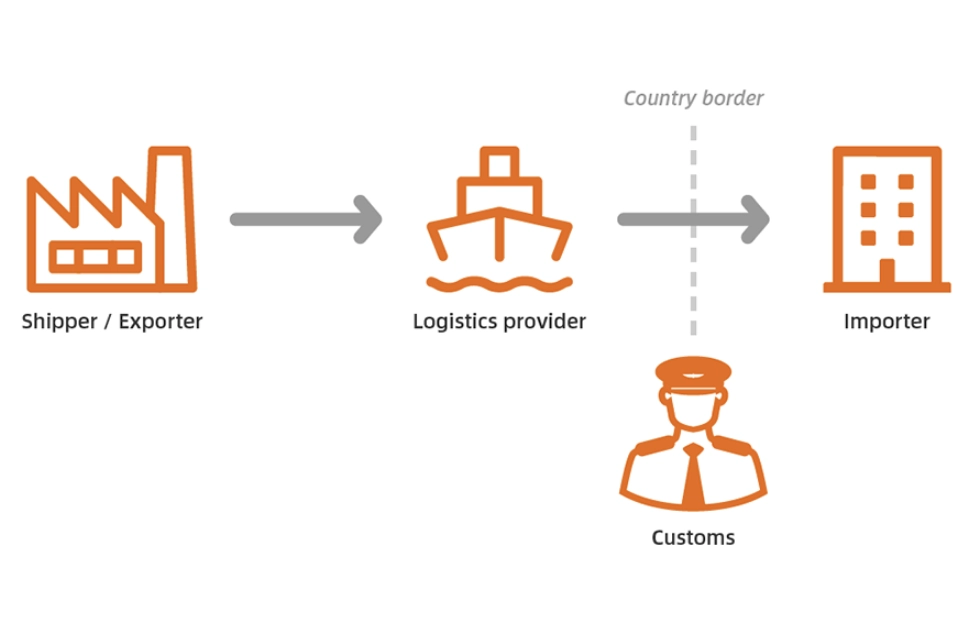
Partner with a freight forwarder for smooth customs clearance and delivery. Make sure freight forwarders adhere to international standards.
International freight agents like Foresmart transport your cargo door to door from one country to another with ease. Foresmart also provides warehousing storage and consolidation service.
After deciding which shipping method to use, you should create a shipping plan on Amazon Seller Central, detailing the products, quantities, and shipping methods. Amazon will provide specific warehouse destinations and labeling requirements. Download and print your product labels. Send them to your Alibaba suppliers or freight forwarders, asking them to label your FBA cargo as Amazon requires.
Related Reading: Do I Need a Freight Forwarder for Alibaba?
Shipping Insurance
Consider obtaining shipping insurance to protect against potential loss or damage during transit.
Step 5: Handling Customs & Import Duties
Required Documentation
What shipping documents are necessary depends on your cargo type: dry, refrigerated, or hazardous, destination, shipping method, etc. Customs declaration can be complicated, but Foresmart can assist you in document compliance.
In general, you need:
-
Commercial Invoice & Packing List
-
-
Bill of Lading (B/L) or Airway Bill (AWB)
Duty & Tax Calculation
Consider VAT and customs charges in your cost estimation. To calculate the duty cost, you need the HS code of your product first, as we mentioned above. Next, find out the local HS code lookup tool. Then, input the HS code and locate the duty rate table. Use the CIF value for the calculation.
Step 6: Managing Amazon FBA Shipments
Employ the tracking number (AWB for air freight, B/L for sea freight) issued by the carrier to track your shipment. You can track the shipment through the shipping company’s official website or ask your freight forwarder for shipment updates. Be aware of ETD (Estimated Time of Departure) and ETA (Estimated Time of Arrival).
When your goods arrive at the destination port, update the arrival time on the Amazon shipping plan. Make sure that the items reach Amazon warehouses on time.
Learn more about Amazon shipping.
Conclusion
Shipping from Alibaba to Amazon FBA warehouse requires careful planning, from product sourcing to logistics management. By following these steps, you can optimize costs, avoid delays, and ensure a smooth delivery process.
Need expert help? Consider working with a trusted freight forwarder like Foresmart to streamline operations!