
U.S. goods imports increased $10.6 billion to $302.2 billion in March 2026, according to the U.S. Bureau of Economic Analysis. When cargo is damaged, delayed, or refused, one FOB phrase can decide who pays freight, who files the claim, and who carries the loss.
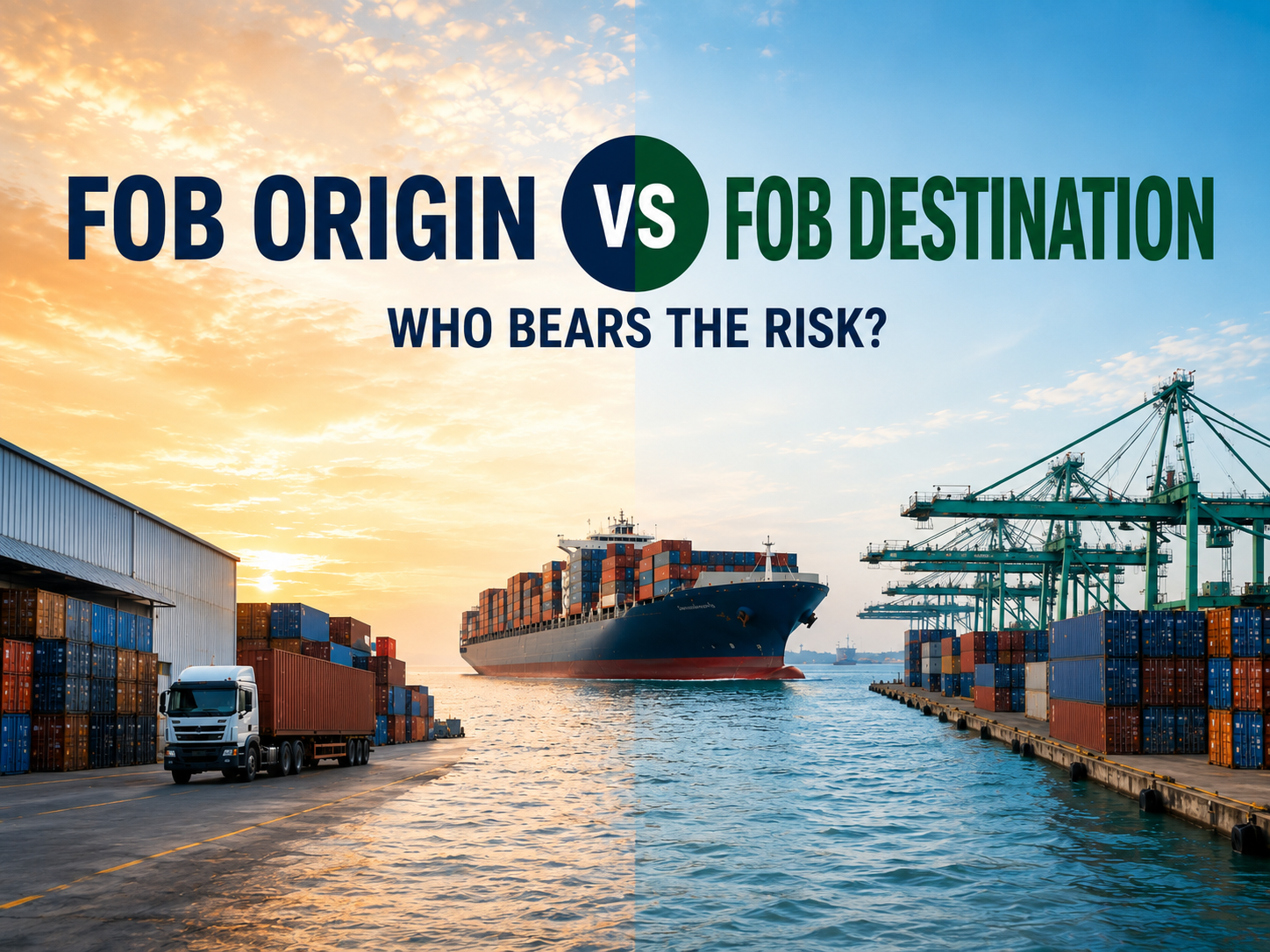
FOB Origin usually shifts risk when the carrier receives goods at the shipping point. FOB Destination usually keeps risk with the seller until goods reach the named destination. For importers, the safest contract names the FOB term, place, freight duty, insurance duty, and proof documents in the same clause.
What Does FOB Origin Mean?
FOB Origin puts the risk point at the seller’s shipping location. Under UCC Section 2-319, FOB place of shipment requires the seller to put the goods into the carrier’s possession at that place and bear the expense and risk of doing so. After that handoff, transit risk usually moves to the buyer unless the contract states another rule.
Shipping Point Risk Transfer
Risk transfers at the shipping point under FOB Origin. The handoff happens when the carrier receives the goods, not when the buyer receives them. This term gives the buyer more control over carrier choice, pickup timing, routing, and tracking, but that control also means the buyer may need to file the claim if the goods are damaged after pickup.
Freight Payment Under FOB Origin
FOB Origin often puts freight planning on the buyer. The buyer may book the carrier, pay freight, or reimburse freight, depending on the contract. Freight payment and risk transfer are different issues, so a contract can say FOB Origin, freight prepaid while risk still shifts at the shipping point.
The purchase order should state:
- Who books the carrier
- Who pays freight
- When risk transfers
Damage Claims Under FOB Origin
Damage claims usually become the buyer’s responsibility after carrier pickup. The buyer needs proof that the goods were shipped in good condition and damaged during transit.
Useful claim records include:
- Bill of lading
- Carrier pickup receipt
- Packing photos
- Delivery exception note
- Inspection report
- Damaged carton photos
The buyer should inspect cartons quickly after delivery because delayed reporting can weaken the claim record.
What Does FOB Destination Mean?
FOB Destination keeps the risk point at the delivery location. Under UCC Section 2-319, FOB place of destination requires the seller to transport goods to that place at the seller’s expense and risk, then tender delivery there.
Delivery Point Risk Transfer
Risk transfers at the destination under FOB Destination. The buyer does not take risk only because the shipment left the seller’s warehouse. If cargo is lost, damaged, or delayed before proper delivery, the seller usually deals with the carrier or insurer.
Freight Payment Under FOB Destination
The seller usually controls freight under FOB Destination. The seller may choose the carrier, manage pickup, pay freight, and handle transit problems. This setup works when the seller has better freight rates or stronger carrier relationships, but the contract should still define freight charges, accessorial fees, and the exact delivery location.
Damage Claims Under FOB Destination
The seller usually handles damage claims before delivery is complete. The seller carries the transit risk until the goods reach the named destination.
If cartons arrive damaged, the buyer should note the damage on the delivery receipt. The buyer should also take photos before unpacking and report the issue quickly, since the seller needs proof to file a carrier claim or arrange replacement.
How Do FOB Origin and FOB Destination Compare?
FOB Origin and FOB Destination differ by when risk moves and who controls the shipment. That difference affects freight planning, insurance coverage, damage claims, delivery proof, and inventory timing.
|
Comparison Point |
FOB Origin |
FOB Destination |
|
Risk transfer |
At the shipping point |
At the named destination |
|
Transit risk |
Usually buyer |
Usually seller |
|
Carrier control |
Often buyer |
Often seller |
|
Freight planning |
Often buyer-led |
Often seller-led |
|
Damage claim owner |
Often buyer after pickup |
Often seller before delivery |
|
Buyer protection |
Lower during transit |
Higher during transit |
|
Delivery proof focus |
Carrier pickup proof |
Destination delivery proof |
Risk Transfer Differences
FOB Origin moves risk earlier. FOB Destination moves risk later. This difference controls who carries loss when goods are damaged, lost, delayed, or refused.
This risk point matters most for fragile, high-value, seasonal, or time-sensitive cargo. If the contract names the wrong handoff point, the party expecting protection may end up carrying the loss.
Freight Cost Differences
FOB terms affect how importers plan sea freight shipping costs, but the freight line still needs separate wording. The contract should not rely on FOB wording alone.
A clear freight clause should answer:
- Who books the carrier?
- Who pays base freight?
- Who pays accessorial fees?
- Who pays storage or redelivery costs?
- Who handles carrier disputes?
This wording helps prevent arguments over fuel surcharges, detention, liftgate service, failed delivery, and remote-area delivery.
Title and Inventory Timing Differences
FOB terms can affect when inventory is recorded. Many buyers record inventory when control and risk pass, but the final accounting treatment depends on the full contract and company policy. With FOB Origin, inventory may be recorded earlier because risk can pass at shipment. With FOB Destination, inventory is usually recorded later because risk stays with the seller until delivery.
Accounting teams should review the purchase order, shipping documents, delivery proof, and revenue recognition policy together.
When Should Buyers Use FOB Origin?
Buyers should use FOB Origin when freight control matters more than delivery protection. This term fits buyers with carrier contracts, logistics staff, and claim-handling processes.
Buyer Control Over Carriers
FOB Origin helps buyers control the carrier, route, pickup window, and tracking process. This control matters when the buyer manages inbound freight through a preferred logistics network. It also matters when the buyer uses consolidated freight services to combine several supplier shipments into one freight plan.
Claim Handling Capacity
FOB Origin fits buyers who can handle freight claims. The buyer needs a team that understands claim deadlines, inspection rules, and carrier paperwork.
Without claim capacity, FOB Origin can create cash pressure because the buyer may pay the supplier while still fighting the carrier. The buyer should keep bills of lading, packing lists, pickup receipts, delivery notes, and damage photos to prove where the loss happened.
Landed Cost Tracking
FOB Origin can support cleaner landed cost tracking. The buyer can separate product cost, freight cost, customs cost, insurance cost, and delivery cost. This visibility helps importers compare suppliers and shipping routes more accurately. It also helps buyers spot freight cost increases before margins shrink.
The buyer should avoid vague terms such as FOB factory without a named location. The contract should name the exact shipping point.
When Should Sellers Use FOB Destination?
Sellers should use FOB Destination when the delivered condition of the goods is part of the sale. This term gives the seller more control over the carrier, delivery process, and customer receiving experience, but it also keeps transit risk with the seller for longer.
Customer Experience Protection
FOB Destination gives buyers a safer receiving process. The buyer expects the seller to deliver conforming goods to the named destination, which works well for retail buyers, large accounts, and customers that do not want freight disputes. Sellers should price freight risk, claim work, and failed delivery costs into the quote.
Seller Freight Rate Advantages
FOB Destination can work when the seller has better freight rates. High-volume sellers may have stronger carrier pricing than one-time buyers, so the buyer receives one delivered price while the seller controls the transport process.
The seller should still define delivery limits. Remote delivery, inside delivery, storage, appointment failure, and redelivery can change the real cost.
Delivery Failure Risk Reduction
FOB Destination helps sellers manage failed delivery risk before buyer acceptance. The seller can work directly with the carrier when the shipment is delayed, refused, or damaged.
FOB Destination is useful when goods need appointment delivery, special handling, or tight receiving windows. The contract should explain what happens if the buyer causes the delivery failure, since missed appointments and wrong addresses should not create open-ended seller liability.
What Mistakes Cause FOB Risk Disputes?
Most FOB disputes start when the contract uses the right term in the wrong system. U.S. domestic FOB wording and Incoterms FOB do not describe the same handoff point, so importers need to match the term to the shipment type and governing rules.
Mixing FOB Origin With Incoterms FOB
Importers should not mix U.S. FOB Origin terms with Incoterms FOB. These terms belong to different systems.
Under Incoterms 2020, FOB means the seller delivers the goods loaded on board the buyer-nominated vessel at the port of shipment. Risk transfers when the goods are on board the vessel. The U.S. Trade Administration lists FOB as an Incoterms rule for sea and inland waterway transport, with a named port of loading.
For container shipments, importers should check whether the FCA Incoterms rule fits better, since containers are often handed to the carrier before vessel loading.
Confusing Freight Payment With Risk Transfer
Freight payment does not always decide risk transfer. A seller may pay freight while the buyer still carries transit risk. Terms such as freight prepaid and freight collect, or freight allowed, explain payment flow. They do not replace the risk-transfer term.
A clean purchase order should write both parts. Example: FOB Origin, Seller Warehouse, freight prepaid and added.
Leaving the Destination Name Unclear
A vague location creates avoidable disputes. FOB Destination is weak when the contract does not name the exact destination. The destination should include the receiving facility, city, state, country, and delivery point when needed.
A warehouse dock is clearer than a general city name. The contract should also state what counts as delivery proof, such as a signed proof of delivery, clean delivery receipt, or warehouse receiving record.
How Should Importers Write FOB Terms Clearly?
Importers should write FOB terms as operating instructions, not legal shorthand. The clause should tell the buyer, seller, carrier, insurer, and accounting team where risk moves and which records prove delivery.
For China-origin shipments, importers can work with Foresmart to match carrier booking, freight cost, insurance timing, and delivery proof to the agreed FOB risk point before cargo leaves the origin point.
Stating the Exact FOB Term
The contract should state the exact FOB term and named place. Do not write FOB alone.
Use clear wording such as:
- FOB Origin, Seller Warehouse, Los Angeles, California
- FOB Destination, Buyer Distribution Center, Dallas, Texas
- FOB Shanghai Port, Incoterms 2020
The first two examples fit U.S. shipment-style wording. The third example belongs to Incoterms and should name the port of loading.
Defining Freight and Insurance Responsibility
The contract should say who books freight, who pays freight, and who buys cargo insurance. This avoids coverage gaps after a loss.
For high-value cargo, insurance should match the risk point. If the buyer takes risk at origin, the buyer should confirm coverage from pickup. If the seller carries risk to destination, the seller should confirm coverage until delivery.
Insurance wording should match the shipment value, product type, route, and claim process.
Listing Delivery Proof Documents
Delivery proof should be listed before shipment. Missing documents can make a valid claim harder to prove.
Importers should request:
- Commercial invoice.
- Packing list.
- Bill of lading or carrier receipt.
- Proof of delivery.
- Damage photos when needed.
- Inspection report for sensitive goods.
- Delivery exception notes.
These documents help prove when risk moved and which party should act next.
FAQ
What is the main difference between FOB Origin and FOB Destination?
FOB Origin and FOB Destination differ by the risk-transfer point. Under FOB Origin, risk usually transfers when the carrier receives the goods at the shipping point. Under FOB Destination, risk usually stays with the seller until the goods reach the named destination.
Who is responsible for damaged goods under FOB Origin?
The buyer is usually responsible for transit damage after the carrier picks up the goods under FOB Origin. If the goods are damaged in transit, the buyer may need to file a claim with the carrier or insurer. Pickup records, packing photos, delivery notes, and damage evidence help support the claim.
Who pays freight under FOB Destination?
The seller often arranges and pays freight under FOB Destination, but the contract should still state the payment rule. Freight payment does not always decide risk transfer. The purchase order should define who books freight, who pays freight, and who handles extra charges.
Does FOB affect cargo insurance responsibility?
Yes, FOB affects who should carry insurance during transit. Under FOB Origin, the buyer should check coverage from the shipping point. Under FOB Destination, the seller should check coverage until the named destination.
Is FOB Origin or FOB Destination better for buyers?
FOB Destination usually gives buyers more delivery protection because the seller keeps transit risk until delivery. FOB Origin can still work for buyers that have carrier contracts, freight visibility, and claim-handling capacity. The better choice depends on whether the buyer wants freight control or delivery protection.
FOB Origin and FOB Destination differ by the risk-transfer point. Under FOB Origin, risk usually transfers when the carrier receives the goods at the shipping point. Under FOB Destination, risk usually stays with the seller until the goods reach the named destination.
The buyer is usually responsible for transit damage after the carrier picks up the goods under FOB Origin. If the goods are damaged in transit, the buyer may need to file a claim with the carrier or insurer. Pickup records, packing photos, delivery notes, and damage evidence help support the claim.
The seller often arranges and pays freight under FOB Destination, but the contract should still state the payment rule. Freight payment does not always decide risk transfer. The purchase order should define who books freight, who pays freight, and who handles extra charges.
Yes, FOB affects who should carry insurance during transit. Under FOB Origin, the buyer should check coverage from the shipping point. Under FOB Destination, the seller should check coverage until the named destination.
FOB Destination usually gives buyers more delivery protection because the seller keeps transit risk until delivery. FOB Origin can still work for buyers that have carrier contracts, freight visibility, and claim-handling capacity. The better choice depends on whether the buyer wants freight control or delivery protection.