
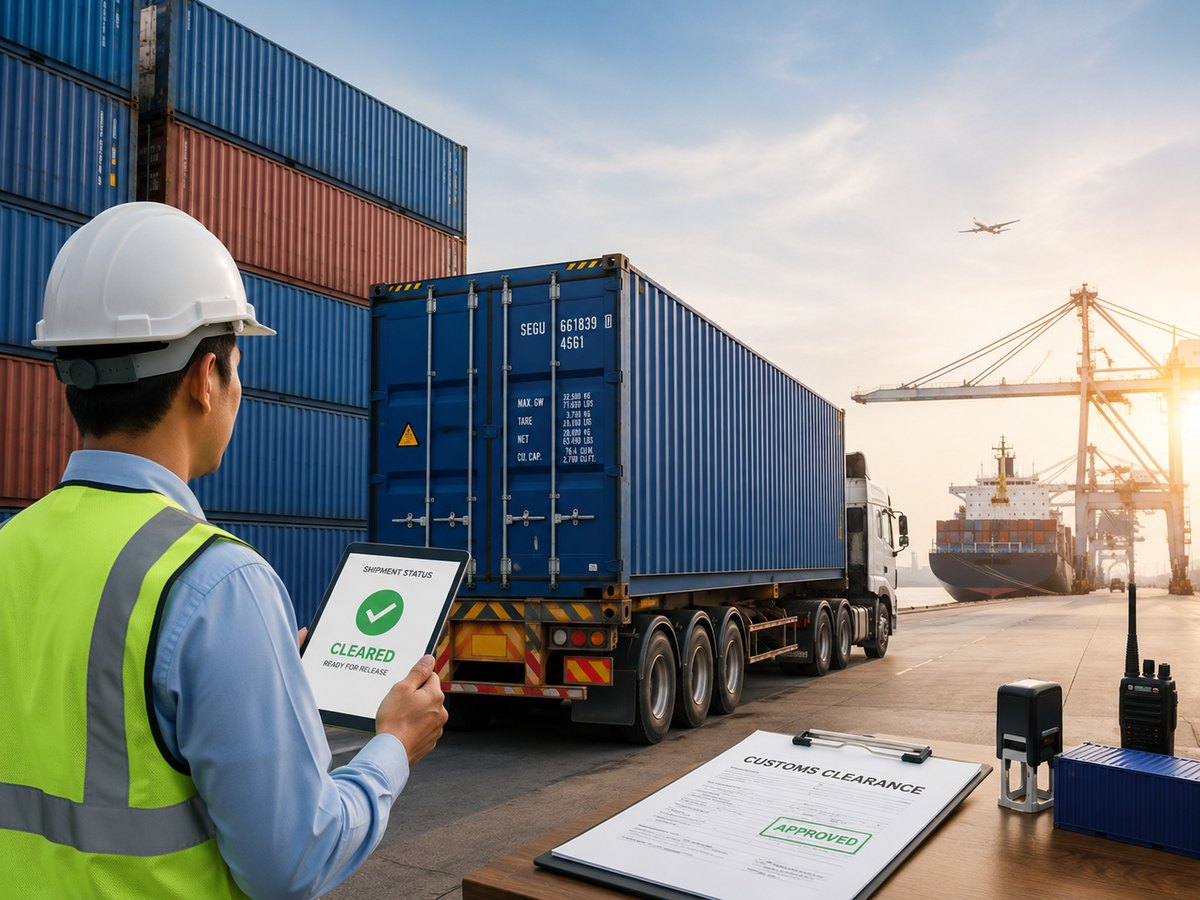
Thousands of cargo containers get stuck at global ports daily due to missing paperwork or unpaid fees. Seeing your shipment stall at the arrival port creates massive stress. You risk paying heavy daily storage fines if the terminal refuses to release your freight.
This guide explains exactly what an international shipment release means for your cargo. We detail the strict difference between government customs approval and carrier commercial release. You will learn how to prepare your documents and settle charges early. This preparation ensures your goods clear the port quickly without expensive delays.
What Is an International Shipment Release?
An international shipment release indicates that both customs authorities and the freight carrier have authorized your cargo to exit the arrival port or bonded warehouse.
This dual approval confirms two critical conditions:
- Your goods legally comply with national import regulations.
- All associated ocean freight and local transit fees are fully paid.
Securing this specific status allows terminal operators to physically mount your containers onto truck chassis and dispatch them for final delivery.
How Does Customs Clearance Differ from Commercial Release?
Cargo must pass two distinct checkpoints before leaving the port facility. Missing either approval keeps your freight locked in expensive terminal storage.
|
Approval Type |
Approving Authority |
Core Requirement |
Required Document |
|---|---|---|---|
|
Customs Approval |
Border Protection Agencies (e.g., CBP) |
Legal compliance and duties paid |
Customs Entry Summary (CBP Form 3461) |
|
Commercial Release |
Freight Carriers and Forwarders |
Freight and terminal charges paid |
Bill of Lading / Telex Release |
Government Customs Approval
Customs officials must verify that imported goods meet national safety and trade regulations. This legal clearance requires accurate product classification and full payment of required import Duties and Taxes. If brokers submit incomplete data or mismatched Harmonized System (HS) codes, containers remain under strict terminal hold, risking daily demurrage penalties.
Carrier Commercial Release
Shipping lines control the physical movement of your containers within the port. They grant commercial release only after receiving full payment for the ocean freight and Destination Handling Charges (DHC). Additionally, carriers require the proper surrender of the Original Bill of Lading (OBL) or a confirmed electronic release before issuing delivery orders to your trucker.
Why Do Cargo Holds and Release Delays Occur?
Importers frequently face terminal holds when documentation or financial settlements break down. Identifying these roadblocks early prevents profit-draining port storage fees.
Incomplete Customs Paperwork
Customs brokers cannot file entry summaries without a precise Commercial Invoice and Packing List. Common triggers for automated holds include:
- Missing product quantity details or gross weights.
- Undervalued commercial declarations.
- Unmatched or invalid Harmonized System (HS) codes.
Unpaid Freight Settlements
Carriers routinely freeze cargo movement if invoices show outstanding balances. Overlooking minor destination fees, port storage charges, or terminal gate fees directly prevents the issuance of the delivery order.
Random Customs Inspections
Border protection agencies systematically flag specific shipments for physical examinations using X-ray machines (NII exams) or intensive container unloads. These mandated physical inspections add days or even weeks to the timeline, regardless of your paperwork’s accuracy.
Missing Specific Import Licenses
Regulated commodities require specialized entry certificates before crossing the border. Importing electronics without FCC clearance, chemicals without EPA declarations, or medical devices without FDA approval forces customs to detain the freight until the importer provides valid compliance proof.
How Can You Ensure a Fast Cargo Release?
Proactive preparation directly eliminates terminal delays. Executing these steps keeps your supply chain moving efficiently.
Preparing Accurate Shipping Documents
Align every data point across your paperwork. You must ensure exact consistency across:
- Total product quantities and carton counts.
- Declared commercial values matching the actual transaction.
- Clear, non-generic product descriptions.
Matching the Commercial Invoice exactly with the Packing List and customs declaration prevents automated mismatches in the customs system.
Settling Freight and Local Charges Promptly
Audit your carrier invoices before the ocean vessel arrives at the destination port. Pre-paying sea freight and terminal handling charges removes financial blocks before the container hits the terminal yard.
Managing the Bill of Lading Effectively
Opt for a Telex Release or Sea Waybill instead of requiring physical original documents to be mailed across the world. Electronic releases allow carriers to clear the shipment instantly upon arrival, saving valuable transit days.
Securing Necessary Import Certifications
Verify government agency requirements before your supplier loads the container in China. Submitting EPA or FDA certificates concurrently with the initial customs entry prevents sudden regulatory holds at the destination port.
What Happens After Your Freight Is Released?
Once the terminal system shows full clearance, the physical distribution phase begins immediately.
Dispatching Trucks for Terminal Pickup
Your freight forwarder instructs a drayage trucking company to retrieve the container. Drivers present the authorized delivery order to port operators, wait in the terminal queue, and mount the container onto a truck chassis.
Devanning Consolidated Cargo
Less than Container Load (LCL) shipments move directly to a Container Freight Station (CFS). Warehouse staff break down the consolidated freight, sort individual pallets, and stage the freight for different buyers.
Completing Final Door-to-Door Delivery
Local logistics carriers load the separated cargo onto domestic trucks. Dispatchers route these trucks to your specified commercial warehouse, Amazon FBA fulfillment center, or residential address for final handover.
How Does Foresmart Streamline Your Global Shipping?
Handling port releases requires precise timing and flawless documentation. Foresmart removes this operational burden through proactive freight management. Operating since 2007, our team pre-audits all commercial documents to secure customs and carrier approvals before your cargo arrives.
Whether you need specialized Consolidated Freight from multiple Chinese suppliers or direct FBA shipping, we manage the entire door-to-door process. As licensed NVOCC and FMC members, we guarantee 24-hour response times, ensuring your supply chain avoids costly terminal holds.
Frequently Asked Questions
Does “International Shipment Release” mean my cargo is arriving today?
No, because logistics data indicates that only 15% of shipments reach final delivery on the exact day of customs release. This tracking status simply confirms authorities have legally cleared the freight to exit the port facility. Actual delivery depends heavily on local terminal congestion and truck availability.
Why is my shipment still stuck after receiving a “Release” status?
Carrier logistics bottlenecks cause over 70% of post-release delays, not customs issues. Once customs approves the entry, their jurisdiction ends. Your cargo is likely waiting for drayage truck chassis or the clearance of pending local terminal handling charges (THC).
Who should I contact if my released shipment hasn’t moved for days?
Contact the carrier’s dedicated customs brokerage department immediately. Frontline customer service representatives resolve less than 20% of international freight issues because they lack access to backend terminal management systems. The brokerage team can instantly pinpoint specific terminal holds or missing local compliance documents, such as a CBP Form 5106.
Why does tracking show “Clearance in Progress” again after a “Release”?
A routine carrier hub rescan causes more than 80% of these redundant tracking updates, not a second customs seizure. Large logistics networks automatically generate new clearance stamps whenever freight crosses regional sorting facility boundaries. Unless additional documents are specifically requested, the shipment remains legally cleared.
No, because logistics data indicates that only 15% of shipments reach final delivery on the exact day of customs release. This tracking status simply confirms authorities have legally cleared the freight to exit the port facility. Actual delivery depends heavily on local terminal congestion and truck availability.
Carrier logistics bottlenecks cause over 70% of post-release delays, not customs issues. Once customs approves the entry, their jurisdiction ends. Your cargo is likely waiting for drayage truck chassis or the clearance of pending local terminal handling charges (THC).
Contact the carrier’s dedicated customs brokerage department immediately. Frontline customer service representatives resolve less than 20% of international freight issues because they lack access to backend terminal management systems. The brokerage team can instantly pinpoint specific terminal holds or missing local compliance documents, such as a CBP Form 5106.
A routine carrier hub rescan causes more than 80% of these redundant tracking updates, not a second customs seizure. Large logistics networks automatically generate new clearance stamps whenever freight crosses regional sorting facility boundaries. Unless additional documents are specifically requested, the shipment remains legally cleared.