

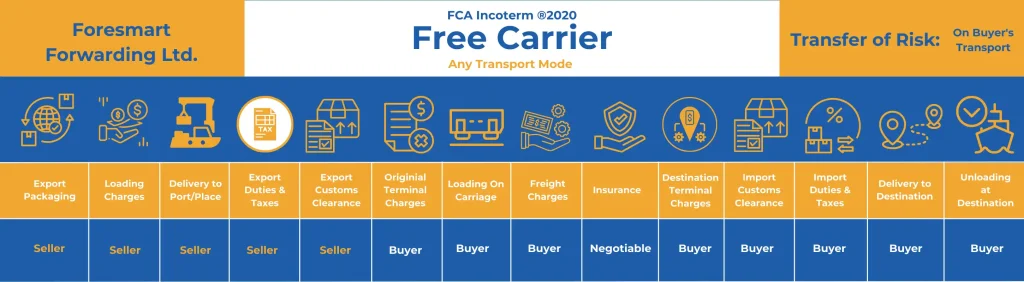
To make global shipping run smoother, there are official rules called “Incoterms” that set clear standards for the obligations of sellers and buyers in international trade.
One of the common Incoterms is FCA, which stands for “Free Carrier.” This post explains everything businesses need to know about FCA Incoterms.
What is the meaning of FCA Incoterms?
FCA shipping terms tell the seller that their duty is to get the goods ready for export and then hand them over to a carrier that the buyer chooses. This carrier could be a truck, train, aircraft, or ship. The seller can pass the goods to the buyer’s freight forwarder at the seller’s own place or the handoff can happen at another spot if the buyer wants to do so.
As soon as the seller turns the goods over to the carrier the buyer selected, the seller completes their FCA responsibilities. The buyer’s transport company then moves the shipment along to the final destination.
So, a “Free carrier” means the seller must supply items to the buyer’s carrier free of any further transportation fees or charges.
When should businesses use FCA shipping terms?
FCA Incoterms work well in these types of situations:
Buyers Have Lower Freight Rates – Large buyers often have discounted pricing from logistics partners. Tapping into these rates using FCA terms saves money.
Buyers Have Established Transport Routes – For regular importers, it makes sense to leverage their standing freight carriers and routes instead of letting sellers arrange piecemeal transport.
Sellers Focus on Manufacturing – Sellers who lack shipping expertise can avoid headaches and costs by passing transport duties to capable buyers via FCA.
Sellers Located Near Departure Hubs – A seller based right beside a container port or freight airport can easily deliver to buyer’s designed carriers for export.
FCA shipping terms provide a helpful balance of effort between buyers and sellers. Sellers prepare the actual goods for export, while buyers tap their logistics capabilities for transport.
Who handles damage or loss with FCA Incoterms?
An important rule under FCA shipping terms is that liability for the shipment transfers from seller to buyer at the point the goods are handed over to the buyer’s selected freight carrier.
If any damage or loss happens after that handover takes place, it becomes the buyer’s responsibility to file claims or absorb replacement costs. The seller no longer carries risks.
Because of this risk transfer, wise buyers will consider getting their own cargo insurance coverage on FCA shipments. This protects them from any mishaps once they take possession from the seller.
Who pays for shipping with FCA shipping terms?
One thing FCA Incoterms makes very clear is that the seller has zero freight costs beyond getting goods ready for export (including dealing with export customs)and loaded onto the buyer’s carrier.
The buyer pays all transportation fees and duties from the seller’s handover point onwards. This includes charges like:
-
Terminal handling fees
-
Loading on carriage
-
Ocean/air freight
-
Documents
-
Import customs clearance
-
Final delivery
So, unlike terms such as DAP or DDP shipping, the seller avoids taking on freight charges. Buyers tackle transport tasks using their own carriers and routes.
Updates in the FCA Incoterms 2020 version
Like all Incoterms, FCA shipping terms get reviewed by ICC every decade to keep guidelines aligned with evolving trade standards and business practices. Typically, though, core FCA principles stay consistent over versions.
FCA Incoterms 2020 made two small changes compared to FCA Incoterms 2010:
1) More focus on the seller “handing goods over to the carrier” as the exact moment seller duties end.
Previous wording on the transfer timing was vague. Adding clarity helps both parties confirm when risk moves to buyers.
2) Buyers can choose any location within the seller’s country for the goods handover.
Before, handover typically defaulted to the seller’s factory or warehouse unless otherwise specified. Now, buyers have more flexibility in choosing a handover spot convenient for their transport plans.
Beyond these tweaks, though, FCA 2020 works much the same as past iterations.
Key things to know when using FCA shipping terms
Now that we’ve reviewed the core basics of FCA shipping terms, let’s explore some other need-to-know factors that importers and exporters should keep in mind when putting these Incoterms into practice. Thinking through logistical details upfront prevents delays or disputes down the road.
Agreeing on the FCA location in advance
Recall that the seller’s responsibility ends once goods are delivered to the buyer’s designated freight carrier at an agreed pick-up point.
Clearly defining this FCA location in sales contracts
Will the handover happen at the seller’s factory or a nearby container terminal? Should delivery align with vessel cut-off times if an ocean carrier is used? Making sure both parties confirm logistics flows prevents confusion.
As the buyer has flexibility in choosing a convenient FCA point within the seller’s country, early coordination enables better planning for both sides.
Using appropriate FCA transfer documentation
When goods are traded hands from seller to buyer under FCA shipping terms, proper documentation provides proof. This paperwork may be needed later for customs or insurance purposes in case of disputes.
Common transfer documents include:
-
Dispatch note confirming goods handover.
-
Freight release note authorizing release to buyer’s carrier.
-
Receipt docket signed by the carrier.
FCA users should align upfront on what exact paperwork needs exchanged at the time of release. Following standardized processes for every shipment also builds a compliance record over time.
Final thoughts on mastering FCA Incoterms
On the surface, FCA shipping terms seem straightforward, but managing the exchange with buyers efficiently boils down to nailing basics like properly noting handover timing and collecting transfer proofs.
Overlooking small but vital details may cause outsized headaches for global traders. By planning and documenting diligently, both exporters and importers can keep FCA shipments on track.
Frequently Asked Questions About FCA Incoterms
Is FCA prepaid or collect shipping?
The FCA shipping term is generally a collect shipping term, meaning the buyer pays and organizes freight transport from the seller’s handover location onwards.
Is FCA the same as Ex Works (EXW)?
No. With EXW, the buyer must arrange to pick up the goods themselves at the seller’s factory or warehouse. With FCA, the seller is responsible for passing goods to the buyer’s designated freight carrier.
What’s the difference between FOB and FCA shipping terms?
FOB requires the seller to load goods onboard a ship at the named port. With FCA, the seller only needs to convey items to whichever carrier the buyer nominates, whether ocean, air, rail, or road.
Can a seller buy insurance under FCA Incoterms?
Yes, however, the seller would only insure the shipment until it’s handed over to the buyer’s freight company. At that point, insurance becomes the buyer’s choice.