
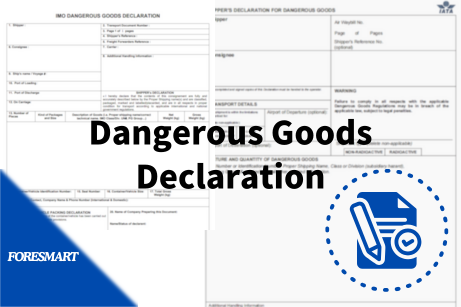
A Dangerous Goods Declaration is an important document submitted to the carrier or relevant authorities when you are shipping hazardous materials across borders. This document tells officials that whatever goods you are transporting are properly packed, labeled, and declared in accordance with the International Air Transport Association (IATA) or International Maritime Organization (IMO).
This form is important if you want to ensure the shipment is safe, the aircraft, the ship, and everyone involved in the transportation process. Read on to learn more about a shipper’s declaration for dangerous goods.
When Do You Need to Fill Out a Dangerous Goods Declaration?
You have to complete the declaration of dangerous goods whenever you ship hazardous materials between different countries. Below are some common instances when you will need one declaration form for dangerous goods :
-
Shipping Lithium Batteries: Lithium batteries are classified as dangerous goods because they may overheat or catch fire, especially at high altitudes. If you are shipping electronic devices that involve a lithium battery, you may need to declare that as dangerous goods.
-
Transporting Flammable Liquids or Solids: Items like acetone, paint, and certain chemicals fall into this category.
-
Shipping Corrosive Materials: Acids or other substances that may cause damage to living tissue and other materials.
-
Transporting Radioactive Materials: Medical isotopes or other radioactive materials need special handling and documentation.
-
Shipping Compressed Gases: Items like oxygen tanks or aerosol cans are considered dangerous.
The main reason for a dangerous cargo declaration is to provide the aircraft operator or carrier with all the necessary information they need about the dangerous goods being shipped. These goods may require special handling and incur the hazardous material shipping fee.
How to Create a Dangerous Goods Declaration?
Creating a declaration for dangerous goods is not complicated. You can fill it either physically on paper or electronically, as it depends on the carrier’s requirements.
There are steps to make sure the form is accurate and in compliance with international regulations:
Download the Declaration Form for Dangerous Goods: The Dangerous Goods Declaration (DGD) form can be downloaded from the IATA website for air freight. For sea freight cargo, you need an IMO Dangerous Goods Declaration form. Make sure you are using the most updated version of the form so that you comply with current regulations.
Provide Shipper and Receiver Details: Include the full name, address, and contact information of both the shipper (sender) and the receiver (consignee). Make sure that all the details are accurate and match the information written on the shipment label.
Specify the Dangerous Goods: Include the proper shipping name for the dangerous goods (like Acetone, Lithium batteries), the class or division of the dangerous goods (like Class 3 for flammable liquids).
Indicate the Quantity and Weight: Provide the quantity of the dangerous goods as well as the net weight (of the goods only) and the gross weight (total weight of the shipment including the package).
Specify Packaging Group: Specify the packing group as it indicates the level of danger associated with the goods:
- Packing Group I: High danger
- Packing Group II: Medium Danger
- Packing Group III: Low Danger
Specify If the Goods Are Radioactive: If you are shipping radioactive materials, you will need to cross out the “Non-Radioactive” option on the form. Radioactive shipments are usually subject to more regulations, so it is important that you check with your courier for specific requirements.
Add Additional Information If Necessary: Add any specific handling instructions. This can include information about temperature control and ventilation or if the goods need to be separated from other materials.
Signing the Declaration: The shipper needs to sign and date the declaration for dangerous goods to certify that the information provided on the form is accurate and the shipment is in compliance with the IATA regulations.
What Is the Importance of the Declaration for Dangerous Goods?
The declaration for dangerous goods in shipping is crucial for:
-
Safety: Ensures proper handling to minimize transport risks
-
Compliance: Meets IATA regulations, avoiding fines and legal issues.
-
Communication: Provides carriers with key details for safe transport.
-
Emergency Response: Includes contact info for quick action in case of spills or accidents.
What Happens When You Give an Incorrect or Incomplete Declaration?
If you don’t fill out the dangerous goods shipping declaration form correctly, you can face serious issues that include:
-
Delays: Your shipment may end up being rejected or delayed by carriers or Customs.
-
Fines: You can end up paying a hefty fine.
-
Safety Risks: The most important concern is that if your dangerous goods are not handled properly, they may cause accidents, spills, or even fires, endangering other goods and putting lives at risk.
What Is a Dangerous Goods Surcharge?
Freight Surcharge for dangerous goods is an extra fee added by carriers on shipment containers that have hazardous materials. This surcharge offsets the additional handling, storage, and transportation requirements that are needed because of the regulations to transport dangerous goods. It helps carriers handle the increased risks and responsibilities that will appear with shipping dangerous materials.
Dangerous goods handling charges are applied for various reasons, which include:
High Handling Costs: Dangerous goods have special procedures for handling, storage, and transportation.
Compliance with Regulations: Carriers need to adhere to strict regulations when they are transporting dangerous goods, which usually involves a lot of paperwork, training, and safety measures.
Insurance Costs: Shipping dangerous goods increases the risk of accidents, which requires carriers to have a higher insurance premium.
Special Equipment: Certain dangerous goods need to be carried in special containers and may require certain equipment that is costly to operate and maintain.
How Do You Calculate Dangerous Goods Surcharges?
Calculating freight surcharges for dangerous goods is dependent on many factors that include:
-
Types of Dangerous Materials: Different types of dangerous goods have different levels of risk, which has an effect on the surcharge amount.
-
Quantity of Goods: The quantity and weight of the dangerous goods being shipped also affect the surcharge.
-
Requirements for Handling: Certain types of dangerous goods require special handling, like being temperature controlled or being separated from other things, which will increase the surcharge.
-
Difficulties in Transportation: The method of transportation (air shipping, land shipping, or sea shipping) and the distance travelled will also have an impact on the surcharge. In terms of shipping fees, sea freight is the most affordable one. Sea freight costs less than rail freight, which in turn costs less than air freight.
Always check with your freight forwarder for special surcharge details they may have.
Conclusion
The dangerous goods declaration form is an important shipping document if you want to ship dangerous materials. It is a standardized document that will give detailed information on any hazardous material being shipped, making sure that all parties involved know of the risks and the necessary precautions they need to take.
If you don’t follow the standard steps, your shipment can end up with delays, fines, cancellation, and more.
FAQs
Why is the declaration for dangerous goods Important?
The document’s main purpose is to make sure that dangerous goods are properly packed, labeled, and declared in compliance. The relevant authorities give critical instructions to the carriers about the dangerous materials, allowing them to handle the shipment safely and decrease the risks during transportation.
Who fills out the declaration for dangerous goods?
The shipper should sign and complete the dangerous goods declaration form. The person who acts on behalf of the shipper, such as a freight forwarder, can fill out the form as well.
How can I reduce dangerous goods fees?
If you are wondering how to reduce dangerous goods fees, there are several ways. You can properly classify and pack your materials in a way that they meet regulatory standards. You can also choose the most direct shipping routes to decrease the transportation time and combine the shipments to reduce the number of surcharges you get.