
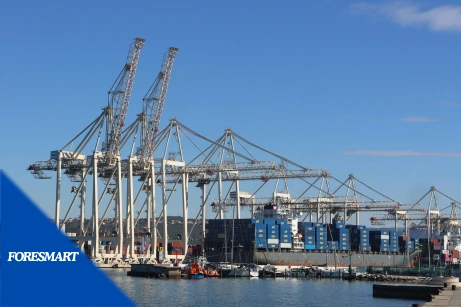
Wharfage is a port fee charged for the right to move cargo across a wharf or quay. It is the charge that covers the cost of letting goods onto or off a vessel and the upkeep of the physical wharf. This dockage fee is normally imposed by the port authority or terminal and billed to the cargo owner or shipper, often collected through the shipping line or agent.
How and When You Actually Pay?
Most shipments pick up a wharfage charge twice: once at origin and again at destination. Ports tend to treat wharfage as a core tariff item, separate from labour, equipment hire, or special inspections.
Calculation methods vary. Some ports price it by weight, using tons or revenue tons, while others price it by volume for non-standard cargo. For containers, you will often see rates by TEU or FEU, whereas bulk cargo is billed by weight or cubic meters. Check the published port tariff to be sure.
Some ports also adjust the dockage fee during peak seasons when vessel congestion rises, since higher traffic places more stress on the berth and equipment. You may even see minor tariff differences between terminals inside the same port, especially where one operator has invested in newer cranes or digital systems. These small variations explain why two quotes on the same route sometimes differ even when everything else looks identical.
Types of Wharfage
Ports use different labels for different cargo types. The usual categories are:
-
General wharfage for non-containerised cargo.
-
Container wharfage charged per container size.
-
Bulk wharfage for loose, unpacked commodities.
-
Ro-Ro wharfage for roll-on / roll-off cargo like cars or heavy vehicles.
Some ports also have special rates for hazardous cargo or heavy lift items, because those consume more space and safety resources. These categories influence both the rate and how the charge appears on the freight invoice.
Wharfage vs. Other Port Charges
The port bill is not a single fee. It is a cluster of charges. Here is how wharfage relates to the most common ones:
Terminal Handling Charge, or THC, is a terminal-level handling fee, often container-based. Wharfage charges are for use of the wharf itself. They can be billed separately or rolled into a single invoice.
Demurrage is a penalty for keeping containers or cargo in port past the free time. Wharfage pays for facility use; demurrage penalises delay.
Tonnage dues and port dues are related but not the same. Tonnage dues are charged to the vessel based on its registered tonnage, reflecting the ship’s use of port waters and facilities. Wharfage, on the other hand, is charged on the cargo and applies when goods cross the quay.
Real Numbers and Examples
Wharfage or harbour fees are highly variable by port, cargo type and region. Some carriers or terminals publish sample wharfage tariff lines.
For example, publicly listed carrier tariffs show city-to-city wharfage levels that can range from a few tens of dollars to over a hundred dollars per container, depending on the port. For breakbulk or heavy cargo, charges get calculated per ton and per cubic meter, and that can look very different from container rates. If you want to benchmark a route, consult the port tariff and your carrier’s published schedule.
On the macro level, studies of port pricing show a big variation across countries. Wharfage is not arbitrary. It is often set within a tariff structure that ports publish and review periodically. Decades of research recommend transparent, marginal-cost-oriented tariff systems to avoid distortions in trade and investment.
Why Wharfage Matters Beyond the Invoice?
A wharfage charge may appear minor on an invoice, but it plays a structural role in port economics and logistics decisions.
-
First, it funds maintenance and upgrades to docks, cranes, and security.
-
Second, it influences route and port choice. Busy, well-connected ports may charge higher harbour fees but give faster turn times. Smaller ports may be cheaper and slower.
-
Third, wharfage cost interacts with other supply chain costs. If this fee is high, even a small delay in picking up cargo can make total costs much higher, as demurrage and detention fees multiply the costs. Or even if you pay a small wharfage fee per container, but have thousands of containers, that fee adds up.
Reports and Research You Can Rely On
If you want to do a proper comparison or justify a logistics decision, there are public resources. UNCTAD and the World Bank have long studied port pricing and tariffs. Their reports show how tariffs are structured and why transparent published rates help traders plan.
Regional studies, for example, by ESCAP, also document the components of port tariffs and how they vary across regions. Use these primary sources when you calculate landed cost or argue a charge with a carrier.
Top 4 Tips for Shippers and Freight Managers
-
Ask for the port tariff reference. If a wharfage amount is on an invoice, require the tariff line and code. Ports publish the schedule; ask your agent to point to the exact line. This makes disputes easier.
-
Watch cargo classification. A misclassified cargo type can bump you from a low to a high wharfage band. Inspect commodity codes when preparing shipping instructions.
-
Compare total landed cost. Add inland haulage, handling, and potential demurrage. The cheapest dockage fee can become the most expensive route when delays add up.
-
Get sample rates from carriers or your freight forwarder and cross-check with the port’s public tariff. For container moves, look at carrier rate sheets and terminal notices. For breakbulk, ask for a per-ton or per-CBM breakdown.
What Should You Do Before You Accept a Quote
-
Is wharfage listed separately?
-
Which tariff and effective date are they using?
-
Is the charge per container, per ton, or per cubic meter?
-
Are hazardous or heavy lift surcharges included?
-
Will your inland delays create demurrage risk?
Final Words
Wharfage is one of those small line items that keep ports alive. It pays for the quay you use, the lights, the pavement, the security camera, and the general upkeep. It shapes route choice and can change the economics of a shipment.
Learn to read the port tariff. Push for the tariff line when an invoice looks odd. And remember, the number on the invoice is not a mystery if you know where to look.