
According to U.S. Customs and Border Protection, ports process over 90,000 cargo containers daily. A single document error traps shipments in port storage, triggering daily demurrage fees that freeze supply chains.
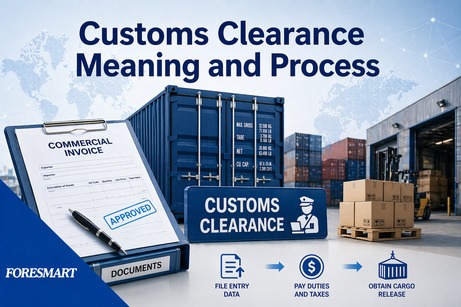
Customs clearance secures the legal entry of imported goods. Proper execution requires filing digital entry data, paying applied duties, and obtaining final cargo release. Formatting documents correctly helps importers bypass inspection triggers and prevent costly border holds.
What Is Customs Clearance
Customs clearance is the legal process for moving commercial freight across international borders. This regulatory checkpoint verifies compliance with destination laws, transitioning cargo from international transit into the domestic commerce stream. Authorities use this procedure to assess tariffs, enforce safety standards, and block restricted materials.
How Does the Customs Clearance Process Work
Securing port release requires three operational phases, moving freight from initial data submission to physical container dispatch.
Filing the Digital Entry Data
Licensed brokers submit cargo manifests into the Automated Commercial Environment (ACE) prior to vessel arrival. This data transmission alerts authorities, allowing algorithms to risk-score the shipment using declared HS codes and origin points.
Paying Duties and Taxes
Authorities calculate applicable tariffs based on the product’s HS classification and declared commercial value. Importers clear this financial obligation via automated clearinghouses or continuous customs bonds. Settling these exact liabilities removes the government financial hold. Settling these exact liabilities removes the government financial hold.
Obtaining Final Cargo Release
Satisfying all regulatory requirements triggers the final customs release message. This electronic authorization prompts terminal operators to issue a delivery order, permitting drayage trucks to extract the container from the port yard.
What Documents Are Required for Customs Clearance
Accurate documentation prevents shipment seizures and administrative fines. Authorities cross-reference these files to verify tax brackets and safety compliance.
Providing the Commercial Invoice
A properly structured commercial invoice acts as the primary evidence for transaction value and tax assessment. This record must detail the buyer, seller, and specific unit pricing, allowing customs to calculate exact duties and bypass valuation holds.
Submitting the Detailed Packing List
The packing list itemizes the mass, volume, and contents of every shipping unit. Customs officers use this document during physical exams to match declared data with the actual inventory.
Providing the Transport Document
The Bill of Lading (B/L) or Air Waybill (AWB) serves as the legal contract of carriage. These transport records provide the unique tracking numbers that authorities require to link the digital entry to the physical cargo.
How Long Does Customs Clearance Take
Standard ocean freight clears upon port arrival via pre-lodged entries, while air freight secures release within two hours. The Automated Commercial Environment (ACE) drives this speed by approving compliant manifests electronically before vessels dock.
Shipments flagged for physical examinations disrupt this baseline schedule. Routine X-ray exams add 24 to 48 hours to the transit time. Full Contraband Enforcement Team (CET) inspections require complete container unloads, delaying cargo availability by up to seven days.
Why Do Customs Holds and Delays Happen
Data discrepancies trigger automated port delays. Authorities freeze these suspect shipments to investigate potential tariff evasion and safety violations.
Using the Wrong HS Code
Incorrect classifications alter applied duty rates, triggering algorithmic flags for tariff evasion. Accurately finding your HS tariff code prevents automated border detentions and normalizes tax assessments. Authorities penalize this misclassification by detaining the cargo and issuing financial fines until brokers submit corrected data.
Declaring the Wrong Cargo Value
Under-declaring commercial value triggers immediate fraud investigations. Customs algorithms compare submitted invoice figures against historical pricing data, where detecting artificial price drops prompts officers to demand proof of payment. This intervention stalls physical release until importers resolve the valuation discrepancy.
Submitting Incomplete or Inconsistent Documents
Data mismatches across the commercial invoice and transport records force authorities to halt processing. Conflicting piece counts or divergent weight metrics flag potential regulatory breaches. Resolving these documentation errors requires brokers to file formal amendments, adding days to the port transit time.
How Do Importers Avoid Costly Clearance Delays
Resolving data errors at the origin prevents administrative holds and daily storage fees. This operational discipline bypasses predictable algorithmic flags, keeping cargo out of examination yards.
Auditing Documents Before Shipment
Pre-shipment audits expose metric discrepancies between commercial invoices and packing lists. Correcting these errors before vessel departure blocks automated customs flags, bypassing routine physical exams. This verification matches every declared value to current import regulations.
Working With Experienced Freight Forwarders
Professional freight forwarders manage digital entry filings to minimize border friction. Logistics partners like Foresmart execute the customs clearance process by auditing supplier files and transmitting ACE data. Delegating this regulatory workload prevents the basic documentation mistakes that freeze international supply chains.
Conclusion
Customs clearance directly dictates supply chain profitability. A single documentation error triggers automated port holds and demurrage fees that compound daily. Auditing HS codes and commercial invoices before vessel departure blocks these delays at the source. A specialized forwarder like Foresmart manages ACE transmission and document audits, keeping shipments on schedule and landed costs predictable.
Frequently Asked Questions (FAQs)
Is Customs Clearance the Same as Customs Release?
No. Customs clearance dictates the entire regulatory workflow of submitting data and paying tariffs. Customs release functions as the final electronic authorization, permitting drayage trucks to extract the physical container from the port.
Who Is Responsible for Customs Clearance, The Importer or the Carrier?
The Importer of Record (IOR) bears full legal responsibility for filing entry data and settling tax liabilities. Ocean and air carriers manage physical transportation, lacking the regulatory authority to clear freight. Importers typically hire licensed customs brokers to execute this specific filing process.
What Fees Are Involved Besides Duties and Taxes?
U.S. imports trigger mandatory federal assessments, requiring importers to accurately calculate the MPF fee alongside the Harbor Maintenance Fee (HMF) for ocean freight. Additional commercial costs involve broker processing charges and routine terminal handling. Physical customs holds add direct container unloading and storage fees to this final invoice.
No. Customs clearance dictates the entire regulatory workflow of submitting data and paying tariffs. Customs release functions as the final electronic authorization, permitting drayage trucks to extract the physical container from the port.
The Importer of Record (IOR) bears full legal responsibility for filing entry data and settling tax liabilities. Ocean and air carriers manage physical transportation, lacking the regulatory authority to clear freight. Importers typically hire licensed customs brokers to execute this specific filing process.
U.S. imports trigger mandatory federal assessments, requiring importers to accurately calculate the MPF fee alongside the Harbor Maintenance Fee (HMF) for ocean freight. Additional commercial costs involve broker processing charges and routine terminal handling. Physical customs holds add direct container unloading and storage fees to this final invoice.